Sunday, February 18, 2007

43. Gene Snyder and Tommie Hockensmith

A few days ago, Tuesday the 13th, among the items I wrote about was the naming of the United States Federal Court House and the former Jefferson Freeway (KY 841) for former Congressman Gene Snyder. My feelings are Snyder deserved the latter but not the former. Without question, because of his political abilities and connections, he secured the funds to finish the circle around Jefferson County which now bears his name.

Congressman Snyder died very late Friday night at his home in Naples, Florida. He was 79 and had suffered pains associated with recent back and heart surgeries.

One of the hallmarks of Congressman Snyder's service to his constituents was just that - service. He was always conbative and controversial and was no doubt somewhat more conservative than most of the voters in his district. But, he had going for him a reputation of constituent services next to none. In my end of the county, which was close to the western terminus of his district, which for 10 of the twelve years he served, stretched from the urban and rural counties around Covington and Newport, southwest along to the Ohio River to Oldham County, then a string along the perimeter of Jefferson County, from Prospect in the northeast to Valley Station and Kosmosdale in the southwest. From time to time, a sign would be placed along W. Manslick Road in downtown Fairdale, in front of Gene Younger's Barber Shop, announcing that the Congressman would be holding a session of talks with the locals, usually at 10am on a Saturday morning. Lots of federal problems were solved in these small meetings at barber shops, service stations, and other interesting locations throughout the Fourth Congressional District. And, despite someone politics, Snyder's office provided quick and effecient responses for those who sought his help.

I was among those seeking the congressman's help as a young voter; in fact, it was in the first year I could cast a ballot in a November election. I was a freshman at the University of Kentucky in the fall of 1978, turning 18 on the first day of fall of that year. I had been a member of my maternal grandfather's household since my parents' divorce in the early 1960s. All of my financial information in applying for loans and grants for college was based on that fact, and that fact became a problem for the university's bursar's office when it came time to release my grant money. The fall term started August 28 that year, and I was assigned housing in Kirwan II, then a freshman boys dorm in South Campus, a part of the Blanding-Kirwan complex. Kirwan II is now the dorm assigned for "health conscious" students, whatever that means. The Blanding part of that complex was named for Sarah Blanding, a Dean of Women at UK in the 1920s. Albert Kirwan had been UK's head football coach, Dean of Men, and, briefly, at the time the complex was being built (and named) Interim President. But, I digress.

As stated, my financial information was based on the being in the household of Daniel T. Hockensmith, and for whatever reason, my grant money was assigned to Jeff Hockensmith, and not Jeff Noble, which was my name, although a tale about name changes hangs thereby, but it will have to wait for another day. For several weeks, I was either in the office or on the phone with the bursar's office about my grant, and my need of it, but to no avail. They were awaiting instruction from the Federal Grant Program folks in Washington, DC and until and unless the Grant program folks made a change, the money assigned to Jeff Hockensmith was not going to be distributed to Jeff Noble.

The weekend of my 18th birthday, about four weeks into the school year, was an eventful one. Three things happened. First, I had gone home on Friday night for a high school football game, knowing I would have to return to Lexington on Saturday, which was in fact my 18th birthday, as well as the UK football team's homecoming game. The Homecoming Queen was sponsored by my dorm, the aformentioned Kirwan II, of which I had been elected Dorm President, having defeated Owensboro Catholic grad Jim Orton by two votes a few weeks earlier. As the president of the dorm sponsoring the Homecoming Queen, I had certain duties during the game, one of which was presenting the Queen to the President of the University, at the time Dr. Otis A. Singletary. On the return trip to Lexington, I was involved in my first real automobile accident. A long line of cars, of which I was 12th and last, were travelling along the Versailles Road a few hundred feet before the then-turnoff to Bluegrass Field when the lead car decided they were going to turn into the farm located at that point, and with no notice, did in fact, turn in, leaving twelve cars to sort of pile up, one against the next, back to car number twelve, me, driving my 1967 Nova Chevy II. The first few cars in the front were damaged heavily. Neither my car, nor the car I hit were damaged, and the two of us were dismissed after an agreement between the third car-up and the guy I hit, all overseen by a Lexington Metro cop who was doing his best to minimize whatever paperwork he might have to complete in making the report of a twelve car accident. He condensed those involved to ten, and I made my way on into Lexington and Commonwealth Stadium. So the accident was event number one.

Event number two was, of course, my coming of age on Saturday evening. After the football game I returned home to participate in the Fairdale Fair, an annual event held on the grounds of the Fairdale Playtorium, a local government owned building which serves as a community center of sorts, located in front of the new Fairdale Elementary School, although it was originally behind the old Fairdale Elementary, which had been torn down in the 1970s. I had complained to my local state representative Dottie Priddy, a friend who was one of those who first interested me in politics, about my money situation at UK. She suggested that I corner Congressman Snyder, who always attended the Fair both nights and usually had a booth, and see if he could be of help. She said he would have known my grandmother, who had died a couple of years earlier, as the Democratic precinct captain, one of his detractors, but also someone he liked.

At the Fair, I did as directed, which leads me to event number three. I introduced myself to my congressman and used my grandmother's name, Tommie Hockensmith, as an entree to the conversation. Snyder said he had indeed known my grandmother and lamented her passing, despite the fact that she had work assidulously for his defeat in several election cycles. He directed an aide to take all my information and assured me his office would work to correct the problem. He also said they would be in touch with the university about the matter. That was Saturday night.

Late the following Tuesday afternoon, I returned to my dorm room, Number 222, which had also been the dorm room of my fraternity big-brother Mark Metcalf, a Republican who later served as UK Student Government president, Garrard County Attorney, and is now a federal judge in Florida. My roommate that freshman semester was a guy named Peter Matthews Wright, also a Republican, although like Mark, Peter was a Rockefeller Republican, not a Goldwater one. Peter was a native of Pittsburgh, Pennsylvania, and a wealthy scion somehow related to the Westinghouse fortune, although I never quite understood how. Peter informed me that the bursar's office was trying to reach me and in fact, as far they knew had reached me. That they were trying to reach me wasn't news as they had been calling me regularly since my tuition had not been paid in full due to my grant money had not been released. Peter informed me that the lady in the bursar's office had informed him (thinking he was I) that my money had in fact been released and that my signature was necessary to effect such a release. I gladly ran across campus to apply my signature to whatever form required it. I will add that I called the congressman's office to thank him, and thanked him in another way as well a few weeks later.

Upon the election of my friend John Yarmuth to the office of Congressman from Kentucky's Third District, a seat held for two years by Snyder, I mentioned to him the reputation for service Snyder possessed. Yarmuth knew that as he had been a Republican when younger and was familiar with Snyder. I allowed that one of the ways to hold onto the office is also one of the simplest to do: have an excellent constituent services operation. As Congressman Yarmuth has hired in his Louisville office, among others, a Mr. Ben Basil, to whom I give a great deal of credit for Yarmuth's win due to his handling - some may say absolute control - of the volunteers in the campaign, I am confident of the constituent services operation now in place and hope that it can be as effective as I know personally Congressman Snyder's was in his day.

I mentioned earlier in this piece that my grandmother has passed away a couple of years prior to the events of the weekend of September 23, 1978. She, in fact, passed away 31 years ago today at the age of 59, on February 18, 1976, due to complications of heart failure and atheriosclerosis. Of the eleven Lewis children who survived infancy (as several didn't including one named Harry Scott), only the two oldest are deceased, my grandmother Tommie, in 1976, and her older brother Henry, I think in 1995. Remaining are Aunt Frances Catherine Moore, Aunt Lura Edith Brown, Aunt Dorothy Ann Henry (although not the Aunt Dorothy previously mention in other posts), Aunt Virginia "Jinny" Lee Sharp (previously mentioned in a post on Florida), Uncle Charlie Lewis, Uncle Billy Lewis, Uncle Bob Lewis (the former Sheriff of Franklin County), Uncle Elbert "Egg" Lewis, and the Uncle Jimmy Carroll Lewis. Lura Brown lives in Graefenburg in Shelby County; Virginia Lee Sharp in Lee County, Florida, and Jimmy Carroll Lewis in Laurel County, in southeastern Kentucky. All the rest live in and around Frankfort, where they were raised, in different locations along the Pea Ridge, Bridgeport-Benson, and/or Louisville roads. My grandmother and grandfather, Uncle Henry and his wife Aunt Virginia, who passed away late last last year, their Aunt Dorothy Collins Austin Hedger, their Uncle Earl Louis Collins and his wife Aunt Margaret Baker Collins, who also passed away last year at the age of 94, their parents Robert and Rachel Lewis, along with some assorted cousins and in-laws are all buried in the Sunset Memorial Gardens cemetery, located just inside Woodford County at the Franklin County border, on US 60, not far from the Kentucky Democratic Party' state headquarters at I-64.

Saturday, February 17, 2007

42. The House at work

246 to 182. That's the tally in the United States House of Representatives on a vote with the title "Disapproving of the decision of the President announced on January 10, 2007, to deploy more than 20,000 additional United States combat troops to Iraq." Thank you.

As each of those 246 votes represents 1/435 of the Census Bureau's population estimate of 301,192,792 souls in our Republic (as of the point of this writing), that means the voices of roughly 170,329,717 citizens have finally been heard in the 68.3 square miles which consititute our nation's capital some 610 miles east northeast of the Ohio River's Left Bank at Milepost 606.

I'm very proud to say that my congressman, John Yarmuth, as well as the congressman of those on the Right Bank of the Ohio River at Milepost 606, Baron Hill, were among the 246 who voted in the affirmative. Joining Yarmuth as a Yes vote in Kentucky's congressional delegation was Sixth District Congressman Ben Chandler, representing the Bluegrass region of central Kentucky. I am hopeful that Yarmuth's presence in the House will allow Chandler to be a little more to the left than he has been on a number of issues during his service to the Republic.

I had written a few weeks ago, after the president's State of the Union address, my opinion that George W. Bush is the worst president in my lifetime, now in its 47th year. I've been joined in that thought - actually in a far more expansive thought, being that Bush fils is the worst president ever - by Al Neuharth, the president and CEO of Gannett Publishing, and founder of the newspaper (with the word "news" used ever so loosely in this context) USA Today. Neuharth had previously listed his five worst presidents as Andrew Jackson, James Buchanan, Ulysses S. Grant, Herbert Hoover, and Richard Nixon. I would concur in part with his list.

It is a long practice of historical writers to try and develop points by which our Chief Magistrates can be compared to and against each other. Oftentimes, however, we allow personal feelings for or against a president to interfere with a true record of their performance. I would not have Richard Nixon among my worst five because some of what he did as president would keep him from that distinction. I've written before that some of the measures he supported, and saw passed, would very likely keep him from enjoying the support of today's Republican Party. Among my worst five would be Ronald Wilson Reagan, someone Neuharth does not list.

The practice of writers to rank the presidents is purely academic unless you are presently being governed by one of the worst ranked, as we are under George W. Bush. Then such a ranking becomes an issue of national importance and security. And when a country is governed by one of the worst, or as Mr. Neuharth is now proclaiming, the worst ever, president, the need arises for the Congress, as one of the three equal branches under our experimental form of government, to step in, as is their power of checks and balances, and correct the actions of such a president. The vote of the House of Representatives yesterday is just such a check and balance of power. However, it is not and will not be enough. I am hopeful that Speaker Pelosi will continue the piece-by-piece, vote-by-vote long-needed correction of the policies and abused-powers the current Commander-In-Chief, and his lieutenants, have undertaken at undermining our Constitution and our republican form of democracy. Our votes in November indicated that she, and by extension the house of congress she controls, should take just such action. Similarly, Senator Reid, the Democratic leader, has the same responsibility to the American public as his end of the capital changed hands as well. We are waiting to hear if he can lead his end as Pelosi is leading hers.

Here is the roll call in the House of Representatives from yesterday:

http://clerk.house.gov/evs/2007/roll099.xml

On a lighter note, it is snowing in the Ohio Valley as we speak. We are expecting about an inch here in Louisville. Hallelujah!

Friday, February 16, 2007

41. Down along Benson Creek

This weekend I will be taking up one of my passions: pleasure driving. For the first time this year, I'll have both time and money to go driving around our Commonwealth, possibly dipping into southern Indiana along the way. It is something I have done for years, usually with very little notice, and never with a particular route in mind.

The trips are usually solo, although I have had friends and family now and then. There are, of course, some favorite backroads that I have traversed several times over. One of those trips is from Louisville out Bardstown Road to Highgrove at KY 48, then east over to Fairfield and Bloomfield. Taking that route during the Christmas season, you will pass, on the right, between the two towns a farm which has decorated a each of a number of trees along either side of their lenghty driveway with a single strand of white lights. The effect of this is quite a sight, especially from a distance, when it appears you are approaching an airport landing with a number of landing lights. As you get closer, the effect is less promounced, but I always look for it when I drive through there. KY 48 ends at US 62 near Chaplin.

Another ride will take me along one of the the old roads to Frankfort, once you are past Shelbyville. I often say there are twelve ways to get from Louisville to Frankfort although most people only know one (I-64) or two (I-64 or US 60). One of those involves departing US 60 where it is crossed by KY 55 (from the north) which becomes KY 53 (to the south). There is a McDonald's on the southwest corner of that intersection. It was in the parking lot of that McDonald's where I learned about the shuttle disaster in January, 1986, returning to Louisville from an early morning breakfast in Frankfort. If you are standing in the McDonald's parking lot facing the street (Main Street to the left, Frankfort Road to the right), digonally across to the upper right is the stub of what used to be the end of Benson Road. (You have to access Benson Pike a little north of this point now). That is the original road from Shelbyville to Frankfort. At one time, there was no intersection here at all. KY 55 to the north is only a recent creation. Called Boone Station Road, it filled in the gap between the split of KY 43/55 and US 60/KY 53. Before that gap was filled in, leaving Shelbyville to the northeast (toward Bagdad) required going due north out of town along 7th or 5th (Jail Hill) off of Washintgton, then turning east past Snow Hill. This road is known as Eminence Pike out to Boone Station, where Eminence Pike then follows KY 55 north while Cropper Road continues east along Mulberry Creek. And KY 55 to the south, now called Mount Eden Road, is not the original way out of Shelbyville. That would be along 3rd Street, south of Main, where Saint James Episcopal Church is on the corner. The original entrance to Grove Hill Cemetery is now in the back, along 3rd Street, where it is now called Old Mount Eden Road. Annie Choate, my great-great grandmother who was previously mentioned in a post, has at least one and maybe both of her parents buried there. But, I digress.

The original road from Shelbyville to Frankfort was Benson Pike. It followed east out of Shelbyville along the north side of what is now Guist Creek Lake. At its intersection with KY 395 is one of my favorite farm houses, a simple but large white frame house with black trim. The last time I was through there that property had a For Sale sign in the front yard. Proceeding east from there, the terrain becomes hilly and the road curvy. At its intersection with KY 1472 (Mink Run Road) is the Beech Ridge Cemetery, a few hundred feet east of the Beech Ridge Baptist Church. A number of my Hockensmith/Peters/Perkins kin are buried in Beech Ridge. My great-grandmother Ellis Rebecca Peters Hockensmith along with much of her family lies there. I have mentioned before my niece Aubreana who middle name (at least one of them) is Ellis. Aubrena's Ellis comes from her grandmother Barbara Ellis Hockensmith, my mother. Mother's Ellis is from her grandmother, the Ellis Rebecca mentioned herein. Many of Ellis Rebecca's in-laws are buried here. Curiously though, her father-in-law, Isaac Daniel Hockensmith, Jr. isn't. He is buried in another cemetery about 1/2 mile east then 1/4 mile south of here in a private cemetery on the Stephen Engstler farm. I had heard of this cemetery all my life, but only last year finally discovered it. As a kid, my mother and my grandmother often visited here, especially on what was then called Decoration Day, to clean and decorate the graves, something my family still does fairly passionately. Another day set aside for grave visiting was Roberts Reunion Day, always the Fifth Sunday in either June, July, or August, as every summer one and only one of those months provides a fifth Sunday. The Roberts family play a prominent role in both of my maternal grandparents families, as they were, besides being man and wife, also distant cousins "through the Roberts line," as we would say. Again, I digress.

From Beech Ridge, Benson Road, now called Beech Ridge Road, with a Bagdad zip code on one side and a Frankfort one on the other, proceeds down the hill to the old community of Hatton, located where Beech Ridge Road crosses the Dutch Fork of North Benson Creek, then the L&N Railroad and joins KY 1005 just west of the Shelby / Franklin County line. My grandfather often said he grew up in Hatton although I do not know exactly where. Once in Franklin County, KY 1005 eventually becomes Devil's Hollow Road. As a kid, two of my favorite swimming holes were along Devil's Hollow Road in North Benson Creek. One was behind the very beautiful North Benson Baptist Church and the other was a spot locally known as Iron Bridge or Red Bridge. At that point, the creek spreads out into a broad spanse and there is effected a waterfall. Back at North Benson Church, the creek is broad and maybe waist deep at some points. I once became enamored with a young lady named Shellie Dean while swimming at North Benson. I was 15, she was 12.

Once you get up the hill into Choateville, one passes along the right the Choateville Christian Church, where my grandmother and many of her siblings were once (or still are) members. Devils Hollow Road passes Pea Ridge Road, where the Franklin County Public Schools have recently opened a new school called West Ridge. I have to wonder why they could not have called it Chaoteville or Pea Ridge. Once past the new school, the road proceeds to the new US 127, which to the left leads down into Frankfort and to the rights leads out to I-64 and Frankfort's version of Preston or Dixie Highway, with most any fast food or restaurant chain you might want, along with the suburban requisite Lowes, Kroger, and Walmart.

Passing US 127 and Parkside Drive, Devils Hollow begins the plunge down to Frankfort along Taylor Avenue, very close to where Benson Creek empties into the Kentucky River. In some of the oldest maps of Frankfort, this road, Devils Hollow is indicated as the "Road to Louisville," as it was before US 60 was cut through as the new route in the mid 1800s.

That's one way to get from here to there. There are (at least) eleven more.

Thursday, February 15, 2007

40. St. Valentine's Day - Día de los Emamorados - in Louisville

(NOTE: THIS POST WAS WRITTEN FOR YESTERDAY, FEBRUARY 14, 2007, BUT WAS NOT ENTERED PROPERLY).

I had lunch with a friend of mine yesterday. She is going through a breakup with her boyfriend of some extended period of time. The breakup is her idea, not his, but he hasn't yet gotten the clue that she really is breaking up this time. We had several good laughs over it and she is aware that I have certain "baggage," as she puts it, which refuses to leave my life, despite being away for weeks or months at a time. It is well known that my door is usually open to friends, family, and occasionally the so-called baggage with whom I enjoy sharing time. I've written before about my brother's visits in the past that went from days to weeks to months, and on at least one occasion, to more than a year. Such is life, and I am content knowing that I can help out here and there with folks who at the time aren't having the best of times.

We ate at a McAlister's Deli, one of maybe three hundred little shops which have been built over the last forty years in the triangle formed by US 42 (not Brownsboro Road), KY 22 (Brownsboro Road), and Lime Kiln Road (as it has been reworked, so as to align with Herr Lane in front of Ballard High School). The whole area is generically referred to as Holiday Manor, as it is the shopping center in the center of it all, and was one of the original developments there. There have since been quite a few others, but Holiday Manor usually explains it, much as "Jefferson Mall" has become a focal point in southern Jefferson County, in the area originally, at least in the 20th century, known as Okolona.

It is interesting how places change names over extended periods of time, usually several decades. The names change for different reasons. Some are large, others are small. One of more well-known changes is that of Saint Helen's, a neighborhood so named because of the presence of a Catholic Church which served as its center. When the denizens of Saint Helen's sought a post office for the area, they were told a Saint Helen's already existed and they should use a different name for their community's post office. They chose the name of the largest family in the area, whose mansion stills stands a few doors south of the church, where the side yard holds the cemetery wherein the remains of most of its occupants bear the last name of Shively. For the record, the other Saint Helens's is a wide place in the road, where KY 52 crosses the Middle Fork of the Kentucky River in Lee County, on the road between Irvine in Estill County and Jackson in Breathitt County.

The same thing happened to the supporters of a post office in the area around Robb's Lane and the Preston Street Road. For many years in the 1800s, the area a few miles south of there was called Cross Roads precinct, for the fork in the road near the present day Lowes at Preston and Cooper Chapel Road, where the road leading north out of Shepherdsville became two branches, one heading north toward Louisville and the other northeast toward Buechel, then an entity unto itself. The area had came to be called Lone Oak, for a large oak tree which once stood on one of the side roads leading west off Preston Highway. Upon application to Post Office officials, there was found to be a Lone Oak in McCracken County in far southwestern Kentucky. For the record, this place is not a wide place in the road, but rather a very wide road, US 45, in an incorporated suburban (and formerly rural) area south of Paducah. The response of the Lone Oakers from Jefferson County was to turn the words around a little and rename their community Okolona, a made up word. As it turns out, the word Okolona is also a real word, the name of a Chickasaw chief. There are towns called Okolona in Arkansas, Mississippi, Tennessee, as well as Kentucky. The others are named for the Chief. Kentucky' is named for a lonesome oak.

Other Jefferson County places have changed names for different reasons. Newtown became Fairdale; Bruners Town became Jefferson Town, and then Jeffersontown; Gilman's Point became Saint Matthews; Lacona became Pleasure Ridge Park; and, of course, the Falls of the Ohio was renamed Louisville. Then there are those places which have disappeared altogether, places such as Kosmosdale, Prestonia, Lakeland, Dravo, and O' Bannon.

Such is life, and life does goes on. Things come and things go. Just like relationships or, perhaps, excess baggage.

Happy Saint Valentine's Day.

Tuesday, February 13, 2007

39. Highways and By-Ways in Jefferson County

Today is my Aunt Judy's birthday. She is 71 which is hard for me to believe. She is the widow of my late uncle, Donald D. Noble, a local character of note who passed away April 29, 2005 from cancer. Uncle Don was a writer, reporter, politician, civil rights proponent, and later in retirement, a caricaturist, an occupation he passed on to one his nephews on Aunt Judy's side, Denny Whalen. My nieces also seem to have some artistic talent, especially (so far) the oldest one, Lindsey, who has painted and drawn hundreds of pictures, some of which she has sold at the annual Saint James Art Fair held each October along Saint James Court (and other streets) in Old Louisville. Aunt Judy is herself retired from the State Fair Board a few years back, where among other things she trained folks, mostly retirees, who sit in those information booths at the State Fair and similar events held at the Kentucky Exposition Center. You may not have noticed, but last year, the name of our behemoth Fairgrounds at Phillips' Lane and Freedom Way, dropped the word "Fair" from its moniker. No more KFEC, now KEC. The move was said to update the image of the property, taking away the country fair connotation and using more urbane nomenclature to identify what every knows was and is and always will be the Fairgrounds.

Today also marks the day my mother has decided to be one of those retirees sitting in those little booths to direct people here and there, actually telling them "where to go," which my mother said she is qualified to do. Louisville is such a small town. My mother worked off and on for nearly forty years in the Highway Department Building which sits out on Phillips' Lane on the Fairgrounds property. She started and ended her career as a clerk-typist, working on rights-of-ways, utility leases, and property acquisitions, from a variety of work spaces within that building. It was there I learned to type as an elementary school student. I attended 3rd and 4th grade at the old Prestonia Elementary, which used to be located where the Aldi Food Market is now, on Preston Highway at Belmar Drive, a few blocks south of Phillips' Lane. Next door to the school was a Walgreens, a Winn-Dixie, and an Arlans department store, all collected together in the shopping center which now houses Value City.

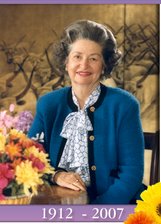
Now and then when I would not be riding the bus home, at the conclusion of whatever activity had kept me late, usually drum practice or Spanish Club, I would walk across the back of the shopping center, along where the hill created by the raised I-65 fell along the left side, to the underpass along Phillips' Lane. At that time, there were houses along both sides of Phillips' Lane, all story and a half cape cods, a handful, maybe two, remain on the east side of I-65. Everything west of I-65 was (erroneously) declared "blighted" by the Airport back in the 1980s and torn down. An entire neighborhood along the south side of Phillip' Lane, with streets called Weyer, Nally, and Fontaine, among others, where the homes were of brick, disappeared. Nothing is there now except a drainage retention basin built and owned by MSD, which can only be viewed from one of the several ramps in the confetti-like confusion of the intersection of I-65, I-264, the Airport, the Fairgrounds, Preston Highway, and Crittenden Drive, all fused into one. Down Phillips' Lane I would go, eventually arriving at the Highway Department, there to sit and play on an unused typewriter, or review maps of planned streets and highways which fell within District Five's operation, all this ending at 4:30, when the State "let out." It was there I first learned about the Jefferson Freeway, the Daisy Lane-Thorn Hill connector, and the Seneca Parkway, with its Land Beautification Project alongside I-64 and Beargrass Creek, north of Grinstead Drive, a project undertaken by the foundation founded by former First Lady Lady Bird Johnson. Some notes on Mrs. Johnson: She turned 94 in December and has been afforded Secret Service protection longer than any other person living now or in the past. She is said to be totally blind and in failing health. Her last public appearance was four months ago today at the LBJ Library.

The Jefferson Freeway began with a one mile portion in 1962 connecting the then-western terminus of I-64 (coming from Frankfort; it had not been completed beyond the Versailles Road exit to the east) with US 60. A picture of the original intersection, as yet unchanged except for encroaching development, hangs in the stairwell of the Highway Department building on Phillips' Lane. Over the next twenty five years, parts were built here and there, with the final project, now called the Gene Snyder Freeway, being completed in 1987, connecting US 42 in the northeast with the Dixie Highway / Greenbelt Highway in the southwest, but failing to connect with I-265 in Indiana. Democrats liked to argue that Snyder shouldn't have his name on anything due to his LG&E property dealings in the 1960s. But the truth be told, it was because of the alignment of then-Congressman Snyder, a friend of the new Republican president Ronald Reagan, and the new bsuiness-oriented governor John Young Brown, Jr., and the governor's well-connected Transportation Secretary Frank Metts, that the project finally got off the paper plans and onto the ground itself and became a reality. I agree his name should not be on the Federal Court House downtown on Broadway; he is however, deserving of this highway having his name applied thereto. Otherwise, we'd still be waiting on it, like we are its completion across the Northup/Abramson/Hawpe unbuilt bridges into Indiana.

Below is an article in today's Courier talking about the unbuilt bridges I have mentioned several times herein. As you can see from the comments by State Representative Jim Wayne (D-35), we are still wating on the project's "initial financial plan." And Anne Northup told us they were already being built.


From the C-J:

After canceling a hearing on the $3.9 billion Ohio River bridges project planned for last week, the head of a state government transportation committee said yesterday that the panel will discuss the project "in the very near future."

But Rep. Don Pasley, D-Winchester, could not say when the House budget review subcommittee on transportation would take up the bridges plan.

Rep. Jim Wayne, D-Louisville, called on transportation officials yesterday to produce an initial financial plan for the project, which last year's state budget required to be finished by the end of 2006.

The plan needs final approval from Indiana officials before it is complete, Highway Commissioner Marc Williams said.

Monday, February 12, 2007

38. On Republicans - and a few Democrats

Today marks the 198th anniversary of the birth of Abraham Lincoln, born in a log cabin to Thomas and Nancy Hanks Lincoln, in what was at the time Hardin County, but is now a part of Larue County. A National Park just south of Hodgenville, where KY 61 heads east away from US 31E, marks the site. Former State Representative Bob Heleringer, a friend of many years, has written an interesting op-ed piece in today's Courier-Journal, the link to which is listed at the end of this post.

Heleringer is generally considered a moderate in his Party, which is generally considered to be conservative, and effectively has been since Ronald Reagan began his quest of the presidency several years before achieving it in 1980. Heleringer's support as a legislator of several social-leaning ideas, especially those which relate to the health and well-being of children, caused some in his Party to be less supportive than they were of others. In 2003, he was paired with Republican gubernatorial hopeful Steve Nunn, another moderate in some matters, in the Primary against Ernie Fletcher and Rebecca Jackson. The Nunn-Heleringer team ran third of three; comments were made by several Democrats that if they made it through their own Primary, they would probably receive the support (some public, some secret) of a number of moderate to liberal Democrats. I've no doubt that would have been the case. But, they weren't right enough for the Right.

As we celebrate the birthday of the Republican Party's first standard bearer, our own Abraham Lincoln, a short look at the presidential race of 2008, is worth a visit. In the last week, word has leaked out that Rudolph Giuliani, he of 9/11 fame, is leading Senator John McCain in the early line. The irony here is the distance McCain has moved, from center to right on the political spectrum (as has Mitt Romney), only to be surpassed at this point by a well known social-liberal, whose only conservative high marks come from his no-nonsense crime fighting as a federal prosecutor in Reagan's Justice Department and later as a two-term mayor of New York, the first Republican to be re-elected to that office since Fiorello LaGuardia, the beloved "Little Flower" who served three terms from 1934 to 1945. (John Lindsey won his first race as a Republican in 1965. He lost the Republican primary in 1969, but won re-election as mayor running on the Liberal ticket. He later switched to the Democratic Party, but did not seek re-election under that Party's banner).

It is an old argument in politics that Democrats move to the left in the Primary while Republicans move to the right. Getting to the center, where most of the voters are, is only necessary in the Fall. McCain and Romney have demonstrated their willingness to sell out personal beliefs in the name of political gain, as has been made evident by McCain's senate votes and Romney's vetoes as governor of Massachusetts. Giuliani, on the other hand, has always been a liberal on social fronts and a conservative on crime matters. When he first ran for mayor in 1989, he was the candidate of both the Republican and the Liberal parties. He lost that race, the closest one in New York's history, by 48,000 votes out of 1,900,000 cast to Democrat David Dinkins. He came back four years later and defeated Dinkins. In 1997, he was re-elected garnering 59% of the vote. As the darling of the old Republican Party, that is pre-Reagan and heavily Eastern Establishment, and as a one-day wonder as an American hero for his very personal role in the events of September 11th, he finds himself in a very unusual position, as front runner of the Republican Party for nomination as president.

On the other side, my side, several days ago I posted a picture in the right hand column of Senators Clinton and Obama, arguably the leaders in the Democratic race to the White House. Obama announced his candidacy over the weekend, and were it not for an early morning commitment I had made to the Metro Democratic Club (of which I was recently elected as Treasurer), I would have driven the 520 or so miles to Abraham Lincoln's place of election, Springfield, Illinois, where Senator Obama made his formal entry into the fray Saturday morning, announcing from the Old State House, where Lincoln had served 150 years earlier. Voting with my heart, Obama is my first choice. Voting with my head, Senator Clinton is. I am hopeful she is the nominee and he is her running mate. I ran that ticket passed my mother, an retired State employee who is something of a moderate, having voted for Ross Perot in 1992, when she thought Bush pere was inept, but couldn't bring herself to vote for Bill Clinton because he seemed to be a womanizer. She indicated Clinton/Obama was a ticket she could support. She went on to say she is for Clinton and whomever she chooses as a running mate, and that Obama would be an excellent choice.

Clinton has made her own journey on the political spectrum, mostly because of her marriage to Bill Clinton. I've never considered the Clintons overly liberal, although I have appreciated some of their ideas. But they are perceived as liberal, and because of that Mrs. Clinton has found herself creating an image with strong ties to the military, getting herself on the Armed Services Committee and voting for the war measures which got America in the predicament in which she currently finds herself. And even while campaiging in New Hampshire and Iowa, she has stressed she would not vote to financially undercut the current troops. She has waffled as to a date-certain for departure of America's troops from the civil war we are participating in in Iraq.

Obama, on the other hand, has a plan which creates that date for March, 2008, which would effectively put it during the few weeks when decisions are being made by the Democratic voters across the Republic in early primaries. And, he has challenged the stable of other Democratic nominees to do the same - come up with a plan, a date, an answer. The merger of her experience and his idealism and absolute star-like qualities, should be a ticket without peer in 2008. It is one for which I hope to cast a ballot in November 2008.

The decision on who will be the Democratic nominee will be very close to have been decided this time next year. But given the large field of several very able candidates, it may be that for the first time in several decades, the Democrats will have a truly divided convention, and the role of convention delegates, local and state supporters and parties, and bottom line grassroots organization, will take on a new meaning, or truthfully reclad itself in the importance they once had in the past, in times such as when Abraham Lincoln was first nominated to his Party's ticket in a four-way race with Salmon Chase, Simon Cameron, and the expected winner, William Seward.

Wouldn't it be nice to have, as part of the 200th celebration of Lincoln's birth in February 2009, the leaders of the greatest nation on the planet to be a president originally a Republican from Illinois, and her vice president, also a native of the state from which Lincoln was elected as a state and federal legislator, and ultimately as President of the United States, all emanating from a log cabin on Sinking Creek branch of Nolin Creek near Hodgenville, Kentucky.


Heleringer's editorial can be found here:
http://www.courier-journal.com/apps/pbcs.dll/article?AID=/20070212/OPINION04/702120381


Post Script

It has occurred to me several times during my college education, that were I to have lived in any era prior around 1964 and after 1888, chances are I would have been more of a liberal Republican, as is Giuliani, and as was presidents Ford, Eisenhower, Taft, Roosevelt, and McKinley. At least it has crossed my mind.

Sunday, February 11, 2007

36. The whole world's in a terrible state of chaos

Not really.

That line is from the Irish playwright Sean O'Casey's Juno and the Paycock, one of my favorite plays, although it is dark comedy about troubled times, the 1920s, in Ireland. Through it all, "Captain" Jack Boyle known as the Paycock, and his buddy Joxer stay pretty well inebriated, ending the play with the words which today serve as the title of the post.

It may be true that we are in troubled times, given that America is engaged in war (with no apparent end in sight or plan), and while the economy seems to be robust, fewer and fewer folks are making their lives better over time. A few months back, Americans, at least those of us who are not only eligible to vote but also bother to do so, sent a message to ourselves as well as the government that we are mad as Hell and aren't going to take it anymore. But are we really?

Since the advent of the USA Today newspaper, a mockery of journalism, Americans have been fed news by the bite, rather than by the meal. While we've been supersizing everything we buy, from boxes of Corn Flakes to SUVs the size of tanks, we've been downsizing the amount of news most of us actually get from the many sources out there willing to give it to us. This is not news. I'm not the first one to write this. But it still bothers me. One of the good things about the internet, and specifically about "home" pages, such as msn, yahoo, or google is they usually have a news feed which allows people to see and read, at whatever depth they are comfortable, news from around the nation and the world. With a little programming, readers can focus in on their home town news and weather, something you used to get on the hour and sometimes the half-hour on local radio, but most of these feeds are now national and not local in nature. Even WHAS radio, long the herald of Louisville news, no longer has a local evening newscast - although I would never know that. I only listen to WHAS when a tornado is not just possible, but seems to be currently happening. Otherwise, I am mostly tuned, if at all, to one of the three local public radio stations (89.3, 90.5, or 91.9), or to 90.9, the public station in Elizabethtown, or to 88.1, the New Albany High School station, which is my general music outlet.

Before the internet, I tried to read the local self-described "One Great Newspaper" as well as at least part of one national paper most everyday. The most easily accesible national paper in the past was the Wall Street Jounral, which is served in Louisville by the Chicago edition. I always tried to read a Washington Post on Sundays, and would now and then somehow manage to get the Sunday Magazine from the New York Times, usually by dropping in at a coffeehouse, or hanging out at the old Hawley-Cooke in the Gardiner Lane Shopping Center. The internet has changed that, and truthfully, it is for the better. Going online and finding articles of interest is so very easy. Signing up for newsletters from a variety of sources is easiest of all. I get daily or weekly doses of information important to me from the Post, the Book Review at the New York Times, from the ACLU and other civil and human rights organizations, as well as people who want me to save the whales, the watersheds, savannahs, rainforests, and any number of other things. Now and then I "unsubscribe," a word many of us find quite useful now and then.

Most of us in our computer set-up have a list of favorites. Mine is heavily populated by media outlets - newspapers, radio, TV, and notably blogs. Some blogs serve a specific readership with specific news, others serve as sounding boards for political and social (is there a difference?) commentary, others are full of poetry, some are outlets for commercial enterprise, and some, like mine, are still looking for their role in the world. What we are have in common is that we all hope someone else is looking at our work, whether we formally admit to that or not, the fact that we post on the internet, available to most anyone if they are really looking, is an admission that we want to be seen and read.

That brings me to today's update of the state of the blog. The first report was on January 22nd, some nineteen days after our debut, which was also my mother's birthday, not that that fact is related. About nineteen days has since past, so an update is in line.

At that time, the visitor counter read just over 200. It now reads about 700 pages accessed from just over 400 individual visits, which means about 300 people other than me have visited. Back on the 22nd, we spoke of where these folks came from. I know I have some (a few) repeat readers who visit regularly and I am grateful for your readership. We've only added a few Kentucky cities since the first report, the new locations being West Point (which is close enough to Louisville to be a local telehone call), Middlesboro (which I mentioned one day as being built in a hole created when a crater impacted the Earth), Bardstown (which has just endured a tragic loss of life on which I posted a few days ago and where there was yesterday buried the ten victims of Kentucky's worst fire in thirty years), and finally Clearfield. A note on Clearfield. I've travelled all over this state, mostly on back roads, and have read many articles and books on Kentucky's place names, including a comprehensive (though not entirely accurate) one by Robert Rennick. I've never heard of or been to Clearfield, to my knowledge. It turns out to be a little hillside village just south off US 60 (Main Street) in Morehead, stretched out along KY 519, which carries the name Woody May Highway briefly. One of the main roads in Clearfield, if you could call it such, is McBrayer Road. Thus, the little village has at least two roads with prominent political names attached to them, although the McBrayer attachment is probably not "big P" political, but purely "little p" political.

As far as other locales across the Republic, we've only added to out list four more states, being Georgia, Illinois, Minnesota, and Ohio. Keep in mind we have regular visitors from Washington, DC. To our list of international visits, previously a boast of four countries, we may add Algeria, Beazil, Germany, Hungary, Japan, Norway, and the United Kingdom. We have regular visits from a number of different places in China, but I do not know why.

Our topic variety is not yet broadening, but I will give it time. There are only so many different subjects that I am interested enough in to write someting worthwhile about, so the array will never be too far-flung. I continue to invite your comments. I've always included among the righthand side bar a note of "Welcome - Beinvenidos" and an invitation to comment. I do not plan to respond to all the comments, or for that matter any of them as a rule. But I am interested if in fact you find what I find of interest of interest to you my readers.

That's today's report. The weather service is calling for a mix of rain, sleet, and snow over the next two days, but I haven't any faith in them at this point. As I said, the whole world's in a terrible state of chaos, and the weather, what with global warming and no snow, is at the top of the list.

Friday, February 9, 2007

35. A Highway By Any Other Name (redux)

About three weeks ago I addressed my views on which street, if any, in Jefferson County, should be renamed to honor the life and memory of Dr. Martin Luther King, Jr. Dr. King's specific ties to Louisville are few. He visited here on several occassions and his brother, the Reverend A. D. Williams King, was pastor of the Zion Church at 22nd and Muhammad Ali Boulevard. But, while his specific ties to Louisville are few, his contributions to the ongoing work of civil rights are many. I believe something more than a closed right-of-way in front of the Mazzoli Federal Building, a post office branch on W. Broadway, and an elementary school in the west end, should bear his name.

The local governing authority, the Louisville - Jefferson County Metro Council, leapt into this discussion at the beginning of the year, with a proposal to rename 22nd Street (some or all) for Dr. King. That proposal met with opposition from various corners, including residents of the working class (and mostly white) neighborhood of Portland, for which 22nd serves as one of several north-south corridors. Simultaneous with the Council's action, State Senator Gerald Neal (my senator, as I live in his district) introduced a measure in the recently convened General Assembly to name (not rename) I-65 in Jefferson County for Dr. King. [Maybe, I should say rename, as I-65 was in the past known by two names for its two parts, the North-South Expressway and the Kentucky Turnpike, which was a predecessor road between Elizabethtown and Louisville which was incorporated into the interstate system as it developed]. The Council, showing their mettle in handling difficult issues, voted 26-0 (imagine that) to not handle this matter, endorsing instead Senator Neal's idea for I-65, rather than having one of their own.

There have been discussions that I-65 was "overdoing it" arguing that King's associations with Louisville did not merit the naming of the main north-south artery. In my January 15th post, I indicated I wasn't sure I agreed with Senator Neal's idea. Now comes State Senator Danny Seum's proposal to name the entirety of I-65 within the Commonwealth for Abraham Lincoln, whose 198th birthday rolls around Monday, a day we used to take as a holiday, both in the Commonwealth and the Republic. The argument to name 65 for Lincoln is strong. The highway passes within fifteen miles of Lincoln's birthplace, a National Historic Site, complete with a log cabin at one time said to be the cabin in which the 16th president was born, and steps leading into the park for each of the president's 56 years of age. Moreover, Lincoln's service as president was wholy marked by the divisive Civil War, and very few places lived through the divisiveness as did Kentucky. Troop movements into and out of Kentucky followed both I-65 (or, more specifically the L & N Railroad) and I-75 (or more specifically the old Wilderness Road along US 25). Many significant sites along I-65 have strong ties to the Civil War, the Lincoln presidency, and Lincoln himself. Nearly every exit off of 65 can lead to some site with some Lincoln significance.

The timing of Senator Seum's proposal is, perhaps, suspect. He has been in the Senate for many years, representing at one time or another nearly all of Jefferson County south of the Watterson, as well as Bullitt County for an extended period. Interstate 65 bisects both counties and runs just to the east of the Senator's farmstead in the Coral Ridge community south of Fairdale. Seum was a Democrat when first elected, but after the gift of a tie from United States Senator Mitch McConnell, he switched over to the Dark Side of the Aisle. He used to also be much more of a libertarian than he is now, but he remains basically a populist. He has allowed his views to shift well to the right over his terms of office. Despite these strong ideological swings, Danny and I have been and remain friends and I respect, even when disagreeing, the work he does in Frankfort. His southern Jefferson County constituents do as well (my mother is one of them) as he easily won reelection in 2006.

If I had to choose between the two proposals, I would, in all likelihood, go with Senator Seum's, as it is more representative of Kentucky's past. But, I always find it interesting that when any member of the current right-wing xenophobic Republican Party wants to display their concern for civil and human rights, they have to go back at least 40 years to the Civil Rights passages of the 1960s, or more often 140 years to their first president, Kentucky's Abraham Lincoln to do so. There is certainly no one of this caliber in today's GOP.

Thursday, February 8, 2007

34. Twice Read Words

I've started re-reading one of my favorites novels, Gore Vidal's Washington DC, a part of his collection of novels on the history of our Republic, weaved into a story line, this one surrounding Senator James Burden Day and Blaise Delacroix Sanford. That pair of characters play significant parts in a different Vidal book, also a part of the series, called Empire.

It is a habit of long-standing of mine to re-read far more books than I read, that is, reading for the first time. I probably own about 2000 books - I really do not know how many there are - and they are one of the reasons I recently moved to a new residence in downtown Louisville, a townhouse with about 1200 square feet of space. One of my goals in the new space is collect all of my possessions into one place, ending the storage of a variety of my "things" at various friends and relatives homes. Most of what I do not have there already is in one of two places, either my mother's home or the basement of my friend Ken's rental property. Both have been very accomodating. Also in my possession, but not in neither my ownership nor yet moved to my new place are some belongings of my brother Kevin's as well as my friend Keith's. Neither seem to be in a big hurry to re-possess their possessions, so one of the rooms in the new place is devoted to other people's stuff, just as some of my friends and relatives have been devoting space in their homes to my stuff. As I said, the process of collecting these collections is underway, and in doing so, I've come across books and other possessions, and am thus interrupted to guage the importance of some of the matter I've come across. (I've written on this in an earlier post).

Eventually, I will have it all there in one place, to go through, allocate to piles of "keep", "discard", or "decide later", which is a euphemism for "keep". Of the things I know I will keep are books - lots of them. As I said, I tend to re-read more than I read. I've re-read any number of history texts from high school and college. I wish I had in my possession the "Word Clues" book I had from either 5th and 6th grade, or 7th and 8th grade (I can't remember which). That text was a resource for learning etymological roots of words of either Latin or Greek origin - stems, roots, prefixes (prefices?), and suffixes (again, suffices?). I think I learned as much about language from that little text as any text I've ever had to use in any part of my education. For instance, take the Latin root jacere,

to throw
. From it, we have the English words abject, adjective, conjecture, deject, eject, inject, interject, object, project, subject, and trajectory, among others. Can you see the roots "to throw" in each of these words? From the Greek root epi, meaning
at, upon, or over
, we get these words, among others: epidermic, epigraph, epilepsy, epilogue, epiphany (which we've blogged about in the past), episode, episcopal (which begets bishop), epistle, and epitaph and epithet, two related ways of using words, one good and one bad. (And to Stuart P., if he is reading, notice the extemities to which I went in that last sentence with regard to the use of the Oxford comma).

Among the things I to re-read a lot are military (and other) histories, the Bible (both as literature and for inspiration (as well as a resource for history)), Several favorite plays of William Shakespeare as well as anything written about his life and times, most anything related to zoning and land use, and finally all things Arthurian, that is having to do with the mythic and real King Arthur, Dux Bellorum, Comes Brittania, alleged son of Aurelius Ambrosius, perhaps cousin to Prince Merlin, and King of all Britain. Arthur and Merlin have been a curiosity of mine since reading Mallory's l'Morte d'Arthur in tenth grade in Mrs. Risner's English class. As background I read Geoffrey of Monmouth's History of the Kings of Britain which is far more fiction than fact, but nonetheless a treasure-chest of history.

Recently, I have found myself interested in Renaissance Fairs (and similar events) which have been springing up here and there acoss the Republic. They recreate a festival atmosphere, with little towns being built, wares sold, fencing contests, and other such activities, all staffed by time-appropriate attire speaking in somewhat time-appropriate English. Two were held in Kentucky last year, one in Eminence and the other in Richmond. I attended one day of the festival in Eminence. I intend to go back should they repeat it. Among the performers there were members of a local assembly of the Society for Creative Anachronism, an organization dedicated to the arts and skills of pre-17th-century Europe. I've listed their website below.

The Eminence fair was held on a farm east of town, covering the woods and corn field of a large farm. I would guess about 100 acres was used in the event. The entry charge, if I remember correctly, was $12.00 for an adult. As there were vendors present, I spent several more greenbacks before departing, but as I said, I would and will return again this summer. Another of the places I intend to return to this year, as I've written before, is Washington, DC. Re-reading Vidal's book will no doubt make that desire gow stronger, and hopefully, after the Primary, I will post to you from somewhere in the Capital City of our Glorious Republic, after having attended some performance of a Shakespeare play or visited the Anacostia Museum, a part of the Smithsoinian focussing on African-American life in the Disrict, and located not along the Mall, but in the Southeast, across the polluted Anacostia, on Fort Place SE, a short street in a beautiful setting within Fort Stanton Park, but not far from the very urban area known as Anacostia.

Until one can visit a place one wishes to visit, the alternative is, now as it always has been, to read about it.


http://www.sca.org
http://www.si.edu/museums - go here, then look for the Anacostia link.

Wednesday, February 7, 2007

33. Tragedy in Bardstown

Yesterday afternoon, as I was riding home on the bus from work, I had a discussion in my head on how we respond to certain tragedies. A few weeks ago I posted here about the train derailment in northern Bullitt County. We've discussed the deaths of a few family members, as well as two adolescent men and a young girl whose deaths were in part caused by a police chase. Finally, more than a few lines were spent of the putting-down of 2006 Kentucky Derby winner Barbaro

Yesterday's news (and today's as well) is filled with the very tragic events in Bardstown, Kentucky (about 35 miles southeast of Louisville). A home on Guthrie Drive, a short connector street I've driven upon many times, apparently had an explosion, and went up in flames in a spanse of about six minutes. Ten people, all members of the same family perished, spanning three generations. There are no words to understand an event such as this, nor are there any to properly console the remaining family, a family which has lost ten members in one event. We can compare it in history to the losses in Katrina, or the tsunami in the south Pacific, but those are people and places far removed from our place here in Kentucky. A little further back, the Beverly Hills Supper Club in Southgate in northern Kentucky afforded a much higher number of persons lost when the club caught fire nearly 30 years ago. The media have reported this to be the largest residential fire in Kentucky in 40 years at least.

My discussion with myself was an ethical one. It involved how we as a community respond to such events. I remember when the kids were killed on the church bus, returning home from King's Island to Radcliff about twenty years ago. I do not know how many there were, maybe two dozen - maybe more, who lost their lives outside of Carrollton on I-71 due to a drunk driver. In an era before many cars had driving lights, Wayne Perkey, who was a DJ on WHAS, Louisville's then-most popular radio station, asked drivers to drive the next day with their high-beam on in memory of the lost students. Truthfully, it was difficult to drive that day as so many folks did use their high-beams in memory of the loss. Everywhere were tributes and the poignancy of the event was strongly felt.

I questioned myself about my response about Barbaro vis-a-vis this loss of human life. Many writers across the nation addressed the loss of the life of a horse, because there were words to do so. In this event, there are no words, no pictures, no proper consolations for such a large loss to one family. They've been on my mind for over 24 hours now and will continue to be so for some time. I am keeping them in my thoughts and would ask you do the same.

The victims were Sherry Maddox and Johnny Litsey, who had lived together for many years. Litsey had worked at Bardstown Mills, a Purina feed store, since he was a teenager. Also, Crystal Denise Maddox, 30, and her two children, Deashia McKinney, 10, and Nekia McKinney, 8. They lived in the house, said Janet Tonge, sister of Sherry Maddox. Also, Demita Jo "Ann" Maddox, and her 2-year-old twin girls, Heaven and Earth. They had moved to Tennessee within the past year and were back for a visit. Also, Dariyel Maddox, who would have turned 4 today and is the daughter of survivor Darrell Maddox. Finally, Ann'Ashia Maddox, the 1-year-old daughter of survivor Lizzie Maddox.

The survivors are Lizzie Maddox, who was not in the house when the fire broke out but suffered minor injuries attempting to rescue those inside; and Darrell Maddox, 25, who suffered facial burns. Maddox works at Bardstown Mills and recently was baptized at First Baptist Church of Bardstown, which several family members attend.

Tuesday, February 6, 2007

32. A short few lines on Jefferson County's old roads

We had a luncheon today in our office for one of the attorneys who is leaving to go practice elsewhere. Out of the window from the restaurant, one has a view of the Belvedere Plaza, where the faux-waterfall will cascade with water once the seasons change and where, at one time, during the winter you could rent a set of skates and iceskate on the artificial lake which now serves as a faux-picnic ground. Louisville's Riverfront/Belvedere Plaza has undergone several changes since first proposed and built in the late 1960s. Hotel developer Al Schneider built the first hotel there in 1970 and later added another one to the east. Dinwiddie Lampton established his insurance building next door in the "Rust" building, a popular concept in the 1970s. There is also a bridge across I-64 in Seneca Park of the same material - rusted steel. Schneider later built four different office buildings achoring the corners of Fourth and Main streets, but tearing down the old Columbia Building on the northwest corner to do so, a building former Mayor Frank Burke described to me as one of the prettiest buildings in downtown Louisville.

As a little kid, I can very vaguely remember the old Kingfish Restaurant, when it was actually located on the Wharf at Fourth Street and River Road, where the cobblestones made their way down into the waters of the Ohio River, on the Left Bank, right at Milepost 606. There was another Kingfish Restaurant way out River Road, I think near where the Caperton Swamp is located. Both are now gone, each replaced by a newer restaurant, the 4th Street one moved two blocks west to 6th Street, and the River Road site closer in and on the other side of the street. The 6th Street site itself was vacated a few years back, and that location is the current home of the new Muhammad Ali Museum.

I can remember the old Harshfield Produce company under the Second Street bridge on the east side, as well as the row of old taverns and nightclubs that used to line Washington Street as part of Louisville's seedier side when I was a teenager and not yet old enough to drive. There were times I would ride my bike all the way downtown on the then-closed Fourth Street, rechristened the Fourth Street Mall. The blocks from Ali Boulevard south to Broadway were especially wicked, housing wig shops and porn shops among the mostly boarded-up buildings. At the time, both the Seelbach and the Brown were closed, although the Brown served for a period as offices for the old Louisville Board of Education, and after the city-county school merger in 1975, the Jefferson County Board of Education. My junior class prom was held in the Crystal Ball Room of the "Brown Education Center," the then-name of the Brown Hotel. In 1984, both hotels were restored and re-opened. Of the old stores from the 1970s, the wig shops are still there. Louisville's porn industry, formerly there and in the so-called porno-district at 3rd and Jefferson streets were all cleaned up and moved out in the 1980s. The Metro government still spends a great deal of time in court over the First Amendment Right issues of businesses of the that ilk.

Over time the Fourth Street Mall was renamed the River City Mall, then back to the Fourth Street Mall, then Fourth Avenue, and finally, back to its roots as Fourth Street, a name found on one of Louisville's earliest maps, when the city extended from the river south to Liberty (which was really the alley south of Jefferson, and later called Green Street, before becoming Liberty), and from Preston's landing (around Wenzel Street) west to 9th Street. There was a road which led to Portland to the west. Fifth Street led out of town, bending ever so slightly, just south of Kentucky Street, a bend which remains in the road grid to this day. River Road led upriver toward Prospect, the Brownsboro Road toward Brownsboro and Ballardsville (US42 outside of the Watterson came much later), the Midland Trail led to points east and is still called that in both Shelbyville and Lexington, Baxter Avenue led out towards Bardstown (the road called Baxter south of Highland Avenue was called Von Borries Avenue and ended just north of what is now Tyler Park), 5th went out to around Crittenden Drive, where it was called Flat Lick Road and joined the Wilderness Road leading out of Portland along 26th Street, joining the path to Shepherdsville near what is now Preston Highway and Locust Lane. For many years a brick toll house, recently painted white, stood on this corner, torn down only a few years ago to make way for a US Bank branch. The Louisville and Nashville Railroad eventually became the main north-south route out of town and the old National Turnpike ran along beside it from Louisville out to Gap-in-Knob, just north of Shepherdsville. All other roads headed southwest and joined the Salt River Turnpike, also known as the old L & N Turnpike, and now known as Dixie Highway.

Those are the early roads of Jefferson County. They all still run more-or-less along the same routes first establish many years ago. Chances are they will for many years to come.

Monday, February 5, 2007

31. My favorite number.

Okay, let's talk about the weather first. It is cold. But, it has been considerably colder in Louisville. This morning's low was around 5 degrees. I've mentioned before the big snow of January 16-17, 1994 (a record up to that point of 17 inches, tying the record set on the same days in 1978). Three days after that snowfall marked the coldest temperature ever recorded in Louisville, 22 degrees below zero. It was 36 below over in Shelbyville. So, today's five degrees above zero seems warm. Today marks the anniversary of the biggest snowfall ever in Louisville, one of 22 inches. It didn't have the lasting effects of the 1978 and 1994 snowfalls because it warmed up faster, and there was no ice involved. This year, I don't think we've had 22 centimeters fall yet, although there was some white stuff blowing around last night around 10:00 pm. The snowy weather coupled with Super Bowl partiers out after the game could have made driving difficult.

Today is one of those dates that because of the way we record things makes for an interesting number, being 02/05/07, where 2 + 5 = 7. Its a small thing, but I still noticed it. I remember the morning of April 5 in 2006, waiting for 1:23 am to pass. Combined with the date, it would read 1:23 04/05/06, at least the way we write it here. In Cuba and South America, among other places, I'm sure someone was waiting on May 4th for the same reason. Another small thing but noticeable. With regard to calendar dates, I'm living in a charmed era. How many people will get to live through a palindromic year? I did in 1991. Then I did it again in 2002. There won't be another one until 2112. I doubt I will be here then. Everyone knows the rule for leap years - if the year is divisible by four, then it is a leap year. But the rule doesn't apply in years ending in 00 unless the first two digits of the year is divisible by four, such as 20. The century years 1700, 1800, and 1900 did not have leap years under the rule. But 2000 did, and I lived through it. That was an easy task after all the hoop-la two months earlier over Y2K. Remember that? I've always found it curious that both me and my brother were born on dates whose numbers are prime, 23 and 17 respectively. We are also both born in a month whose number is a square, me being 9 (3*3) and Kevin being 1 (1*1).

There is a system of beliefs called numerology. I've mentioned it in an earlier post. I've always been fascinated by the discussion of numerology, of calendars, and other mathematical relationships in our cultures. I may have written before of my belief that everything there is can be reduced to a number of some sort. Then, knowing what those numbers are and their relationships to each other, a specific and unique number could and can be applied to everything there is, all those things which have been created since God struck the original match causing the Big Bang, as discussed yesterday.

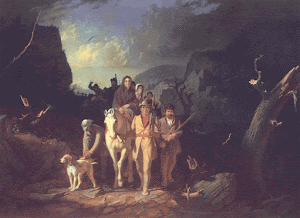
Among the things we already use numbers for are waves and specifically wavelengths. I've had a theory all my life about sound waves. I learned very early about the doppler effect of sound, the noices emanating from a fire engine siren or the old rotating fire alarm that was located on the old Okolona Fire House when it was still located on Blue Lick Road. I played little league baseball in the Okolona Little League, whose fields at the time were the remnants of the Shirley Neblett farm at the corner of Preston Highway and Blue Lick Road. My first year in the minor-minor league, we played on a field that is now occupied by the McDonald's just off that corner to the south. Later a Kroger was built as part of the Southwinds Shopping Center. Later, the entire little league was relocated to new fields and facilities on the back side of Southern High School, about one mile south of the original location and a new Home Depot was built on the former little league and women's club site. Mr. Neblett (whose son Bill was a friend a mine who passed away just a few weeks ago, and whose twin grandsons, also friends of mine, Mark and Neil, were born on the day President Kennedy was assasinated), gave part of his farm for the little league, another part for the Okolona Women's Club, and yet another part for the Okolona Fire House. Of the three entities, only the firehouse building remains, serving now as a senior citizens community center called the Wilderness Road Club, in honor of Preston Highway being the western terminus of the Wilderness Road which plays such a large part in Kentucky's history, entering the state at the opposite end, through the Cumberland Gap, made famous by George Caleb Bingham's oil on canvass painting in 1851 known as "Daniel Boone Escorting Settlers through the Cumberland Gap." But, I digress - but someday I will write about the Wilderness Road as it meandered through northern Bullitt and southern Jefferson County, from Bullitt's Lick west of present day Shepherdsville, to the Fish Pool Plantation near what is now Cooper Memorial Church, where it branched, one branch going to Buechel along the present day [Old] Shepherdsville Road, while the other one went north along the Preston Street Corduroy Road to the area called Poplar Level on the Clark family farm (near George Rogers Clark Park), and then to the Falls of the Ohio, closing in on present day Portland along what is now 26th Street.

Playing baseball at the little league, games were interrupted whenever the fire alarm sounded. The alarm was a yellow box with four speakers mounted on top of a red pole. It sat out just beyond the fence in the first base line of the minor league field. When it sounded, it rotated, calling the volunteers in from the proverbial four corners of the Okolona District, to go and fight the fires. (This was in the days before cell phones, pagers, and PDAs. Heck, some people didn't even have home phones). As the alarm rotated, the noise coming from it waxed and waned as the speakers went past. The alarm would sound for three minutes, which is an eternity if you are eight years old standing in right field, with very little to do anyway. But, the ebb and flow of the sound left an impression on me about soundwaves. Very little in pure science has ever really caught my attention, but due to an interest in history and politics, this did.

Historical events are often put to paper after the actual occurence, somtimes long afterwards. But even when there are eyewitnesses making the recording, there are likely to be differing accounts of what actually happened. Only with the advent of wax recordings, then later tape recorders and 8mm film, and progressing through to pictures on cell phones and instantaneous you-tube viewing has history become so easy to properly record. Now imagine if you could invent a device that could hear sound waves, much as your ear does. Hearing aids are just such an invention. They pick up a sound and magnify it so that one can hear it better. We've all experienced hearing a train bell in the distance, or the noise from Thunder Over Louisville, even when we are a mile or two away. When I was a kid out on South Park Road, we would often hear the practice bombs exploding at Fort Knox, some fifteen to twenty miles to the southwest. We know that sound, like light, travels at a given velocity. We've been taught that the light we see from the sun isn't instant, but has travelled over time. The same is true for sound. Sound travels over time, and as time goes by, the height of the sound waves becomes increasingly shorter - but there is still a wave, an up and down motion as the sound travels out into space.

In my theory, which I absolutely believe to be true, each and every sound ever made, is still out there travelling as waves in heights in an ever decreasing fashion. If a receiver could be invented that could pick up these diminished sound waves, we could hear the voices of the past, as their words are still out their bouncing around. We could hear President Lincoln's actual allegedly high-pitched delivery of the Gettysburg Address in 1863, or Napoleon Bonaparte's Farewell to the Old Guard in 1814, or President Washington's Farewell Address in 1794. If we fine-tuned the receiver, perhaps we could find Queen Elizabeth I in 1588 addressing her troops at Tilbury, or the Sermon on the Mount delivered by Jesus Christ around 30, or even further back the Apology of Socrates, 400 years before the birth of Christ. Those waves are there and the true recording of history is to be found when those waves are found and the sounds recreated.

And all of these things are based in numbers. Everyone has a favorite number. Mine is 31. This is post number 31.

Sunday, February 4, 2007

30. We believe in One God, the Father . . . .

Have you picked up your 2007 Kentucky Travel Guide yet? Among the various places to see in Kentucky is a new listing for the Creation Museum, located on the Bullitsburg Church Road in Petersburg, a small community in Boone County, northwest of Florence where KY 8 meets KY 20. I haven't been there but I understand it to be a museum dedicated to showing that all of God's Creation was actually created just as outlined in the first few chapters of the Book of Genesis, itself the first book of the Bible. (I'll point out here that scholars do not believe that Genesis was the first written of the books of the Bible; they ascribe that distinction to the Book of Job, written somewhere between 2100 and 1800 BC, while Genesis is 400 years younger, having been penned around 1400 BC - BCE, as many folks now write).

If you didn't know, an Archbishop of Armagh (Ireland), James Ussher, who lived from 1581 to 1656 CE, declared that God created the heavens and the Earth on October 23, 4004 BCE. He went on to say that Adam and Eve were evicted from the Garden of Eden on November 10, 4004 BCE, and further, that Noah's Ark made landfall on Mount Ararat on May 5, 2348 BCE which, according to him was "on a Wednesday." The Creation Museum is dedicated to preserving this story of God's creation according to this timeline, and includes everything that has happened as part of that timeline, including geological formations (such as Mammoth Cave) otherwise believed to be millions of years older, as well as the idea that Noah took "baby" dinosaurs aboard the Ark during the Great Deluge. There are figures of dinosaurs as well as one of Adam on display.

As someone who is quite sure they believe in God, I am also quite sure that the account given in the Bible, as well as Archbishop Ussher's suggested calendar, are both just that - suggestions. Actually, the seven day story of creation, while beautiful and encouraging with its nightly close of "evening came and morning followed," is certainly not something that really happened the way Moses, its traditional writer, said it happened. At least that is what I believe. You are free to believe as you choose. That is one of the heralds of our great Republic, that its citizens are free to worship God, or anything else, or nothing at all, in the manner they see fit.

Growing up, religion was a part but not an integral part of the house I lived in. After my parents divorce, my mother, my brother, and me went to live with my mother's parents. They weren't church going people, although both were members of a church, my grandmother of the Choateville Christian Church, (ironically) on Devil's Hollow Road in Frankfort; and my grandfather of the Carlisle Avenue Baptist Church in South Louisville. My mother was also not a church going person, although deeply religious and an example of some of God's most outstanding work. As a youth, she joined the Third Avenue Baptist Church in Old Louisville where she was raised. She maintains a membership there to this day.

My brother and I attended church from time-to-time with the neighbors, although never with the immediately next-door neighbors, as they were Catholic like my father and that was one church we were encouraged not to attend. Since the Okolona Christian Church was the closest Christian church (the denomination of my grandmother), we began going there. Later we would go to the Mount Holly Methodist Church in Fairdale with the Helton's, and later the Thixton Lane Baptist Church out on the county line in the middle of nowhere with the Shumate's. My brother and I eventually joined Thixton Lane and were baptised there in April, 1974. I was 13, he was 12. For the record, my father, a non-practicing Catholic but Catholic nonetheless, objected to these baptisms of me and my brother, as we had both been baptized at birth into the "One True Church," presided over by the Bishop of Rome. Eventually we both stopped going to church as a habit.

When I was in 11th grade, a friend of mine, Steve Bensing, invited me to his church, Holy Family Catholic Church, where a number of my high school friends attended as well as my father's brother and sister-in-law, and so I went off and on to church with him. When I went away to college the first time, I became enamored with the both the ritualism as well as the social justice emphasis (and near socialism) of the Catholic Church and began attending services at the Saint Rose Newman Center on Rose Street in Lexington. I enrolled in "Becoming a Catholic" classes and eventually "graduated" and was told I was prepared to be baptized (again) and confirmed into the communion of the Catholic Church. But, as always, I moved slowly. The following spring, in May, 1979, I formally joined Holy Family Catholic Church, was rebaptized (again over the objection of my father who insisted I was already "in") and confirmed on the same day by Father Clifford Reide, who that day was leaving his assignment at Holy Family, and thus I was his last official act as Holy Family's priest.

I've been an active member of my church for nearly 30 years, participating in most every event held, including being a Bingo caller on Sunday nights since 1984. As I have for the last 22 years, I'll be calling Bingo tonight while most everyone else will be cheering for either Indianapolis or Chicago. (For the record, I'm for the Colts). I been a lector at Mass, a collection taker, a summer camp chaperone, grass cutter, painter, and any number of things over the years. I have a great church family at Holy Family. But, while I am happy with my church (little "c'), I'm not happy with my Church (capital "C"), which has veered far to the right in its official pronouncements emanating from Rome, far from the credo of social justice and the rights of all beings taught and held dear earlier in the 20th century. If the Catholic Church were closer to the precepts taught by the United States Council of Bishops, the Catholic arm of the mother church in the United States, I would be alright. But all to often those views are well to the left of the official mores being spoken from the chair of Saint Peter, especially under Pope Benedict XVI, the former Bishop Jospeh Ratzinger, one of the more conservative leaders of the Church who was elevated to Pope in April, 2005.

I saw this move early on and in 2003 decided I would take five years to determine if my home church of 25 years would remain so. I roamed through the doors of a few other churches in trying to make this decision, and am still undecided. I regularly attend Mass now at an Episcopal Church on Baxter Avenue. It is a very small congregation compared to Holy Family, with only 15 to 20 persons attending the service as opposed to the two hundred or so I am more accustomed to. I've visited the United Church of Christ as well as the Unitarian-Universalist church, but so far, only the Episcopal church offers the ritual and liturgical importance combined with a sense of social service and justice, the elements most important to me in finding a church home.

As to the Unitarian and Universalist traditions, I will admit the ideas they promote are appealing, but their very unstructured worship I find unsuitable. I am probably more Unitarian than Trinitarian, and am certainly a Universalist, believing that we are all God's children, God's creation, and as such, subject to a loving parent's desire of well being for their own. As with the birds of the air and the fish of the sea, I am confident that God's want all of us to be happy and that, ultimately, He will call all of us home to a life of perpetual happiness in paradise. I really do believe that. But there is no ritual based, liturgically structured, and apostolically succeeded Universalist church. If there was, I'd probably join.

This much I know I believe. The first four words of the Bible are a guidepost for me, "In the beginning God . . . " The way they are written, in English at least, implies that when the beginning began, God was already there. In fact, He began the beginning. In the beginning, God did something which caused the beginning. I believe he struck a match and caused the Big Boom. The rest, evolution and otherwise, is, as they say, history.

In the beginning God. That's probably a pretty good creed. It works for me.

Saturday, February 3, 2007

29. Police Pursuit.

"Running from police was a mistake that unnecessarily cost 18-year-old Montrell Mucker his life, his family said yesterday. "It was a mistake a lot of young people make," said Joyce Mucker, his grandmother."

That's how a Courier-Journal story begins today, with questions from the grandmother of Montrell Mucker, an 18 year old, who broke the law, then tried to outrun the police on foot, after bailing out of the car he was driving. He died of injuries sustained when the police cruiser chasing him apparently hit him. From the pictures on the news, the cruiser was up on the curb when it came to a stop. The "accident" occurred in an African-American neighborhood at 23rd and Dumesnil streets, where Dumesnil becomes a narrow one driving-lane street, after making the curve around the northside of the Lyman T. Johnson Middle School. As a cross-street, 23rd is similarly narrow. I'd be asking questions, too, the main one being why were the police chasing someone with a car, who themself was on foot? But asking questions of the police department in this town somehow makes someone unpatriotic, or soft on crime, or another such negative connotation. Several weeks ago, someone, another person breaking the law, being pursued by the police ran the redlight at 1st and Breckinridge streets and struck three small children, killing one of them who was eleven years old.

In each of these events, the persons being chased were black. And, the child killed at 1st and Breckinridge was also black. Police chase white lawbreakers as well, with the same tragic results. On Wednesday morning, July 24, 1991, police were in pursuit of two white males on a stolen motorcycle, one of whom was not wearing a helmet, at the time a violation of the law. The police knew the passenger did not have a helmet. According to reports at the time, the chase advanced to speeds of 80 miles per hour through Germantown and Old Louisville before heading out Preston Highway. At Standiford Lane and Preston, the motorcylcle slammed into a truck broadside and 17 year old Joseph Robert Spears, the passenger, died.

It is appropriate to point out that in the deaths of these two teenagers, Mr. Mucker yesterday, and Mr. Spears in 1991, both were being chased because they had violated the law. Both lost their lives as a direct result of their own actions. The death of Demetra Boyd on January 6th was an unforutnate instance of the girl simply being in the wrong place at the wrong time, the time happening to be when Donta Jones, who had stolen a purse on 4th Street, was being hotly pursued by police through the streets of downtown Louisville.

One question which should be asked is what, if any, guidelines are there which determine if pursuit at high speeds on city streets are absolutely necessary. Does stealing a purse justify a high-speed chase ending in the death of an eleven year old? Does stealing a motorcycle justify a high-speed chase ending in the death of a seventeen year old, albeit one of the two persons who stole the bike? In my opinion, an opinion which is likely to find disagreement among some of my readers, the answers is "maybe, maybe not." That is to say, I don't have a good answer. I understand and support the idea that the police need the tools necessary to solve to solve crimes and that not having the tools necessary to do so causes their work to go unfinished and inevitably heaps on them an equal amount of criticism.

Having worked in and around the corner of Sixth and Jefferson streets (the government hub for Louisville-Jefferson County Metro) for most of my life, I have many friends in the law enforcement business, whether they be Metro police, deputy sheriffs, or commonwealth's investigators. I myself was a deputy sheriff very young in my life. I have only a few, maybe three, police officers who I would call close personal friends. I know their demeanor as an individual is different from that as a police officer. And they do a job very few of us would, but they are also very well paid if they stay at it for any period of time. I believe our police officers and sheriffs to be highly trained and I am appreciative of the necessity of such training. But I also believe that it takes a certain type of person to do this type of work, and among those types, some overstep their bounds of authority with regularity.

Everytime I drive an interstate highway, at some point I am passed by either a police cruiser or someone driving a car with one of those FOP license plates. Most often, they pass by me at high rates of speed. Some perhaps are on assignment. Many, obviuously, aren't. They often have their children or wives or husbands (or boyfriends or girlfriends) in the car, and usually are indifferent to others who are driving at the posted speed limit, riding their bumpers until they yield the fast lane to the police. This morning I was en route to a breakfast held in the Highview area. Driving east on the Snyder Freeway from I-65, I was passed by an Audubon Park police car [their cars are incorrectly identified as "City of Audubon" as opposed to "City of Audubon Park," the appropriate name]. When the officer passed me, I was doing about 70, five miles over the posted speed limit - it may even be 55 at that point, I am not sure. The "City of Audubon" cruiser was easily going 80 miles per hour. He exited at Smyrna Parkway, turning south. The City of Audubon Park is a very nice upscale enclave of 100 year old homes for the most part, located between Preston Highway and Poplar Level Road, about 1 and 1/2 miles north of the Watterson Expressway, and approximately ten miles north of where this particular cruiser was driving at speeds well above the speed limit early on a Saturday morning. Why was he going 80 miles an hour on the Snyder Freeway ten miles south of the city from whose tax coffers he draws a paycheck? I have no idea. But it bothers me. But it doesn't bother me nearly as much as when someone is killed while being pursued by the police for some infraction of the law which in my opinion the need would not arise to be in such pursuit, at high speeds through well populated areas.

I understand there are instances when such pursuit is warranted. Whenever the life of someone, including especially a peace officer, is endangered, then pursuit is necessary. Demetra Boyd died because Donta Jones was being pursued after having stolen a purse. Joseph Spears was being pursued initially because the tailight was out on the motorcycle upon which he was riding. It was only after the pursuit began that police found out the bike had been stolen. Montrell Mucker had bailed out of the car in which he was driving erratically (someone else assumed the wheel and has not yet been apprehended) and was on foot when struck and killed by a police cruiser.

The grandmother is asking questions. I think she should be.

Friday, February 2, 2007

28. On the passing of Mrs. Lillie Chandler

First, it has snowed some more. The snow started around 4 am and continues at this point. It is scheduled to end later in the day. Hopefully, it will end before nightfall, as I have a funeral wake to attend on W. Broadway at G. C. Williams Mortuary. The deceased was Mrs. Lillie Chandler, 73, an African-American woman I have known for several years, meeting her first because she lived across the street from my friend, the former Louisville alderwoman and councilmember Denise Bentley, who is herself best known for supporting Anne Northup in her various races for office, including her most recent one losing to John Yarmuth last November, and by such support causing a truce to be drawn between she and I so as not to discuss the race and thereby endanger our relationship. Denise and I made it amicably through the election. Mrs. Chandler allowed me to place one of John Yarmuth's yard signs on her property, as she has done for me with other candidates I have supported, among them Ken Herndon, whose 2006 sign for re-election as the Jefferson County Judge/Executive also found a home in Mrs. Chandler's yard.

Over the years, I had done a few odd jobs for Mrs. Chandler including moving some furniture and mowing her lawn. But Mrs. Chandler made her mark in my book by her cooking. Knowing I was a bachelor, and admittedly not much of a cook, Mrs. Chandler would often call over to Denise's if my truck was in her driveway, asking if I had eaten or not. To be honest, Denise has fed me pretty well at her house, as she also has at home a 16 year old son, who is a star player on his high school football team, and thus requires a substantial amount of food which Denise readily maintains in her cupboard. Nonetheless, whenever Mrs. Chandler offered, I accepted, usually taking the food home in some container for later enjoyment. Rather like a corner diner, the take home meals consisted of an entree, fried chicken especially, and two or three veggies, one of which was always green beans, cooked with plenty of bacon fat, and a healthy dose of onions. Then, there was dessert. Cobblers, pies, and some cake, although I'm not a cake eater, I never turned any of it down.

One of Mrs. Chandler's sons, Todd, who is my age, is a driver for Louisville's sanitation department. Todd, Denise's son Marcus, and I once moved a large television set for Denise from Old Louisville to her house off 34th Street near New Zion Church. With Todd at the wheel, the trip was made as if on one of the Sanitation routes, through sides streets and alleys, as opposed to the main streets one would normally travel. I usually see Todd, as I did this year, at the McDonald's before the Martin Luther King motorcade begins each year on King's federal holiday, dressed to the nines.

I do not know what Mrs. Chandler did in her work life, if anything. I only knew her in retirement as the lady across the street from Denise, who could cook for an army. Her funeral is tomorrow at 11 a.m. at her church, King Soloman Baptist, 1620 Anderson Street. She will be buried in Green Meadows Cemetery.

On a different and unrelated note, yesterday I ranted some about America and its handling of immigrants, both legal and illegal. Today, I read a story, which I have linked below, which only makes me madder. We, that is, our country, which effectively is you, me, and the other 300 million souls who are residents of our sovereign Republic, have created a sort of holding prison in South Texas, where we house, sometimes for months and maybe years, illegals of non-Mexican heritage. These people are treated the same way as terrorists and murders. While agreeing they have entered illegally, this kind of treatment is wrong. I could go on, but I wont as it would require popping another blood pressure pill. Just read it for yourself.

Happy Ground Hog Day.

http://www.washingtonpost.com/wp-dyn/content/article/2007/02/01/AR2007020102238.html?nav=hcmodule

Thursday, February 1, 2007

27. Whither America?

Today's big news?

1. Tana Conner used cocaine? Miss USA; remember her?
2. President Bush announces there is an income gap between the rich and the poor. Where has he been sleeping? In the Chamber of Commerce's spare bedroom? It reminds me of when his father learned that supermarkets used scanners to read prices. Just who are these people?
3. The governor passed out more tax breaks yesterday, this time to military personnel who honestly probably deserve a break. Is he running for something?
4. This item may really be news, or may not; we'll know in a year or so. Barbaro had a full blood brother colt - same sire, same dam - who is two years old and living on a farm outside of Lexington. He is being sent to Florida for training.

Back in December, Stuart Perelmuter, a local screenwriter and actor, educated at and a graduate of the Fine Arts program at Syracuse University and recently appointed Press Secretary for newly-elected Third District Congressman John Yarmuth, sent me an email concerning immigration. He has asked me to communicate with a Maria Ramirez of the local ACLU about a program the KCCIR (a statewide immigration reform movement) is planning to put on soon to educate folks in Kentucky about immigrants and their place in our society. Maria and I have exchanged emails and are scheduled to have lunch soon. The KCCIR has a program director for this project and my role will be as an adviser, perhaps.

I am known to be fairly liberal on a number of issues, certain gun rights, private property and land use and/or zoning matters not being among them. On immigration, I am well to left of most liberals and most anyone else on this matter. The by-word in the campaign office, not entirely in jest, was my strong support of both free love and free borders. To start with, I do not favor the "Wall" along the border, the one that has Tancredo and his crew celebrating about 700 miles of blockage, while a handful of illegals are also celebrating, but at milemarker 702 along the route.

I will readily acknowledge there is a problem with illegal entry into our country. The problem is manifold, and not entirely to blame are those actually making the illegal entry. Others who should share in the blame are the governments of both the country from which thse folks left as well as ours which they are entering. Countries south of the border need to do more to keep their folks at home. We need to find ways to help those who wish to enter to do so legally. Rather than throwing up walls, both literally and figuratively, we should be throwing up welcome centers. We could use the words from the base of the Statue of Liberty as a greeting sign.

In my life, I've met many immigrants, particularly those from Latino countries as well as a number of Middle Easterners. Most have come here as some form of refugee. Most are gainfully employed, paying taxes, enjoying the benefits of their work and of their life. Some are not employed, and some may very well be illegal. There is an economic argument made on both sides of the immigration argument as to whether or not immigrants cost money or make money for the taxpayer. Those who use illegal social security numbers are to some extent inadvertently sustaining that system, as there will be no way they will ever draw on the money they pay in through their (or someone's) social security number. Arguments are made that many of these illegals will work for wages at or lower than the going rate for Americans. That is true. Arguments are made that these illegals are taking jobs from Americans. I believe that is a little hyperbolic. They are, for the most part, taking jobs that Americans have not or will not do. If Americans would do these jobs, they wouldn't be available.

In my post on President Bush's State of the Union address, I stated I believe one the ways to improve our immigration program is to pursue a program of amnesty. The president said he isn't interested in this, although I personally do not believe him. I think he, personally, probably recognises the opportunities in an amnesty program. Several years ago, under Clinton, America passed a welfare to work program, moving folks from the welfare dole to a payroll. How well it has worked I do not know. In an amnesty program, we could move a number of people from the black market to the tax rolls. This is a good idea. The more people legitimately paying taxes in our country, the better off we will be. I am surprised that conservative Republicans do not see this idea as a good thing. As they are in the habit of cutting the amount of taxes we (the government) receive, mostly from their friends, here would be a ready source of tax dollars, and one that very few of their well-designed tax breaks would ever effect.

All of this was sparked by a news item I read in the Washington Post on an increase in fees the U. S. Citizens and Immigration Service is proposing. One fee would rise from $325 to $905. A second one doubles to a total of $455, from $225. Another increases from $330 to $595. While much of what I've written above concerns illegals, these fees are for people we have already let in, and often times encourage them to become citizens of our great Republic - at a cost. That's really egregious behavior on our part. Are we inviting people in so as to make a few bucks off them?

Now I know I have made these few arguments rather simplistic and this issue isn't. I just do not understand why America insists on being a bully in this regard, other than the fact that we tend to be a bully in most regards, as we relate to the international community. We used to be proud of our melting pot. Now we are proud of our insular attitude toward non-Americans. I, for one, am not proud of it at all and I do not find any purpose in such haughtiness. And I think a lot of the problem along our border to the south isn't economic at all. These folks aren't European. In other words, they aren't white.

Here below is a link to a report given to a subcommittee of congress last summer pertaining to immigration in Kentucky.

http://www.kccir.org/kccir/Important%20Documents/Dr%20Kirby%20Neil%20Paper%20on%20Undocumented%20Immigrants.doc

By the way, the real news of the day is of a much lighter nature than the serious discussion above.

They finally did it, they finally got it right. The weather forecasters called for one to two inches of snow, and snow actually fell, and in some places fell to the height of an inch or so. It began about 2:00 am, meaning that January went basically snowless here at the Left Bank of the Ohio near Milepost 606, but February is off to a good start.

One final note: RIP Molly Ivins, Queen Writer of the Progressives, who died today in Austin, Texas, her home. I listened to her speak and met her when she spoke here in Louisville at the ACLU Annual Dinner in August, 2004. Raise More Hell, Molly.


A poem by Emma Lazarus


Not like the brazen giant of Greek fame,

With conquering limbs astride from land to land;

Here at our sea-washed, sunset gates shall stand

A mighty woman with a torch, whose flame

Is the imprisoned lightning, and her name

Mother of Exiles. From her beacon-hand

Glows world-wide welcome; her mild eyes command

The air-bridged harbor that twin cities frame.

"Keep, ancient lands, your storied pomp!" cries she

With silent lips. "Give me your tired, your poor,

Your huddled masses yearning to breathe free,

The wretched refuse of your teeming shore.

Send these, the homeless, tempest-tost to me,

I lift my lamp beside the golden door!"

The Archives at Milepost 606

Personal

Louisville, Kentucky, United States
Never married, liberal Democrat, born in 1960, opinionated but generally pleasant, member of the Episcopal Church. Graduate of Prestonia Elementary, Durrett High, and Spalding University; the first two now-closed Jefferson County Public Schools, the latter a very small liberal arts college in downtown Louisville affiliated with the Roman Catholic Sisters of Charity of Nazareth. My vocation and avocation is politics. My favorite pastime is driving the backroads of Kentucky and southern Indiana, visiting small towns, political hangouts, courthouses, churches, and cemeteries. You are welcome to ride with me sometime.