Thursday, March 8, 2007

58. Precinct Conventions, LD Elections, and Democratic Executive Committees

It is seventy-five days until Democratic Primary voters determine who the next governor will be. On that same day, Republicans will determine the name of this fall's second place finisher in the race. I can't see any of the Democrats losing this fall with the possible exception of Otis Hensley, who no one seems to know. I've stated my support for Jonathan Miller, the incumbent State Treasurer, as his running mate Irv Maze is a long time friend, employer, and good Democrat. Irv and I first met in 1980, the year we each sought seats on the local Democratic Executive Committee. He was running for Chair of the 46th and I was running for Vice Chair of the 45th. The 46th, represented since 1984 in Frankfort by the current Speaker Pro-Tem, Larry Clark, is largely unchanged since that time, while the 45th, then represented by former Democratic State Representative Dottie Priddy, has been redistricted away from the conservative south end of Jefferson County to the conservative south end of Fayette County, where it is presently represented by Republican Stan Lee.

Elections for Chair and Vice Chair of a Legislative District, treated as the equivalent of the Chair and Vice Chair of a County elsewhere in the state, are the second part of the beginning steps of a quadrennial rebuilding of the entire Democratic Party, starting at the precinct level, moving up through the district (or county) level, then to the congressional district level, then to the state level, and culminating in a national convention which ultimately and technically nominates the Democratic Party's candidate for president in that fall's election. The process usually starts in April of a presidential year, which means we are just over a year away from commencing our reorganization.

In the past, the local Party has not done enough to publicise this series of events, and as such, many Democrats never understand or get involved in the process. But, it should be noted that all registered Democrats are eligible to participate at the first and most basic level of this reorganization, the precinct convention. The rules of the National, State, and local Democratic parties open the process up to any and all registered Democrats. When new blood does get involved, it has been my experience that the "Old Guard" throws up every available barricade in order to protect their revered seats on the committee. They have changed the rules mid-course, not properly held precinct conventions, or in some cases, not properly counted the votes from precinct conventions where the outsiders prevailed. As someone who has been involved in every precinct, legislative, county, congressional, and state convention since I was first eligible in 1980, I have seen it all.

Back then, when legislative district chairs and vice chairs still had some patronage power, holding onto the seats was understandable. It may not be popular these days, but I am still one of those who believe that good politics and good government make for good bed-fellows. They can and should feed off each other. There were times when the precinct captain in a given area was the person people went to when they needed help from city hall. Sometimes it might have been for a job, or to right a wrong, or to wrong a right - that would be when they got a ticket for speeding but wanted to get it set aside. A friendly precinct captain could go to a district judge, or one of the green jackets, and find some help in most cases, thus eliminating some paperwork down the line. Jobs, especially works and sanitation jobs, were the jackpot of political patronage. And one must ask, what is really wrong with such an operation? Providing jobs puts spending money in the pockets of the employees, some of which comes back as taxes in the coffers of the employers.

Since the mid-1980s, at least in Jefferson County, the patronage part of being on the Executive Committee has more or less fallen aside. But, people are still interested in the position, at least in theory. They want to know how the elections are held, who is in change, and what are the rewards. Even without the role of finding jobs and fixing tickets, chairs still protect their seats. In order to run in Jefferson County, a person must file for the office. In the 2004 cycle, the folks in charge changed the rules several times during the course of the elections, at one point only having the filing period open for a span of four hours on November 1st. That decision and several others they made during the course of the election were challenged at the State Party level, and were overturned. But, it was logistically too late for most of those candidates to mount any successful campaign at that point.

The process starts with the local (incumbent) County Executive Committee determining the nomination process, whether it will be necessary to file or declare, whether one can seek more than office (one of the rules that changed, then changed again in the 2004 process), and whether one must run on a slate. I've been involved in tinkering with these rules in both the 2000 and the 2004 elections, and I am not sure which process best serves the Party and the parties involved, namely the registered Democrats of Kentucky. Once those decisions are made, candidates need to start lining up support for the Precinct Convention day.

Precinct conventions are usually held the first or second Saturday in April at 10:00 am. Voters gather at the entrance to their polling place from the previous November and conduct an election. Since most of these polling places are closed, the elections should be held at the main door where voters would normally enter to vote. The convention is called to order by a Temporary Chair, someone who has been appointed by the incumbent, and thus is probably there to ensure that incumbent's reelection. Any Democrat in the precinct is eligible to participate, as long as they had already registered to vote. Usually the cut-off date is 30 days prior.

The first order of business is to elect a permanent chair to replace the temporary chair. Then an election is held to elect a secretary to record the business. Then a committeeman is elected. Then a committeewoman is elected. Then a committeeyouth, someone aged 35 or less, is elected. These three people form the Precinct committee. Their election concludes this convention. It is only at this level, the precinct level, where any and all Democrats are allowed to participate in the election of the executive committees members. There is a later Congressional convention which is also open to all Democrats, but the purposes there are related to the state and national conventions, and not the local level executive committees. If you do not participate at this level on this day, then you have voluntarily shut yourself out until the next cycle four years later.

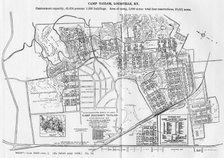
Let me point out here that participation has, for the last twenty or so years, been minimal at best. In 2004, I was the only person present for the election in my precicnt, M-144, which voted at the AmVets Post on S. Shelby Street. I elected myself permanent chair, recording secretary, and committeeman. I elected my friend Tootsie Privett committeewoman. I did not elect a committeeyouth, as I did not know anyone 35 or under to nominate. Not all precinct elections are that easy, but many are. In 1996, my precinct election was held amidst a big storm. H-121 voted at the old Camp Taylor Fire House on Lincoln Avenue. During the five minutes I was there, the tornado sirens went off. I had picked up Beverly Wright and driven her there with me for the election. It was conducted in the front seat of my truck. We elected me as committeeman, her as committeewoman, and Mike McDermott as committeeyouth, although he wasn't there at the time. Mike was and is a big boy and would not quite have fit in the truck with Beverly and me. But, in that first election, back in 1980, where I was elected committeeyouth in precinct P-128 at Blue Lick Elementary School, approximately 40 people were present. Jim "Bud" Priddy was elected committeeman, Carolyn Beauchamp committeewoman, and me as youth. I wasn't there though. I knew that in order for us to win the entire district, our team must carry the vote in P-102, which voted at Okolona Elementary School, and was the home to our team's opponent Ed Louden, and Ed's strongest supporter, then-State Senator Bill "Fibber" McGee. Fibber has enough children in his own family to carry most precincts. But P-102 had the largest number of Democrats of any precinct in the 45th and I wasn't going to let Ed have it without a fight. Working through my little league baseball friends, as well as Mimi Beauchamp's friends from Southern High School, where she had gone but I didn't, we loaded the place with a whole bunch of 17, 18, and 19 year olds that Ed didn't know existed. So I gave up my vote in P-128 and went up to P-102 as an observer - and to keep Louden honest. And we won by beating him in his own precinct. The important thing here is that one must understand and participate in the process to be a part of the process. Rules are laid out, allegedly publicised, though admittedly not very well, and elections follow. Process is important.

I mentioned above that we had to carry P-102 because it had the most Democrats. This is informative. Precincts conventions produce weighted votes. Each committemember's vote is worth one/third of its precinct's ratio of Democrats against the total number of Democrats in a legislative district. Let me make this as simple as I can. Lets say that an LD (legislative district) has 3 precincts and a total of 2000 Democratic voters. Precinct #1 has 1200 Democrats. Precinct #2 has 600 Democrats. And, precinct #3 has 200 Democrats, for a total of 2000 Democrats in the LD. A committeeman, committeewoman, and committeeyouth are elected in each of the three precincts, so you have a total of nine committeemembers voting. However, each one does not have 1/9 of the vote. Again, they have 1/3 of their precinct's ration against the whole district. Thus the committeeman in Precinct #1 has a total of 1/3 of 1200/2000 or 20%. If you controlled the vote of the three committee members of Precinct #1 you control the election, as you would have 60% of the total. This is where that 12th grade calculus class comes in handy. You end up doing lots of figuring if you are in a contested race.

Either that same day, or a week later, at 2:00 pm, all the committeemembers elected from each precincts attend an LD convention. The location of this convention is controlled by the incumbent, so hereto, the system is designed to counter any outsiders. In my race in 1980, Ed Louden, the incumbent we were trying to defeat, decided to hold the convention at Fibber McGee's Tavern, a watering hole on Preston Highway at Pinecroft Drive. It is still there, although Fibber himself passed away several years ago. Many of my delegates were members of either Gethsemane or Thixton Lane Baptist Church, including a number of temperance women in the 60s and 70s. Further, I was only 19 years old and thus not legally supposed to be in a licensed drinking establishment. The belief was some of our folks wouldn't darken the doors of a tavern. They were wrong. I remember Mrs. Stallard, who was one of the Baptist Womens Union people on our side, a 78 year old committeewoman in the Mount Washington Road precinct which at the time voted at St. Elizabeth Seton Church. Not only did she attend the convention, she wandered up to the bar and ordered a Sterling Beer in a longneck bottle. Fibber confided in me at that point that we would likely win the race. And, I'll point out, we did. (By the way, Irv won his race as well, although only by a mere thousandth of a vote, and only after five challenges. He has won very race where votes have been counted and his name has appeared on the ballot since that time).

Again, it is all process. We'll go over all of this again at a later date - maybe several times. The reorganization is a great time to get involved in the Party. The only prerequisite is being a registered Democrat. As 2006 was a good year for us, and we are all woriking to make 2007 similarly so, the reorganization also works as a catalyst in those most important of years, presidential elections.

Stay tuned.

Tuesday, March 6, 2007

57. On service

A few days back, I posted a picture of America's Second-In-Command Darth Vader, aka Dick Cheney, speaking aboard the USS Kitty Hawk in Japan. I made the comment he was trying to get as far away from Scooter Libby as he possibly could. Scooter's trial was beginning that day, and today, Mr. Libby was found guilty on four of five counts of obstruction of justice and perjury. The Vice President's former Chief of Staff has been involved with at least one other high profile criminal, Marc Rich. Remember Mr. Rich? He was a bondtrader, among other things, pardoned by former President Bill Clinton hours before he relinquished the keys to 1600 Pennsylvania Avenue NW to the Usurper Bush. Rich's attorney during most of his prosection was Mr. Libby. Rich never appeared in court; he has been on vacation in Lake Lucerne, Switzerland since sometime in 1983 when charges were first brought against him then-United States Attorney Rudolph Guiliani. Isn't it a small circle the rich and powerful seem to always run in?

Prior to joining the U.S. Attorney's office, Guiliani clerked for United States District Judge Lloyd MacMahon, of the Southern District of New York. As an undergraduate and law student, Mayor Guiliani managed to avoid the draft and any military service. Of course, went on to become America's Mayor for his heroic efforts in response to the events of September 11. Last week, in a poll of the conservative wing of the Republican Party, at its Conservative Political Action Conference (CPAC), Guiliani placed second, behind Mitt Romney, the former governor of Massachusetts.

At one time Guiliani and Romney shared similar views on subjects like gay rights, abortion, and religious tolerance. Giuliani hasn't wavered from his left-of-center and well left of most in the GOP views on these subjects. Romney, on the other hand, seems to looking for a home amongst the right wingers, flip-flopping on a number of issues, apparently convincinlgy enough for 21% of the voters in the CPAC poll, placing him first among the GOP contenders. But then you get to the #2 choice of the CPAC pollees and you must then ask yourself, "do these people have any real values?" The put the flip-flopper first. Their second choice was the socially liberal Rudolph Guiliani. Maybe they were thanking him for going after Marc Rich back in 1983. After all Rich's wife and in-laws were large contributors to Clinton and the Democrats a decade earlier. Short of that, it is hard to say why 17% of the CPAC voters want Guiliani to be their next president.

More votes were cast in this year's poll than in any previous year. I'm not too worried - last year these same voters put George Allen at the top of their list. The conservative star Allen, who has been married twice, like Guiliani also managed to avoid any service in the Vietnam War, for which he could have given some time. While he won the CPAC poll for president in 2006, his home state voters who knew him better defeated him in his reelection bid to the United States Senate. A large part of that defeat was predicated upon his racist comment toward S. R. Sidarth, a University of Virgina senior who was filming Allen's campaign on behalf of Jim Webb, Allen's opponent, and the eventual winner of the race.

The truth is, there are lots of "George Allen" types in the Grand Old Party. Not only is it the party of Gas, Oil, and Petroleum; it might also be called the party of Xenophobes, Homophobes, Racists, Bigots, and any number of other less-than-socially acceptable examples of poor behavior and attitudes. Here in Kentucky, we have folks like State Senator Dick Roeding who called gays the "wrong kind of people" for Kentucky. Martin Cothran claims to be against anyone using the Courts "for purposes that short circuit the democratic process” yet lauds President Bush's support of Intelligent Design, Bush being the poster boy for using the courts to short circuit the democratic process.

The bottom line here is that lots of politicians from both sides of the aisle seem to be hypocritical at times, and overwhelmingly so in some cases. On a political blog here in Kentucky, I've been criticized and called a hypocrite over my support of Jonathan Miller for governor, given that I had previously supported Steve Henry, and for continuing to post on another blog ran by a guy who has encountered some legal problems over his failure to pay taxes. That's called being judgmental in my book. The difference between how Democrats do it and how Republicans do it seems to be the amount of hubris involved. Republicans are holier than thou - and holier than most, on many matters. But their records tend to be hole-ier than that. Lapses of judgment, off-color comments, and just plain rudeness are hallmarks of how they operate. I like to think that I am not like that.

The Gospel of Saint Matthew, in the Seventh chapter, beginning at the First verse, says "Nolite iudicare ut non iudicemini" -- "Judge Not, that you be judged." Judgment should be left to others charged with such a task. Christians who believe in the inerrancy of the Bible - and not all of us do - consider the judgment of God as outlined in Revelation, Chapter 20, as a final judgment, that day when the dead stand before God and the book of their lives and deeds allows God to make such a judgment as to their eternity. On a more earthly level, we have systems of judgment here on earth; rites, rules, and rituals in place for centuries allowing a jury of one's peers to determine judgment for the wrongs inflicted upon society by an individual or a group. The idea of a jury, as I wrote my email-associate Nick Stump this morning, finds it roots in Athens in ancient Greece. It was outlined in writing as early as the Magna Carta in 1215, at Article 39. Those rights granted to the ciizens of England carried over in forming the system of laws in our sovereign Republic.

My friend Stump has been on "jury duty" for a few weeks. I commended him for his service, his duty to his fellow citizens. All of us have different ways to serve, some by election to political or public office, others by service on a jury. In the days of the draft, some were called involuntarily. Most who were went ahead and did their duty. Others took off to Canada, only to be later granted an amnesty of sorts by Republican President Gerald Ford, who served his country in the United States Navy, leaving the service as a Lieutenant Commander. A more general amnesty was granted by Ford's successor, Democratic President Jimmy Carter. Like Ford, Carter served in the uniform of the United States Navy on submarines in the Atlantic and Pacific fleets, although his service fell between two of the 20th century's conflicts, WW2 and the Korean War.

Among those for whom neither President Ford nor President Carter ever had to concern themselves about a request for Amnesty in avoidance of fighting on foreign shores in defense of our country's people and beliefs are the following:
George W. Bush, Big Dick Cheney, Mitch McConnell, Bill Frist, Dennis Hastert, Lindsey Scott, George Will, Bill O' Reilly, Rush Limbaugh, Pat Buchanan, Ralph Reed, Sean Hannity, Ted Nugent, and Anne Coulter. Why? They never enlisted for a foreign affair, thus they never went.

As a disclaimer, I didn't either. I am 46 and while there were no foreign wars when I was of the age to go, I did venture up to the Okolona Post Office, then located on Pinecroft Drive, and fill out the little card required of eighteen year olds at the time. It was my duty to do so and I did. Some of my classmates voluntarily entered the service - Tim Jansing and Scott Shearer are two names that come to mind - and Scott spent twenty years there, retiring at age 38 while living with his family in Tokyo. My father was an Army reservist, although he is now a big peacenik. George Bush's war caused my father to give up his lifetime as a registered Republican, as he switched to Independent in 2003. My grandfather who raised me was in the Seabees, specifically the 627th, 628, and 629th Divisions of the 114th Construction Batallionsof the United States Navy. My brother and I grew up with a flag outside our home and many of our social activities revolving around the calendar of the VFW Post 8639, on Lambert Avenue in Okolona. I have a great deal of respect for any of those who have or do serve. But I needn't pour any of that respect out on the current members of the junta controlling the residency at 1600 Pennsylvania Avenue NW as they did not fulfill their duty.

Six Hundred Eighty five days remain in the term of George W. Bush, the Usurper. Redemption draweth nigh.

Sunday, March 4, 2007

56. March Forth!

From time to time, all of us get into a rut, or at least into a routine, going to work each day, coming home, doing the same things each evening, and even our weekends tend to be rather mundane if we aren't paying attention. (Incidentally, rut and routine are etymological cousins, both ultimately from the Middle English word for route). James Whitcomb Riley called life "this lower mundane institute" in his poem My Philosophy. My Uncle Bob Lewis gave me a copy of the book The Complete Poetical Works of James Whitcomb Riley for my eighth birthday, which I still have in my library. He indicated a few poems therein for me to memorize and try to understand. Little Orhpan Annie and When the Frost is On the Punkin' and the Fodder's in the Shock were among those, along with My Philosophy, for which Uncle Bob indicated there would be a test later.

I think it is important for everyone to strive to overcome the "lower" part of Riley's so-called mundane institute. That is done by activity outside of the normal ebb and flow of a day's, or a week's, or a life's activity; that is, doing something in addition to what one is already doing. I believe this charge also includes finding not only hobbies but friends with which to share those hobbies. I worry about those who seemingly are plodding through this mundane institute without the support of close friends or even acquaintenances, people with whom you can share attendance at events, speak with about your thoughts, or sharing the ups and downs of everyday life. For many, this is probably a spouse; for others a partner.

A few nights ago, my friend Migael called me for a ride, as his car had broke down. He made the comment somewhere in the conversation that "a friend is someone you can call when your car is broke down, and their first response isn't 'How far away are you?' but rather 'Are you okay?' He was ok and I retrieved him from his immediate dilemma and helped to make arrangements for the car to be towed, thus removing him from his then-present predicament.

But then there are also times when these predicaments require not the help of a friend, but the internal will to make a change. These are the more difficult, and sometimes life-changing episodes we all encounter in the personal journeys we call our lives. For some it is to start a new job, or the bigger job, to start a new family. Or it might be a return to school, to finish a degree, whether a GED, a BA, or something higher. These are all decisions which are called forth from places within, rather than without. Several years ago, when I was contemplating going back to school, a friend of mine, former Jefferson County Sheriff Jim Greene, made it real simple. He asked 'How long will it take you to finish?' accompanied with the question 'How old will you be when you do finish?' He followed those questions with 'If you don't go back and do this, how old will you be anyway in the same period, having accomplished nothing?' He made the decision to go back to school rather easy, as if not going back would simply be foolish. He was right, and I did. I will add that Sheriff Greene went to college and law school at night over several years while working a full time job at General Electric. That was inspiration in itself.

Another friend whom I have mentioned a few times herein has recently began a real estate practice in addition to his "normal" forty-hour a week job. In a few short months, he has had some real successes. I tried real estate when I was in my twenties, but did not enjoy it. My father made his career in real estate, property management, and being a landlord, and I did it mostly because he wanted me to. But, I sold very little and, after keeping my license in escrow for several years, eventually let it lapse in the late 1990s. There are two things I do want to do before I get too old. One is try law school again (the first attempt didn't work); the other is to have about five acres somewhere and be some sort of gentleman farmer. I'm not sure which one is more attainable and I hope to do both. There are several books about the latter, one called Five Acres and Independence is a popular read. Returning to law school requires scoring high enough on the LSAT and finding a school that will have you. I would need to go at night, and closeby, that means either the Brandeis School of Law at U of L or the Chase Law School at Northern Kentucky. U of L has talked about dropping their night school program, but I don't think there has been a final decision.

The point is, now and then, one must hear and act upon a call to action. I've taken my time working my way into the new year, 2007, as the old one, 2006, provided me with just such a call to action; quite a diversion in the form of working for the successful John Yarmuth campaign for Congress. People usually do things like that when they are younger. I was 45. I don't know what it is I want to undertake, only that I am leaning toward doing so. I might need a few more months to convert the "leaning toward" into "definitely deciding." I have already this year started a new blog, transferred to a new job, and moved to a new residence. Today's date impels us to even more action, proclaiming now is the time to march forth .

Saturday, March 3, 2007

55. Several Interesting Ideas for Kentucky and Jefferson County, worth reprinting

I do not intend to reprint other's work often, but now and then I read something that is worth a reprint and a full reading.

This is not my work, and as such comes with a disclaimer that the opinions expressed in it are not necessarily my own. But, they are damned close. And they are ideas I have heard before from politicians who aren't afraid to lead, as opposed to following the trend. Ken Herndon, the portfolio-less Jefferson County Judge Executive, who has ambitions of being on the Metro Council, and I discussed special taxing districts several times over our fifteen year political friendship. We both support library funding through a taxing district. We have spoken of an umbrella taxing district for Parks, the Arts, and other amenities which have been cut short by the Right's misguided mania for a reduced government, going back to California's Prop 13 in 1978 and Kentucky's House Bill 44 in 1979 - both horrid legislation aimed at limiting taxes, but in fact resulting in limiting government and the government's ability to properly function.

I read this on a blog operated by Paul Hosse, a Democrat-turned Republican who lives in the Penile area of southwestern Jefferson County, and who is someone I have known for many years as a decent fellow. We were each unsuccessful candidates for different districts in the inaugural races for the new Metro Council. Mr. Hosse didn't write this either, as it was written by one of his readers who calls himself Moderate Man. Moderate Man's article is called "Big Steps". Mr. Hosse found it interesting. So do I.


Moderate Man wrote:

Where is the leadership? Why do you vote for candidates without vision? How about the ones who will promise you anything to get elected and part you from your money? Why aren't the major parties redesigning their methods? If the parties are failing to serve the population, then why don’t the cities and some regions become self sufficient to a greater extent than presently? Let me give an example. The Kentucky State legislature considers Louisville Metro and Jefferson County a donor county towards their budget. We consistently give more tax dollars to Frankfort than we receive. As we are the largest city in the state, it probably is justified to assist the other parts of the state with our taxes. However, the other parts of the state have an obligation also to be frugal with the states money. 120 counties for a state this size are too many. Too many county seats with patronage employees and political potentates. I recommend reducing the number of Kentucky counties by one third. But I am a realist. I know this will never happen as the people we vote for would not vote themselves out of a job and will gladly splurge at the taxpayer feeding trough. So the other parts of the state thumb their nose at their responsibility to be guardians of the budget money. And they resent Louisville Metro for being so successful. Its time for our City leaders to realize that if we want anything done, we will have to start pulling us up by our bootstraps. Frankfort won’t help us unless they think that without their help our town’s revenue machine may dry up and they will receive less funds. Our town needs additional tax monies to expand a stagnant population, develop a robust economy, attract high wage employers and more corporate headquarters. We need a small City sales tax added, increased property tax not capped at 4 %, increased occupational tax and less user fees for city services. We also need a separate taxing district for the parks, another one for the arts, and another one for the library. We already give special districts for sporting facilities. The medical community for the most part is a for-profit business and only a select group of non profit facilities should be subsidized, like additional medical care for indigents and the poor. Our town could use the extra revenue for tax abatement to lure corporate headquarters, develop light rail, rebuild our aging infrastructure, keep the arts groups intact, enhance the parks for generations to come, provide an educational Mecca in our libraries. The funds could be even used to give 60% partial college scholarships to every one who wanted to go and who attended a 4 year local public high school, have good grades and will then attend their hometown college like Kalamazoo, Michigan does. This town had the will. Do we?

*****

Here is the link to Mr. Hosse's blog: http://hosse.blogspot.com

54. Some more numbers

This should be a short entry.

First, today would have been my Uncle Don Noble's 71st birthday. He died on April 29, 2005 and is buried at Calvary Cemetery in Louisville. My brother Kevin's middle name was taken from Don's middle name, Dean. Don was my father's older brother. Dad has a younger brother, who the family calls Chris but whose real name is Vince, or Vincent.

Second, it is snowing up a storm, though not likely to get very deep, if it sticks at all. I'll take it. "They say that any snow is good snow, so I took what I could get." Isn't that how that song goes?

I went riding this morning out to Taylorsville Lake to inspect the dam. There is a lot of dam inspecting going on here in the Commonwealth of late, though most of it is down in the south. At Taylorsville today, I went down below the dam, then over it, and finally to the visitor's center next to it. But at 7:00 am, no one else was there but me. But I was treated to the sun rising up over the southeast, a large orb of orange light, exaggerated by the reflection off the lake itself. 'Twas a beautiful sight. Sometimes, but not today, when I am in Taylorsville, I visit the grave of a friend, Gary Housley, who is buried in the Valley Cemetery, which is up on top of a hill as opposed to in a valley, on the west side of town on KY 44.

I noticed the state road markers along Taylorsville Road/Railroad Street between the Spencer County Hiigh School and Main Street carry both the KY 44 and the KY 55 signage. I wonder if there are other consecutive digit-repeating combinations anywhere else in the Commonwealth? I can not think of any. I know there are places where consecutive numbers run together, or at least close, if not along the same highway. In northern Kentucky KY 8, 9, and 10 converge, as do KY 16 and 17. KY 8, 9, and 10 come together again outside of Maysville, near the village of Washington, of which we spoke last week. In far southern Kentucky, you can travel KY 79 and 80 together around the northside of Russellville on the new By-Pass, but both numbers are outranked by the federal designation of US 68. A little east of there you can turn left off of KY 99 onto KY 100 in the village of Holland or from KY 100 to 101 in Scottsville. I've been there.

Okay, enough. I'm going out to play in the snow - or what's left of it. Spring springs in about 19 days.

Friday, March 2, 2007

53. Fourth Street and Muhammad Ali Boulevard

UPDATED: 5:53 AM
Weather: Wind advisory in effect today
The Courier-Journal


This morning's on-line paper began with the Wind Advisory in effect all day for Louisville. It seems the meteorologists who couldn't find an appropriate amount of snow for us snow enthusiasts have indeed found some wind if there are wind enthusiasts out there. All through the night, I was awakened by the wind blowing through the windows in my stariwell, sounding like an airplane engine preparing to take off. One of my plastic outdoor chairs, the kind you buy at Kroger for $6.99 had blown over to the patio of a neighboring townhouse. From my window here on the 10th floor, I can look out of the stoplights serving the intersection of 6th and Jefferson streets, which at times are a little more horizontal than vertical.

Later this afternoon, more wind is arriving, as if we need it. President George W. Bush, previously mentioned as the 43rd best president in our nation's history, is arriving to raise some money for the financially cash-strapped campaign of United States Senate Minority Leader Addison Mitchell McConnell, Jr., whose campaign chest is down to its last $3,000,000.00 or so. Along the way, the president will make some official business stops, no doubt to qualify the trip as a government expense, speaking to some students at the University of Louisville, honoring a volunteer at the Cabbage Patch Settlement House in the Old Louisville/Limerick neighborhood, and crossing over to the Right Bank of the Ohio River at Milepost 606 to visit with some young Americans at Silver Creek Elementary School in New Albany, Indiana.

As with this visit, the last time the Commander-In-Chief was in the area is was to do some politicking - imagine that. You would think he would be so busy with the War, the economy, North Korea, and the newly elected Democratic Congress that politicking would be way down on the list of things to do. But no. Last year, he was across the river in Sellersburg, in Indiana's 9th Congressional District, to campaign for former Congressman Mike Sodrel, who lost his reelection bid to Baron Hill, the man he had defeated two years earlier. Sodrel has promised a rematch in 2008. Bush was also in Louisville to campaign for Congressman Geof Davis, who doesn't represent Louisville. Bush did not take the time to visit with former Congresswoman Anne Northup on that visit, which was probably wise, given that Mr. Bush, in his two elections never carried her congressional district. The 3rd Congressional District has supported Democrats to the Republic's highest post since 1992. Instead, he travelled out US 42 into Davis' district for a fundraiser in Oldham County.

Today, Senator McConnell is bringing the president to the Seelbach Hotel, one of Louisville's two historic downtown hotels. The hotel opened in 1905 and served Louisville's downtown for seventy years before closing in 1975, as hotels and motels in the outlying county became the places to stay when staying in Louisville. In reopened on April 13, 1982, in a splendid celebration of the beginning of Fourth Street's revitalization. I remember attending the ceremonies, which had different themes on each floor. On one floor was a country-western theme, another of old Europe, another of the South, and so on. Each floor's theme including bands playing appropriate music and food representing the various regions. It was the first place I had ever seen an ice sculpture, this one up on the 10th floor. The festivities were overseen by Louisville Mayor Harvey I. Sloane and Kentucky Governor John Y. Brown, Jr.

Tonight, just in time for rush hour, one can visit with the senior senator from Kentucky and his leader, the president, for a cool $2000.00 a plate. This isn't the president's first visit to the hotel. Located on one of Louisville's windiest corners at Fourth Street and Muhammad Ali Boulevard, the Seelbach (known as the Sheraton in the 1960s) has hosted several presidents, including Taft, FDR, Truman, and Johnson, among others. On October 8, 1984, I met both Vice President Walter Mondale and President Ronald Reagan there, although neither was a guest. The night before they had debated at the Kentucky Center for the Arts, which had just opened the previous November, in the first presidential debate of that cycle. In 1988, the late Marty Welch, a local Democratic Party strategist and raconteur introduced me to Paul Simon, the politician, not the singer, on the front steps of the Seelbach. I supported Senator Simon in the 1988 presidential cycle. For many years, Room 743 served as a Democratic Party party room, having first become popular the year Earle Clements was elected governor of Kentucky, back in 1947.

But tonight, it will be Republican Party central. There are protests planned by the local Peace activists, as well as some Democratic Party stalwarts, some of whom are both. There will also be some rumblings amongst those who use either Chestnut, Ali, 1st Street, or I-65 as part of their rush-hour departure from downtown Louisville, as all of those streets will be closed. Some businesses are having to close early to allow thier workers a chance to get out of town before the president gets into town. I doubt forcing a business to close early is part of the Republican Party's official package of concern for small businesses.

Bush and McConnell will pass by the Jefferson County Attorney's Child Support Office in that block of Ali between 3rd and 4th, where people neither of them will ever meet (although Mitch probably had to pay child support for his daughters from his first marriage) go to keep current their support orders, with a support staff of great people working there whose first concern is neither the payor or the payee, but the children involved. There will also be at the hotel waitstaff and housekeeping personnel attending to the senator and his friends, many of whom work at least one other job beside the one at the hotel to make ends meet, usually doing so at very little above the minimum wage, which had languished unchanged for many years and in the halls of congress for an eternity it seemed, an eternity which ended with the election of a Democratic Congress. The election of that congress, including Democrats John Yarmuth and Baron Hill, of Kentucky's 3rd and Indiana's 9th respectively, was brought on in great part as a response to the extremely inadequate, incompetent, and often incomprehensible administration of George W. Bush and his friends, friends like Addison Mitchell McConnell, Jr.

Thursday, March 1, 2007

52. March already?

Time marches on. Nineteen days have passed since we had an update.

The march of the blog has taken it to screens in 22 states plus the District of Columbia. It's also been visited, if only for a one-page viewing, in 17 countries other than the US of A. During the last week alone, viewers in Chandler, Arizona; Bel Air, Maryland; Fresh Meadows, New York; and Milwaukee, Wisconsin have all paid a visit to the Left Bank of the Ohio River at Milepost 606. Also the last week has brought international viewing in both Brussels, Belgium and Alur Gejah, Malaysia.

I keep track of these things for two reasons. The first is curiosity. It is comforting to know that someone is reading, even if only by accident. We've had nine different hits from places in China, more than any other foreign country. I'm told it is because of the word "noble" as it is tranliterated into certain Chinese dialects. The United Kingdom is next, but isn't close to the nine hits from the Orient.

The other reason I keep track is the sense of travel one gets from reading. I've been an avid reader all my life. Reading allows one to visit places all over the planet, getting to know people and ideas, and finding in those things both the likenesses and differences all of us have in inhabiting the same small orb in the cosmos. Whether you are reading newspapers, church bulletins, airplane schedules, the Congressional Record, or novels (which I don't, except those by Gore Vidal, James Michener, or ones having to do with the "matter of Arthur"), the places and people mentioned therein are often places that one will never get to in real life, and thus reading affords the experience of travel and knowledge, at a considerably cheaper cost than the real thing.

Last week, in preparation for a visit to Louisville by United States Senator Barak Obama, I purchased a new copy of his book The Audacity of Hope, which I've since completed. Thus, when he spoke, I had a better sense of who he was based on where he had been. When I was at the bookstore (Borders, downtown at 4th and Liberty streets), I saw Terry McAuliffe's book What a Party, but my mission was only to get the Obama volume. So I passed it up for the moment. Economically, it turns out, that was a good move.

Last night I attended a small gathering of folks at the home of Kentucky Democratic Party Chair Jerry Lundergan and his wife Charlotte, on the northside of Lexington, in an enclave off the east side of the Old Paris Pike (N. Limestone Street in town) for a visit with Mr. McAuliffe, the former Chair of the National Democratic Party, a close confidant of the Clintons as well as former President Jimmy Carter, Congressman Dick Gephardt, and currently a leader of the Clinton for President campaign. He was in Lexington for a book signing. As I understand, he had arranged this party in between separate book signings. There were about 35 people in attendance, including five members of the legislature and two former governors (one of whom is also counted among the aforementioned legislators), and one other person who had ran for governor but lost in the 1979 primary to the one of two who were there. To carry the matter further, each of the two governors present had each in the same year (1987) lost another race for the same position to the late Wallace Wilkinson. Other political leaders and a few hacks like me were also there to enjoy the catered food, the speech, and the conversation. As a gift, the Lundergans gave everyone a copy of McAuliffe's book, which, after standing in a short line, the author with pen in hand, sat at a dining room table and entered his name and a personal message to each of us in attendance. Pretty cool. (For the record, as I have written before, I am supportive of Hillary Clinton for president, and upon the occassion of her nomination, I am hopeful she will choose as a running mate Barak Obama).

Another highlight for me was the piano in one of the side parlors in the home of the hosts. There it was, bedecked with about twelve candlesticks, some music sitting on the front, cover open, and keys, alas, unattended. It is a habit of mine not to pass up unattended pianos. I play a little and try to play each one I see. I've played in hotels (most recently the new Marriott at 3rd and Jefferson), both the old and new Governor's Mansions in Kentucky, the basement of the Hillebrand Senior Citizen House, Lacey and Barbara Smith's condo on W. Main Street, in the Convention Center in Maysville, atop Kirwan Tower on the UK campus, in the music rooms at U of L and Bellarmine, and last spring in the (new) Capital on a landing in front of the House of Representatives at the Governor's Derby Breakfast. On many of those occasions, I do not ask permission, figuring that I could play a little and explain later for my impudence. On other occasions, I do ask, which is the appropriate thing to do. My late friend Scott Pierce had an antique square piano in his "South Wing" gathering room. I always asked before playing, and while he always said yes, I always knew he would have rather have said no, but he was a delightful host given to making sure his guests were pleased upon visits to his home. Two nights ago, while visiting with a friend at the Samuel Culbertson Mansion on S. Third Street, I asked the host there if I could play the piano in the front left parlor. I had been to the Mansion in 2004 for a community meeting and had eyed the piano there, but time did not then afford me the opportunity to play. "Not only that one," he replied, "but the upstairs one as well." And I did. And so last night, in addition to the catered food (which was excellent) and drinks, and a pitch by McAuliffe for both his book and his boss, Hillary, the 35 or so guests were accorded a few minutes of Jeff at the ivories.

It was a delightful evening.

Tuesday, February 27, 2007

51. Some Answers - and a correction

Some answers to some trivia questions from previous posts.

Columbus, Kentucky is the city in Kentucky briefly considered as a possible new federal capital city, more centrally located in the expanding west. President Thomas Jefferson considered this move after a fire damaged the White House during the course of his term.

The city is located in Hickman County in the Purchase, where KY 80 empties into the Mississippi River and is home to the Columbus-Belmont State Park, which is where one can view in person the large anchor I pictured in the right column. That anchor, and the chain attached to it, played a role in the Confederate Army's execution of the Civil War. The opposing generals in the conflict which took place on November 7, 1861 were CSA Brigadier General Gideon Pillow and USA General Ulysses Grant. Grant went on to become the War's winning general, and later served, although not very well, as President of the United States.

I mentioned one day that Kentucky had a Lincoln County, but it wasn't named for the Commonwealth's only contribution to the list of people elected as President. Our Lincoln County was formed in 1780 (when Kentucky was still a part of the Commonwealth of Virginia) and named for a general from the American War of Independence (The Revolutionary War), Benjamin Lincoln, a native of the Commonwealth of Massachusetts. It was one of three counties created by the splitting up of Kentucky County, Virginia in the summer of 1780, the others being Jefferson and Fayette.

General Lincoln played a variety of roles throughout the War including at one point as a prisoner of the British. His last role was that of surrogate for his Commanding General George Washington, at Yorktown. When British General Lord Cornwallis refused to personally surrender his sword after the defeat, he sent a surrogate to do so. General Washington responded in kind, sending General Lincoln to accept.

Jeptha Knob, or Jeptha's Knob, in eastern Shelby County, lies between US 60 and I-64 south of the village of Clay Village (sometimes written as one word, Clayvillage) and north of Hemp Ridge (also sometimes written as the one word Hempridge). The "knob" rises to a the height of 1188 feet above sea level. For comparison, the highest point here in Jefferson County is South Park Hill at 902 feet above sea level, located just southwest of the intersection of South Park Road and the Gene Snyder Freeway. The Freeway, west of I-65 over to the L&N overpass, runs along the foot of South Park Hill.

I used "knob" in quotation marks because the hill isn't a knob, as are the other hills surrounding Louisville as well as those speading across central Kentucky seem to be. It is now thought by geologists to be an asteroid which impacted the earth some 425 million or so years ago. It's nearest higher neighbor would be the Parksville Knob, a true knob, some 42 or so miles to the south-southeast, in the community of the same name in Boyle County, about one/third of a mile south of the intersection of KY 34 and KY 300. The Parksville Knob rises 1364 feet above sea level.

There is an old tradition about which very little has been written that George Washington, as a very young man, was sent to this area to survey lands on behalf of Thomas Fairfax, the sixth Lord Fairfax. The sixteen year old future president was a distant cousin of the British noble. It is documented that Washington surveyed lands well into what is now West Virginia. But the tradition is that a letter Washington wrote at the age of 22 mentions the high point "west of the river and east of the Falls of the Ohio" which he visited on one of the surveys. The unnamed river would be the Kentucky and the "Falls of the Ohio" became Louisville in the late 1770s. That high point would be Jeptha Knob.

In my post written for Saint Valentine's Day, but posted a day later, I included a picture of some Cuban ex-pats at a Mass celebrated at Saint Helen's Church in Shively. The purpose of that celebration was the installation of a statue of Jose Marti, a leading figure in Cuban history from the 19th century. The international airport in Havana is named in his honor. Marti was also a poet and one of his poems was set to music in the 1960s in the popular song Guantanamera. The Mass took place in September, 1963. The statue was erected in the Shively City Park behind City Hall. It was dedicated to those Jefferson Countians who fought in Cuba in the the Battle of Cardenas (the Filibusters) on May 19, 1850. Sometime in 2003 or 2004, the City of Shively tore down the monument and its present whereabouts are not clear.

As I had in the past pointed the statue out to Cuban refugeess who have made their American home here along the Left Bank of the Ohio River at Milepost 606, I've been curious for some time as to the purpose of removing the monument, but have not made any serious inquiries. Why would you tear down a monument dedicated to Jefferson Countians? I need to ask this question of either my friend Jim Jenkins, the former mayor of Shively, or his successor, Sherry Connor, whom I met during last fall's Shively festival when she and her mother visited the campaign booth of John Yarmuth, at the time a candidate for Congress. There is a little known movement led by Antonio de la Cova to restore the monument.

I wrote more than one entry of the idea of naming something in our community for Dr. Martin Luther King, Jr. The Louisville-Jefferson County Metro Council quickly wandered into this discussion, and finding the oil in the frying pan much too hot for their usual level of comfort and safety, just as quickly retreated, leaving the decision to the Commonwealth's legislature, currently in general assembly (hence the name) in Frankfort for one of the so-called "short sessions" approved by the voters through a referendum vote several years ago, one of many of the constitutional referenda offered to voters in my lifetime of voting, almost all of which I cast a "no" vote upon, including this one. This week the General Assembly approved naming Interstate 65 in Jefferson County the Dr. Martin Luther King, Jr. Expressway and directed the Transportation Cabinet to erect appropriate signage at intervals along the path. I-65 wasn't my first choice, but it will suffice. It is the successor route to the old L & N Railroad between the old North and the old South, and as such may be an appropriate road to carry the 20th century leader's name.

Finally, I made a mistake. I make a lot, truthfully. When I named this blog, I calculated my location along the Ohio River to be at Milepoint 606. Milepoint 606 is actually just a little further downriver from me. I am much closer to milepoint 604. Milepoint 606 is in reality almost directly in front of the bluff where George Rogers Clark's cabin sat in what would become the Town of Clarksville. It is nearly the exact point where Meriwether Lewis and William Clark (George's little brother) shoved off, for the first time together, as the Corps of Discovery in what has come to be known as the Lewis and Clark Expedition. I'm not going ot change the name of my blog - it will remain at Milepoint 606, and given that much of what has been written about in the blog has been of an historic nature, that point and that name are still, in spirit at least, correct.

Monday, February 26, 2007

50. Procrastination and Delayed Gratification

Do you ever think about your car (or truck's) license plate number? For the record, mine is 0699. It is a special issue plate, carrying, in addition to that number, a decal with my college alma mater's symbol on it. With special issue plates it is possible to get the plate number you want, or the plate type (as I have) you want. As I've written before, numbers are a curious things for me, whether they be precinct numbers, vote counts, birthdays, or - in this case - license plate numbers.

Today's license plate numbering system (in Kentucky) isn't fair to nosey geographers like me who want to be able to tell from the plate number in which county the car is licensed. Short of reading the small decal with the county's name, there is no way to do this, with the singular exception of those cars registered in Adair County (Columbia). Being Kentucky's first county alphabetically, they will always have the letters "AAA" as part of their plates. If you see a plate with three numbers followed by AAA, or probably AAB and AAC as well, they are from Adair. Beyond that, the plates are sent to the counties as needed. Since the counties' names are attached with a decal and not stamped into the plate as before, there is no need for an absolute system of successive letters and numbers specifically assigned to a given county.

This wasn't always the case. In the 1950s and 1960s, Kentucky licenses began with the number 0-000 (issued in Adair County) and ran through the counties to Woodford numerically. I do not know if there was ever a plate numbered 999-999. Beginning in 1960 (and maybe before), the larger counties' plates, as well as all truck plates, began with a letter. Here in Jefferson County, the letters J and K were originally assigned. Before that system was abandoned, L, M, and N were added. Fayette County had B plates, maybe A as well; Kenton had C; Campbell had G; and McCracken had P. All truck plates began with the letter T. At the time, Kentucky's automobile license plates were only good for one year. Every year, every car got a new plate. One year they were blue numbers on a white plate, then the next year the pattern was reversed. Back then, all the license plates expired on December 31st of each year, but drivers had until the last day of February to get them renewed. Ideally, people would come in at various times, thus avoiding long lines on the last day. Again, that was ideally. In practice that wasn't the case.

At that time, the license plate office was located in what is now the Stock Yards Bank building at 214 S. Fifth Street. (This building was originally built as a bank and housed the National Bank of Kentucky, later the First National Bank of Louisville, prior to its relocation to what is now the National City Tower at 101 S. 5th Street). The license office itself was the first floor and basement of an L-shaped building, actually two buildings, wrapping around from 5th Street to the yellow brick building located on Market Street. The Market Street entrance is now closed. License plates were kept in an old vault located on the first floor. That vault had some writings on the wall, graffiti left by teenagers who were held there when that office served as a holding cell for the old Juvenile Courts, also formerly housed in the building. I remember being in the vault in 1979, but can not locate it now when nosing around the Stock Yards office, although I am confident it is still there.

About this time each year, the Courier-Journal felt obliged to publish a picture taken of the lines that formed on the 26th, 27th and 28th of February (and the 29th no doubt every fourth year), of folks who did not do the ideal thing and come in during the preceding eight weeks to get a new plate. Like many of us still, they procrastinated. And so the line would come out of the front door onto Fifth and wrap into the Courthouse Alley, properly Court Place, then form on down the alley to 6th, north on 6th to Market, and east on Market back to 5th. The entire half-block would be surrounded in a serpentine chain of humanity, procrastinators all.

In the current process, any one who visits any of the license plate offices on the final day of a given month will find the successors to those who waited in the half-block queues of the past. To be sure, today's system is a great deal better. Branches have been opened throughout the county and hours have been extended at least one day of the week at each of these branches. The current County Clerk Bobbie Holsclaw, and her predecessor, Rebecca Jackson, both Republicans, made great advances in the system of renewal. Part of it would have happened anyway when the State changed the expiration date from the last day of the year to the last day of each of the twelve months. But a great deal of it is their work, work that has made the process easier and the lines nearly non-existant. Such lines have become rare given the new system of renewing regsitration, now done in accordance with your month of birth, meaning that there are now twelve groups of procrastinators, as opposed to one.

But lines of folks do occur from time-to-time. Concerts at the Palace Theatre or the Gardens (formerly Louisville Gardens, formerly the Convention Center, and most formerly the Armory) will sometimes find folks waiting, but nothing of the proportions of the old license plate days. I can not recall seeing anything like it the last twenty-five years until last night. Last night, a serpentine line of humanity wound around the block bounded by 2nd, Jefferson, 3rd, and Liberty streets (that block in reality a half-block, as Liberty is only a half-block, not a full block, south of Jefferson. Sometime I will discuss the original southern edge of the city, the alley south of Jefferson, once called Green Street, but that will be in another post). The reason? Barack Obama.

United States Senator Barack Obama made his second visit to Louisville in six months. The first time he came as a phenom of the Democratic Party, ushered into Louisville with the help of Carolyn Tandy, wife of Councilman David Tandy, and the State Democratic Party, to campaign for then-candidate John Yarmuth, who went on to win his race for Congress, defeating the five-term incumbent Anne Northup. It was no secret then that Obama was in reality campaigning for himself. Earlier this month, phenom Obama became candidate Obama with his official entry into the race for President of the United States, an election to be decided in about 21 months, with the victor taking office January 20, 2009 and ending the Junta currently controlling the occupancy of 1600 Pennsylvania Avenue NW in the capital city of our Republic. Obama spoke last time at Slugger Field, on one of the most beautiful late summer evenings ever experienced here on the Left Bank of the Ohio River at Milepost 606. That speech was electrifying.

I was warned earlier in the day by a reader about yesterday's speech, specifically not to be swept off my feet by the able, affable, and attractive senator from Illinois. Since that already happened the last time, I was able last night to withstand his energizing presence. Obama's speech last night, in the second floor ballroom of the Downtown Marriott, repeated some of the same themes, and also followed up on the changes undertaken in Washington since the electorate sent its message back in November. The press reported "at least 3000" were in attendance. The senator arrived late and some ticket holders had departed early, but most, if not all, of the 3000 were still there when he delivered his twenty-five minutes of verbal electricity. It was enthusiastic and powerful, especially when he made references to the accident of a war the current administration is administering. He referred a few times to a "first term" indicating there will likely be a second term, all to loud and approving cheers.

I've said before I am supporting Hillary Clinton for president. I am supportive of Senator Obama's effort as I am hopeful that she will be nominated and choose him as her running mate. I can envision sixteen years of uninterrupted Democratic administrations in the District, something which has never happened in my lifetime, and in fact has not happened since FDR's first re-election in 1936, the year my maternal grandparents were married in the pastor's parlor on Conway Street in Frankfort, something mentioned in a previous post.

But, what was most impressive last night wasn't the senator or his speech. It was the crowd, the crowd that had waited in line circling the block around the hotel. They were very young, young, middle-aged, old, and very old. They were business folks, laborers, retirees, and lots and lots of students. They were liberal, moderate, and conservative. There were at the very least four Republicans there, friends of mine, and I am sure more adherants to the Dark Side were also in attendance. It was an incredible sight for someone running for president with so little experience in Washington DC. And, in retrospect, that may be the reason. Lots of people are simply fed up with those who inhabit the environs within the Beltway and Obama, with his youthful appearance and short amount of service so far (just a few weeks over two years) in the United States Senate, may be an elixir for what ails the usually unresponsive and uninterested voters out in the hinterlands. As I said, the stars last night were the people. After waiting for an hour and a half in a line around a city block in weather which went from cold and dry to wet and windy, they got their satisfaction, their delayed gratification. Some say watching laws being made is a lot like watching sausage being made - not pretty. But watching democracy itself (demos, from the Greek for common people) is really quite an encouraging sight.

Saturday, February 24, 2007

49. Early Saturday thoughts

I am only writing because I'd like to try and have an entry each day. I've been thinking of different subjects to muse upon, but the Muses themselves are being of little help. I know I want to write about the conflicts between private property ownership and zoning, two ideas of great interest to me but I know of little interest to most other people.

I believe that the ownership of private property, and the taking of such property by the government, and the control of the property through planning and zoning laws, are topics which need continually to be addressed as more and more land is divided up into smaller and smaller spaces and owned by more and more people. Where once we spoke of 1000 acres land and military grants, metes and bounds, the Northwest Ordinance, we then moved onto the smaller parcels of 100 acre farms, then of the Lower 40 acres; we're now in the process of not only dividing up our land into parcels which actually touch the earth, but due to high rises and condominiums, we have to deal with horizontal property law, involving property that only exists in space, not on the earth.

I've also found myself weaving a pattern of support and non-support on how political districts and boundaries are drawn. There is a movement for this to be done in some neutral way when the time comes; the time for doing such drawing used to come around every ten years, but since the 1990s, it seems everytime a state legislature switched majorities, the lines for state house and senate, and federal house seats were redrawn to the then-current majority's benefit. Here in Kentucky, the one person who could tell you the most about that is Democratic-turned-Republican State Senator Danny Seum, currently serving in the 38th Senate District, which currently runs along the southern perimeter of the county. But Danny's district has been all over the place, including for a time all of Bullitt County. The Barack Obama book I've been reading the last few days touches briefly on this matter as well as that of public financing, which I have tended to not support and have sided with Mitch McConnell on the matter as it relates to the question "Is Money Speech?" and to the merits of the lawsuit which McConnell won titled McConnell v. FEC which came before the United States Supreme Court in 2003 and which revisited all the arguments of the earlier case on a very closely related matter, Buckley v. Valeo, itself before the same Court in 1976.

All of these topics can be very dry reading for those for whom they hold no interest. They are some of my few conservative leanings and I have spent a few minutes here and there arguing their merits with my more liberal friends from time to time. Neither me nor those with whom I am engaged in a discussion seem to me moved by such discussions. But in arguing the same matters alone, a battle of wits to be sure, I do find some movement to the left.

Once, when my brother and I were helping our very conservative Republican uncle with his fence gate, which was lodged and seemingly immovable; I gave it an extra heavy heave-ho, and indeed it became unlodged, and bolted strongly to the left, indeed so strongly that it jumped off track. My uncle's half-joking response was "you always go too far to the left." Truthfully, when in doubt, it is probably the best course to take - to the left. I will note, in defense of my uncle, that he would note here that he is not a latter-day Republican who believes in uncontrolled spending and church controlled politics, but one of small government, small spending (and no borrowing), TR-like conservation, and, as he would say about the so-called Christian Right - well, I won't print that here. He thinks as highly of them as I do.

But, in all of this, the Muses wont speak clearly, so for the moment, I'll leave off. Enjoy the weekend. By the way, just before I began this I checked my visitor and pages-read count. Whenever the next page is read, that page will be the 1000th page visited. There have been right at 600 visitors, of course 100 of those are me. Thanks to all of you. And, while I make no promises to respond to comments, I do invite you to leave one.

Friday, February 23, 2007

48. The Halls of Congress

Maybe it is a celebration of Washington's birthday, which was yesterday. Maybe not. In any event, we are having a political weekend here on the Left Bank of the Ohio River at Milepost 606. This afternoon our Congressman, John Yarmuth, the one who defeated Anne Northup just a few months ago, is having an open house at his rather cramped offices on the second floor of the Romano L. Mazzoli Federal Building. The event is to run from 3:00 pm to 5:00 pm and wraps up the "In-District Work Week" which has all 435 members of America's lower house of congress back in their states visiting with the home folk. It brought to Louisville not only our congressman, but his press person as well. I've written about Stuart Perelmuter herein before and had the chance to see him today at lunch. I wasn't expecting him, as I had scheduled lunch with another of Congressman Yarmuth's local office workers, Marty Meyer, who brought Stuart along as a surprise. I am always pleased to see and speak with Stuart.

Tomorrow afternoon at the State Democratic Party Headquarters just a few miles up the road, Democratic Party Chairs from each of our Commonwealth's 120 counties are invited to a work session at which the seven slates for governor are expected to make an appearance. A few weeks ago, the Party Chair had all seven slates in to agree to a documents which says that each set of the six losers is committed to supporting the Democratic nominee, whoever he might be, whenever our Primary process is completed. That's a pretty tall order, since it something we could not accomplish four years ago when one of our Primary candidates went over to the Dark Side of the Aisle with his support in November. The Party Chair is to be commended for this effort and we should all pray is holds, as we must retake the Executive Mansion this fall.

Later in the evening, the Louisville-Jefferson County Democratic Executive Committee is having its annual Wendell Ford Dinner at the Clarion Hotel off Hurstbourne Lane at I-64. This is a semi-formal affair which usually draws several hundred folks for a meal that is typically well-presented, but honestly sub-par in taste. As a non-cooking bachelor, I am hopeful the meal is worthwhile. Even if it isn't the conversation promises to be as the candidates for statewide office should all be in attendance, seeking support from the four corners of the room. Most everyone is already decided on their gubernatiorial candidate. The only other real race is for State Treasurer. Four Democrats are running including Louisville attorney Todd Hollenbach, IV and retired State Representative Mike Weaver of Radcliff, who last year lost his race for Congress against Ron Lewis, also of Hardin County. The event serves as both a fundraiser and homecoming for the Party faithful.

Sunday afternoon United States Senator Barack Obama, of Illinois, will be at the Downtown Marriott for a fundraiser. He is making a sweep through the area, indeed through the South, where one of the real questions is how many African-Americans will support him instead of United States Senator Hillary Clinton, wife of the sometimes-called "first black president." He has picked up some heavy-weight endorsements along the way and the two of them seem destined to slug it all for the next twelve months. Both Obama and Clinton, actually both Mr. and Mrs. Clinton, have given speeches in Louisville in the last few years, and all three seem to have a devoted following. Obama started his swing in South Carolina last weekend, a state where nearly 50% of the Primary voters are African-Americans. Earlier this week he picked up the endorsement of Virginia governor Tim Kaine and former Senate Majority Leader Tom Daschle. He also raised well over a million dollars at a fundraiser in Hollywood, usually the turf of the Clintons. It's going to be a long year.

Switching gears to religion, like political passions, another opiate of the people, this week for Christians marks the beginning of Lent, a period of forty days of preparation, leading up to Good Friday and Easter Sunday, the defining events of the various religions surrounding Jesus Christ. Ash Wednesday is a day where Christians of many faiths make their way to a service where ashes are marked on their foreheads or in their palms to remind them we are all human, and as such, are subject to being returned to dust. Ashes to Ashes, Dust to Dust. It is the same message which transpires in the conversation between Hamlet and his friend Horatio in the graveyard where two clowns are digging a grave, that each of us ends up a dirt, that we are all mortal. He used the examples of Alexander and Caesar.

"Alexander died, Alexander was buried,
Alexander returneth into dust; the dust is earth;
ofearth we make loam; and why of that loam,
whereto he was converted, might they not stop a beer-barrel?
Imperious Caesar, dead and turn'd to clay,
Might stop a hole to keep the wind away:
O, that that earth, which kept the world in awe,
Should patch a wall to expel the winter flaw!"


Later in that same discussion are his comments on Man himself.
“What a piece of work is Man!
How noble in reason!
How infinite in faculty.
In form, in moving how express and Admirable.
In action how like an angel,
In apprehension how like a god;
The beauty of the world,
the paragon of Animals”


Shakespeare was quite a writer. I always find it odd that we have very few schools named for him. We often name buildings (and roads and interstate highways) for folks who have made a lasting impression on ourselves and our society. Have you ever come across Shakespeare Elementary or Shakespeare Middle School. I know I have not. I do find that odd.

We began this entry speaking of Congressman Yarmuth and his open-house in cramped quarters at the Federal Building in downtown Louisville. Congressman Yarmuth's Washington office is on the third floor of the Cannon Office Building, built in the Beaux Arts style in 1908. It was named for former House Speaker Joseph Cannon in 1962. "Uncle Joe" Cannon was Speaker of the House from 1903 to 1911 and had a reputation for control of the House similar to the one LBJ had when he was in control of the Senate. He was a critic of fellow Republican Theodore Roosevelt, whom he often criticised for operating outside of the confines of the United States Constitution. Cannon was the first person to appear on the cover of Time magazine and was also the first person to have a congressional office building named for him, where Congressman Yarmuth's office is located. Three years after the House named a building for Cannon, work work completed on the newest House office building, the Rayburn Building, named for House Speaker Sam Raybrun of Texas, a close friend of Lyndon Johnson's, and said to be the most effective Speaker in the history of our Republic. Rayburn served as Speaker during the presidencies of FDR, Truman, Eisenhower, and Kennedy, although his service was interrupted twice when his party, the Democrats, were in the Minority. He served in the United States House of Representatives from 1913, the year after my grandfather Dan was born, until 1961, the year after I was born. The House office building bearing his name was dedicated 42 years ago today, February 23, 1965.

Thursday, February 22, 2007

47. Washington's Birthday

Today, of course, is President Washington's birthday, the Father of our Republic, for whom our Federal City is named. In Kentucky we have both a county and a town named for the president. Washington, the town, is one of the oldest towns in Kentucky, incorporated by the Virginia legislature in 1786, six years before Kentucky joined the Federal union. The town's history claims it to be the first place in the United States named for the president. The town runs along the old US 68, (a block or two east of the new four-lane 62/68 that weaves up the hill and out of Maysville), and a few miles south of Maysville, of which technically it is a part due to being incorporated thereto in 1990. Old US 68, or Old Main Street, is a narrow two lane road, with small ditches along either side of it. The road widens at the main cross intersection which is with KY 1236, which becomes US 62 a few blocks to the west. There are shops, stores, and old log cabins, including one housing the Post Office.

The town of Washington played a part in the establishment of postal service to the expanding United States, first as a route into what was then called the Northwest Territory (or Expansion) into Kentucky, Indiana, Illinois, and points west. Later, President Andrew Jackson, who travelled through the town on his trips between his home and the District of Columbia, made it part of the route for mail distribution along the Limestone Pike and Buffalo Trace, which ran from Zionsville, Ohio, south to Maysville, onto Lexington, Nashville, and eventually New Orleans, all territory very familiar to the president. Another bit of trivia about this town is the idea that some thought it might become the nation's capital, long before Washington DC actually did so after being named for the exact same person. Here is a trivia question for you. What Kentucky town was seriously considered as the nation's capital city? I'll give you two hints - one is its very name which is similar to a part of the name of the actual national capital, and the other is it played a role in our nation's history in the War of Secession, variously also known as the War Between the States, the War of Northern Aggression, or its most popular name, the Civil War.

Also located in Kentucky is Washington County, the most common name for a county in the Republic, there being 31 Washington counties. The county was formed in 1792, the first county formed after Kentucky was granted statehood, and was the tenth formed from the original territory of Kentucky County, Virginia. Many of Kentucky's counties are, like Washington, among the most common names for a county. In fact, of the top sixteen most common names for a county, Kentucky has all sixteen. The second most common is Jefferson, and tied for third are Franklin, Jackson, and Lincoln. But, oddly, Kentucky's Lincoln County is not named for the only president born in the Commonwealth. We do have a county named for the only president buried in the Commonwealth, that of Taylor County, formed in 1848 and named for Zachary Taylor, whose remains lay buried in the Taylor family tomb, located at the Zachary Taylor National Cemetery on Brownboro Road in Louisville, a place several generations of the Taylor family called home. And our Green County, the 13th most common name and named for Nathanael Greene, drops the terminal "e" that is found in the other Greene counties across the country. But, I digress.

The county seat of Washington County is Springfield. Some lists offer than Springfield is the most common place name in the country, according to the United State Census Bureau. It is not the most common community name, however. A distinction of our commonly named city of Springfield in our commonly named county of Washington is that it is the only Springfield city in a Washington county in the country. Springfield is one of those places I will trek to on one of my Saturday pleasure drives. Like going to Frankfort, there are several ways to get there, but my most common one is to drive out I-65 to the Bernheim Forest exit at KY 245. This road takes you through the knobs of southern Bullitt and northwestern Nelson counties, passing along the way the Jim Beam Distillery in Clermont, there producing one of the products which has made Kentucky famous worldwide. The road leads into Bardstown. (A side note: we have a Shepherdsville Road, sometimes called the Old Shepherdsville Road in Jefferson County, but no road called New Shepherdsville Road. Nelson has a New Shepherdsville Road, sometimes called Shepherdsville Road, but no Old Shepherdsville Road).

You can follow KY 245 around Bardstown on the new eastside By-Pass through the old rock quarry, but I usually follow the old road into town, then turn left onto Stephen Foster, the main east-west corridor. Following through town and around the old Court House, you join on the east side US 150, which is the road to Springfield. Not too far out on the right, you will pass Federal Hill, the estate made famous as the setting for Stephen Collins Foster's song My Old Kentucky Home. Just past there is a McDonald's, also on the right, at the corner where you can turn south onto KY 49 and visit the Maker's Mark Distillery. That McDonald's is my usual "convenience" stop, both for personal duties and to get anther cup of coffee. Opposite the McDonald's is Guthrie Drive, the street on which a few weeks ago Bardstown and Kentucky suffered the loss of ten lives in a devastating fire.

After crossing the county line into Washington County is the village of Fredericktown, actually off to the right on the "old" road, where one can worship at the Old Holy Trinity Church. Fredericktown is set up against a hill in a broad plain easily prone to flood waters rising out of the Beech Fork of the Rolling Fork of Salt River, upon which it is directly located. There is a little market along through there where one can buy freshly processed meats, by the pound, or by the side. Continuing southeastwardly along US 150 about six miles, the large buildings of Saint Catherine's College arise on the right. The huge Dominican Motherhouse of the facility was built in 1904, but the college's history marks its founding as a college to 1931. The first school of any type was founded by the Catholic Sisters of Saint Dominic (the Dominicans) in 1823. They began grating degrees in 1839. It is a beautiful place, once set well in the countryside, but the city of Springfield is slowly making its expansion out to the college. Shortly after the college, Springfield proper comes into sight. My cousin, Bill Lewis, Jr., lived for several years in Springfield. He is known around this area as a jazz musician, playing the coronet and other such instruments. He currently lives in Lebanon, Kentucky. A friend, Aaron Horner, who played a key role in the Yarmuth campaign, serving as the Interim Chair between the departure of Dan Borsch, who ran the Primary part of the campaign, and the arrival of Jason Burke, who ran the Fall campaign, is also a native to this area.

One of the rules about the pleasure trips is this - you must return to Louisville along a route substantially different, as much as possible, from the journey there. Returning from Springfield, you can go north along KY 555 (parts of which used to be KY 53) toward Willisburg Lake, then through to Chaplin, Bloomfield, and Fairfield, passing along the way a few branches of Metro Councilman Jim King's King Southern Bank. Another way would be to follow KY 55 up to Taylorsville Lake and re-enter Jefferson County along Taylorsville Lake Road out past Jeffersontown. There are several more but I will leave their discovery up to you.

There is a tradition that the furthest west George Washington ever travelled in his lifetime is to a high point between Louisville and Lexington, while he was a young man working as a surveyor. Do you know where this is? A number of you have probably passed this point many times. Happy Birthday, Mr. President.

Wednesday, February 21, 2007

46. Catching Up

Back on April 18 and 19, 1775, Paul Revere made his famous horse ride through what was then the Boston countryside, and attributed to him are the words "The British are coming!" This morning, the Commander-In-Chief of our Republic, the one widely heralded now as the worst president in the 231 year history of the Republic, woke up to UK Prime Minister Tony Blair's words "The British are leaving." Iraq that is. At least some of them. Several hundred of the original group had already left. The British contingent is down to 7100 and the Prime Minister announced this morning that the number would be reduced to 5000 in the next year. One Brit who is apparently headed the other way, that is to Iraq, is His Royal Highness Prince Harry of Wales, third in line to the British Throne behind his father His Royal Highness the Prince of Wales, and his older brother His Royal Highness Prince William of Wales. The young princes [how often do you hear that phrase outside of a reference to the nephews of Richard III allegedly killed in the Tower of London?] are members of the British cavalry unit called the Blues and Royals. Their uncle Prince Andrew also served, following in the footsteps of their grandfather Prince Philip, who had a distinguished career in the Royal Navy during World War Two.

Meanwhile, on the other side of the globe, Big Dick Cheney, the Second-in-Command of the current junta holding power at 1600 Pennsylvania Avenue NW in our Federal City, announced to troops aboard the USS Kitty Hawk in Japan that America would not support a policy of retreat. (I suppose one reason he was in Japan was to get as far away as he could from Scooter Libbey). Cheney may be right in his assessment of Americans not supporting a retreat. A recent Bluegrass Poll, conducted by the Courier-Journal, bears that out somewhat, at least here in Kentucky. According to the poll, being released in a piecemeal fashion all this week, despite the fact that a majority doesn't like the way Bush has handled the war, 54 percent of poll said they support the presence of U.S. military personnel in Iraq. On the other hand, 61 percent say they oppose the president's plan to increase by 21,500 the number of troops there. Cheney's words were well chosen. That doesn't make him and his boss popular here in the Commonwealth. Fifty-five percent disapprove of the job Bush is doing. Sixty percent say they don't like the way Commander-In-Chief has handled the war in Iraq.

Given how well receieved the president is here in Kentucky (typed with tongue planted firmly-in-cheek), the obvious next-move for the United States Senate Minority Leader to take would be to invite the President here for a little fundraiser. How delightful. On March 2nd the President will be here to raise funds for his friend and leader, Senator Addison Mitchell McConnell, Jr., Republican of Louisville. The event is scheduled for the Seelbach Hotel at Fourth Street and Ali Boulevard. I've not yet figured out why, as I know McConnell to be a first-rate calculator and strategist. Few are better at the game of politics than the former Jefferson County Judge Executive, a native of Tuscumbia, Alabama, a graduate of duPont Manual High School, the University of Louisville, and the University of Kentucky Law School. We should all pay close attention. On too many occassions, I've listened as McConnell drug people into a speech at Fancy Farm, Kentucky on the first Saturday in August, only to make fools of them (I've been there and been one) when he gets to the punch line. Who can forget the stand-up cut-out he brought of President Clinton one time, asking the Democrats on the stage to "stand with Clinton" for a photo-op. He is good. Again, let's pay attention.

Finally, along the lines of paying attention, attention is being presently paid to Louisville Metro Police Officer Ronald Fey, Jr., who wasn't paying attention when the police cruiser he was driving struck and killed Montrell Mucker, an 18 year old black male who was running from the police, on foot, after abandoning the car he was driving which had nearly caused an accident with Officer Fey. No one will ever know why Mucker was fleeing the police, other than he was being chased - by a car while he was on foot. But in his illegal evasion, he was driven over by Fey's police vehicle. In my post on this matter the other day, I closed with the thought that the grandmother of the deceased had a right to be asking questions. The police report released on the chase raises more questions. The report blames two factors, distraction and not being under control, as contributors to the crash. It also lists the street's slippery surface as a factor. It had snowed earlier in the day. It places no blame on Officer Fey or the policy of chasing young men on foot with a police cruiser. Neither does it place any blame on the training officer, Christopher Turner, also present in the car, present because Officer Fey is still on probation from his original hiring. The only blame it does place is on Officer Fey for failing to control his vehicle while it was in a tailspin, apparently from the snow which had fallen earlier in the day. As I said before, Montrell Mucker's grandmother should be asking questions.

Tuesday, February 20, 2007

45. Obama, Louisville, and The Audacity of Hope

Last night I began reading Barack Obama's second book called The Audacity of Hope, which references a line he spoke during his keynote address to the 2004 Democratic National Convention at the Fleet Center in Boston, Massachusetts. The book is just under 400 pages long, although the print is big and the book isn't, and I got through the first 100 before succombing to the need to sleep, about 11:00 pm.

While Obama's message (thus far) is impressive and inspiring, his writing style (thus far) is not, but it is not bad enough to take away from the message. I am enjoying the book. As I have said, if I were voting with my heart, Barack Obama would get my vote on the first ballot. But, my mind says we need someone with more experience, and that someone for me is Hillary Clinton. I am hopeful her running mate is Mr. Obama.

Reading his book thus far, I can identify with many thoughts, especially given that he is just one year younger than me. It is a sign you really are finally getting old when you are considering supporting someone for vice president who is younger than you are. He is and I am.

Obama mentions my home town here on the Left Bank of the Ohio River at Milepost 606 on page 49, which was halfway through last night's reading. Other than the towns identifying politicians, places within his home state of Illinois, and the large metropolises of New York and Los Angeles, Louisville, along with Little Rock, are the first two cities he mentions by name. He describes the southern part of the state of Illinois as being more in tune with Little Rock or Louisville than with urban areas such as Chicago, his home. He has mentioned that he likes to travel the southern part of his state for town-hall type meetings, held in high schools, city halls, or college facilities. That he has some liking for Louisville was evident upon his visit here back on September 14 at Slugger Field. He said that Louisville was a regular stop for him on his trips back and forth between Illinois and Washington, DC. That night an estimated 5000 to 6000 people heard him give a speech entitled "Had Enough?" Later in the evening, a private DSCC fundraiser [originally written as DCCC, but corrected after being told of my mistake by an anonymous commenter] was also held. Listening to him speak is a pleasure. He has a style of run-on sentences, an style which sounds as if one thought is leading to another with little segue, but the whole seems to all be very naturally connected.

In reading the book last night, I experienced something I do not recall ever having experienced before. I've read hundreds, maybe thousands, of books. Very rarely have I known or been close enough to the writer, to know and hear their voice when reading their words. This is not the case with Obama. I have been close enough to hear him, having met him that night in September, hearing him speak, that now I could hear him speak the words I was reading from his book. So, not only was I reading his words, I was hearing them as well. Just in the last few days had I ever even heard of this concept. Over the weekend, I was speaking with a friend from the northern part of the Commonwealth who told me she had been reading this blog and one of the things she said to me was that she could hear my voice when reading my words. Since none of us really hears ourselves as others do, it was interesting for me to know that some of those reading can actually hear me saying these words. That's how I felt reading Obama's book.

There are other comforting things I am taking from the reading. He speaks of his meeting early in his senatorial career with the Dean of the Senate, Robert Byrd, now the longest serving senator in the history of the Republic. Byrd carries a copy of the Constitution in his pocket. He cites from it in many speeches and often refers to it as the rule book for the governance of America. Most of my friends know that I, too, am a student of the Constitution, though not of the caliper of the Senior Senator from West Virginia, indeed the Senior Senator from the United States of America. Obama, on the other hand, cites from the Declaration of Independence in the book, just as he did when giving the speech in Boston in 2004.

We hold these truths to be self-evident, that all men are created equal, that they are endowed, by their Creator, with certain unalienable Rights, that among these are Life, Liberty, and the pursuit of Happiness.

The idea that "all men", and hopefully by now, 231 years later, we all accept that by the words "all men" we mean "everyone," has certain inalienable rights, is a central theme for anyone who believes in civil and human rights as a bedrock of their political creed. I am one of those. So, apparently, is Senator Obama. That word, inalienable, is a rather unusual one, and in all my years of reading those hundreds or thousands of books mentioned above, the only place I've ever read it is in the United States Declaration of Independence. Breaking it down etymologically, you get to its Latin root alius meaning other. We have words such as alien, alias, and alibi, all related to this word. By adding the Latin prefix in or un, meaning not or opposite, you get to the idea that an inalienable right is one which, belonging to one, cannot be moved to another; that is, an inalienable right cannot be taken away - they are yours, now and forever, world without end, Amen. And among these, according to the document, are "Life, Liberty, and the pursuit of Happiness." It is important to note that the founders did not limit these inalienable rights to just those three ideas, but rather that those three are among others not ennumerated in the document.

I'm looking forward to reading more of Obama's book tonight and the next few nights. He will be here in Louisville, again, this Sunday for what is known as a small-dollar fundraiser, meaning the tickets are in the $25.00 range. I intend to go and listen and hear him speak in the voice that I know, and probably the words I'll be reading during the next few days. In my profile attached to this blog, one of the words I use to describe myself is optimistic. Optimism implies hopefulness. There is a daring to be bold and brave in expecting, as an optimist does, that hope does spring eternal. In the Bible, in Paul's Letter to the Romans, at Chapter 12, Verses 11 and 12, he writes "Be thoroughly warm-hearted, the Lord's own servants, full of joyful hope, patient under persecution, earnest and persistent in prayer." That takes some work - being hopeful and patient, especially under persecution, as I believe our Republic and its Constitution are under the junta of George Bush and Dick Cheney.

Obama calls us to be bold, to have the audacity which hope entails. It is a worthy goal.

Monday, February 19, 2007

Weather Changes, Politics remains

I wrote Friday about having some time over the weekend to do some pleasure driving. I did, but it was only "some" and not enough. My drivetime was cut short due to the snowfall in central Kentucky, where my driving had taken me on Saturday. The first stop was a meeting of the Kentucky Democratic Party State Central Executive Committee, on which I serve as a committeeman representing the Democrats of the Third Congressional District of Kentucky. The meeting lasted about two hours but was not as well attended as usual, probably due to the promise of snow and ice in the forecast. There are about 50 or so voting members from all parts of the Commonwealth - and from all points along the spectrum of political views. A similar meeting, of the Party Chairs of the 120 counties, will be held next Saturday at the same location. Several of this year's statewide candidates are expected to attend, and I will probably drop in as well.

After the meeting, I progressed over to the Bluegrass area around Richmond, then returned somewhat north to the southeast corner of Fayette County, where Man-O-War Boulevard intersects with I-75 and met a friend (and others) for supper (or, as my friend called it, dinner. I explained to her that dinner what the meal one ate with either family or church-folk on Sunday afternoon or evening, and that otherwise, the meal consumed after 5 o' clock any other time is supper. She didn't seem to agree). During our meal, the snow falling outside began to accumulate, adding to the inch or so that was already upon the lawns there in that part of Fayette County. We left the location of the "dinner" and picked up her son from his job at Meijer's, where because of the heavy snow resulting in lighter shopping, workers were being told to go home early. By the time I left Lexington, the snow was beginning to be deep and the roads were beginning to be covered. It was, in a word, beautiful. I paused here and there on my return trip to Louisville, stopping at a restaurant on the west side of Frankfort for a cup of coffee with a friend.

On that west side of Frankfort, the snow was noticeably lighter and the roads were noticeably clearer. That phenomenon increased as one got closer to our Republic's 26th largest city, Louisville-Jefferson County Metro. Of course, had I been riding with Mayor Abramson, I would have to say our Republic's 16th largest city. The Mayor uses funny math in arriving at that accolade for his and my hometown.

And, what a difference a few hours and days can make. Having lunch today in Jarfi's, a Mediterranean restaurant located in the Kentucky Center for the Arts, I interrupted my friend Hazel when, in the distance through the window behind her, I could see the electronic thermometer display in front of the American Home Life Building, the "Rust" building I wrote of several posts back. The thermometer had, at 12:13 p.m. today, turned over from 49 degrees to 50 degrees and I felt that was worthy of an interruption. I did not interrupt a second time, however, when at 12:51 p.m. it notched up yet again to 51 degrees. While winter is not officially over until March 22 or so, today's weather is a far cry from the very cold temperatures we've endured here in the Ohio Valley for several weeks, and all without any great demonstrance of winter's ability to create a deep snowfall. My brother offered a theory that because of nature's desire for balance, and the fact that he has already seen birds flying north - I'm not making this up - our spring will be short, and a hot and dry summer is forthcoming in response to the very wet fall and very cold winter we've had during the last six months or so.

My brother has several theories on any number of ideas and is willing to share them at any notice, or more often without any notice whatsoever. He can talk for hours at a time about rather obscure subjects, citing along the way books and magazines, and more often than not, either the Discovery Channel or the History Channel, or both, as the sources of his knowledge. As I am not a subscriber to the local cable service, given that my possession of a television set is limited to a 13" screen TV which presently has a home in the closet of the front bedroom of my home, I cannot attest to his theories as based on shows watched on either of these networks. His theories usually have some relation to nature, the Bible, or military history. While he and I are different in many ways, we both share a very strong interest in our origins and those of the creatures big and small with whom we share planet Earth. It is mostly in how we access this information, and how we relay our interests to others where the differences between us are notably apparent.

The one thing Kevin is not terribly interested in is politics. Unlike Tip O' Neill's "all politics is local," Kevin believes "all politics are corrupt, and all politicians corrupted." As a result, we tend not to discuss such matters. Knowing what I do know about Kevin, I would say he is a left-leaning libertarian if he is anything. But that is a reach. He is almost apolitical, which is a state of mind I of which I cannnot conceive. And, it must be wearing off. When his oldest daughter registered to vote, she chose to be an Independent. Later this year in August, my oldest nephew will come of age and as such can participate in this year's election. When informed of this at a family Christmas gathering, he responded he wasn't interested. He did allow that he might register in time to vote for president in 2008, but that he hadn't yet made that decision. Again, I can't conceive of such non-interest.

But then I am a politician, and under my brother's understanding of such, I have already been corrupted by politics and so my unbelief in such non-interest is entirely expected. Lord, help me in my unbelief.

The Archives at Milepost 606

Personal

Louisville, Kentucky, United States
Never married, liberal Democrat, born in 1960, opinionated but generally pleasant, member of the Episcopal Church. Graduate of Prestonia Elementary, Durrett High, and Spalding University; the first two now-closed Jefferson County Public Schools, the latter a very small liberal arts college in downtown Louisville affiliated with the Roman Catholic Sisters of Charity of Nazareth. My vocation and avocation is politics. My favorite pastime is driving the backroads of Kentucky and southern Indiana, visiting small towns, political hangouts, courthouses, churches, and cemeteries. You are welcome to ride with me sometime.