Wednesday, March 24, 2010

609. Bus Routes and other routes - a Trivia Quiz

As a junior high and senior high school student at what was then known as Durrett High School on Preston Highway, I was assigned to ride Bus #6933 to and from school. Bus #6933 route was the Advanced Program route for students who generally lived on the west side of Okolona and over into South Park and Fairdale. I caught the bus at the end of my street, Whippoorwill Road. Most of the busses which served southern Jefferson County parked at the Fairdale Compound which meant that when mine let me out, it continued west on South Park toward Fairdale.

Bus #6933 wasn't the only bus I could ride but it was the only one to which I was assigned. The other one I often rode was Bus #609, today's entry number. Bus #609 was also an AP student bus, delivering students from Durrett southward, but generally serving the east side of Okolona and over into Highview. But like #6933, at the end of its route, it too travelled along South Park Road between Okolona and Fairdale to be parked at the aforementioned Fairdale Compound.

Somewhere in this blog I am sure I have mentioned a young lady named Janice Platt. She was two years behind me in school and sometime in 9th grade I fell madly in love with her and remained so for much of my high school life. I lived west of Okolona, she lived east of Okolona. Three miles of South Park Road, which at Preston Highway becomes East Manslick Road, separated us. That, and the fact that I was assigned to #6933 and she was assigned to #609.

On one schoolday somewhere in 9th grade, I exitted my school bus, #6933, at the foot of my street only to see that behind us was her school bus, #609. I checked this for several days and eventually learned why, which, again was for the purposes of evening storage at the Fairdale Compound. Thus it was that I "managed" to miss #6933 one afternoon in Durrett's parking lot only to catch #609. After a few times of doing this the bus driver, Mr. Martin, caught on. He told me I was assigned to #6933 and that I had to ride #6933. Summarily, I was dismissed from #609.

But I really wanted to ride #609 as that was really the only time I could manage an attempt at wooing this young lady who had totally captured my attention. Thus, I made my case to Mrs. Wilson. Mrs. Wilson drove #6933. I explained to her - I am sure in graphic hormonal-raging fourteen-year-old detail - my dilemma. At some point after that Mr. Martin allowed me to ride along on #609 since he was going to "end up going down South Park Road anyway" right past the foot of my street.

It is this idea of two routes travelling along the same road - #6933 and #609 along South Park Road - which leads to today's little quiz. You are free to stop reading at this point, or to take the quiz leaving your comments below.

The quiz covers Federal Highway Routes in Jefferson County. I will offer questions - you can offer answers. All answers will relate to a "US" or "Interstate" highway in Jefferson County. There are no prizes but any winners will be announced. The last quiz I had resulted in ZERO responses. Let's do better. Here we go.

*****


1. What is the name of the road marked as US42 northeast (or outside) of the Watterson Expressway?


2. Where does Interstate 265 begin and end?


3. Two different Interstates are co-signed with two different State Highway routes. What are they and what are their co-signed state highway routes?


4. For whom was the Watterson Expressway named and why did she or he deserve it? (If you are under the age 30, here is an easier one: For whom was the Gene Snyder Freeway named and why did she or he deserve it?)


5. What three once-rural communities (and one still is) are on the "old roads or old routes" of a present day US highway?


6. What former three-digit US route once served Louisville, co-signed for most of its route with US60?


7. What was the original name of the Gene Snyder Freeway? (There are actually two answers, but only the more recent name is widely known. Either answer wins).


8. What is the "honorary" name of US31E?


9. Where is US31?


10. With regard to US highway routes, what is unique about the 100 block of S. 22nd Street?


BONUS: Name the only county in the United States with two sets of consecutively numbered Interstate routes.

EXTRA BONUS: What are the two consecutively numbered routes' numbers?

Thanks for playing.

Sunday, March 21, 2010

608. Yes We Can 219-212

March 21, 2010 - about an hour ago.

Someday a generation or two from now, this will be one of those dates that that one smart kid in Social Studies class will remember. The question, in 10th grade Social Studies, will be posed "When did the United States pass its Healthcare Reform legislation?" It'll be a question like "When did the United States pass Civil Rights reforms?" or "When did the United States create the Social Security program?" Most of us can usually answer that "such-and-such" a program was created when "so-and-so" was president. Actually the list of presidents pushing and enacting progressive legislation is pretty limited. Once you get past FDR and LBJ, there is a second tier with names like Taft, Truman, Eisenhower, Nixon, and the other Roosevelt. A new name got added tonight - Obama.


President Obama delivered on Healthcare. With the help of Speaker Nancy Pelosi and many others, the United States House of Representatives passed Healthcare Reform tonight by a vote of 219-212. The measure, supported solely by Democrats, was pushed across the threshold of 216 votes by anti-abortion Democrat Bart Stupak, congressman from Michigan's First District (northern Michigan and the UP) since 1993. It was a sort of Nixon-goes-to-China moment - the progressive legislation only happening because someone who wasn't expected to be there when it counted was. Thank you Congressman Stupak. (As a note, Stupak's legislative record is moderately progressive outside of the issue of abortion).

Here along the Left Bank of the Ohio River near Milepost 606 the measure, which will add 32,000,000 people to the ranks of the insured nationwide, was supported by 3rd District Congressman John Yarmuth of Kentucky as well as Eighth District Congressman Brad Ellsworth of Indiana and Ninth District Congressman Baron Hill, also of Indiana. Ellsworth is a candidate for the United States Senate this fall. The balance of Kentucky's congressional delegation made up of four Republicans and one Democrat, Ben Chandler of Versailles, all voted No. In Indiana, the vote was on partisan lines with all Democrats voting Yes and all Republicans voting No. No "Chandlerites" among the Hoosier Democrats.

It took more than a year, along with a black Democratic president from Hawaii with a funny name and a female Speaker of the House from San Francisco, to get the job done. If it wasn't before, it is now crystal clear that one political party is interested in the life, liberty, and pursuit of happiness by the American people - the Democratic Party. And one party isn't - the Republican Party. Republican Leader John Boehner, in a marked lack of civility on the House floor reiterated the Republican Party mantra not only on this subject but on almost every subject when he took the podium with the repeated chants of "Hell, no; Hell, no."

To that we the Democrats have a three word response - Yes We Can !

But back to that school kid who always has the answers. When the 10th grade Social Studies teacher asks that question "When did the United States pass its Healthcare Reform legislation?" she or he is going to say March 21, 2010.

Thanks Be To God.

Saturday, March 20, 2010

Spring - Quick Notes

Some quick notes for this first day of Spring.

Tomorrow will be the biggest test thus far for President Obama's domestic agenda, a day which will set the pace and course for the remainder of his term. The Democrats are forcing through healthcare, finally delivering on a promise made in 2008. My congressman, John Yarmuth, has been a staunch supporter from the beginning for healthcare reform. In the last twenty-four hours, two congressmen from across the river have come on board, Indiana's 9th District Congressman Baron Hill of Seymour and the 8th District Congressman Brad Ellsworth of Evansville, the latter of whom is running to fill the seat being vacated by United States Senator Evan Bayh. It is a courageous move for Hill, and an even more courageous one for Ellsworth. Ellsworth will need the backing [read dollars] of every single healthcare reform supporter as he makes his race for this fall. His stock went up tremendously with this move. Three cheers for Baron Hill and three-times-three cheers for Brad Ellsworth.

More later. I'm off to the 10th Annual ACLU/Fairness Camapign Wiltshire Pantry Dinner. I'll be seated with my friend Morgan Ransdell, who is an attorney with the Kentucky Commission on Human Relations.

Happy Spring.

Wednesday, March 17, 2010

606. The 606th Post for Milepost 606

Well, I never dreamt there'd be a 606th post when I began the blog back in January 2007. But here we are. If you google the number 606 you have to go to the second entry of the fourth page before the Left Bank of the Ohio River near Milepost 606 shows up as an option. Still, that's pretty cool. The very first option on the first page is the Area Code 606 which serves much of northern and eastern Kentucky.

My 606 is derived, more or less, from Louisville's milemarker location on the 981 mile journey the Ohio River makes from its beginning at Pittsburgh, Pennsylvania to its completion, where it empties into the Mississippi south of Cairo, Illinois. Milemarker 606 is very near the location of the river's widest point anywhere on its journey, shown in the picture at left. That's the 14th Street (Pennsylvania) Railroad Bridge in the background and the northern tip of Shippingport Island at left.

Speaking of the river, it is rising. As I drove into the office this morning, I noticed the gangplank out to the Belle of Louisville is resting well above the wharf's edge and is extending up into the North Fourth Street Circle. This, of course, is a regular occurence each year as rain and melted snow make their way from such faraway places as extreme southwestern New York and extreme north central Georgia into the Ohio River valley (although whatever comes in from Georgia would not pass through Louisville). See the map of the Ohio River valley.

Louisville's history is very closely related to the river, the town having been established at the only natural navigational barrier along the 981 mile course, the Falls of the Ohio, a series of rapids lowering the level of the river 26 feet over a 3/4 mile span. Our Portland Canal (the McAlpine Locks and Dam) were originally began in 1825 as a means to get around the falls. Were it not for the falls, we Louisvillians may have grown up as part of the Westport, Kentucky metropolitan area. Westport, a now-tiny and idyllic village north of Louisville in Shelby County when established but now part of Oldham County and for which it once served as the County Seat, was founded about the same time as Louisville by a man named Elijah Craig, recognizable to those familiar with Kentucky's beverage industry.

Or, conversely, we may have been denizens of West Point, Kentucky, settled roughly about 1776, a few years before either Louisville or Westport. West Point is south of Louisville at the Jefferson-Hardin county line on what is now called Dixie Highway, but what earlier know as the Louisville-Nashville Turnpike. West Point lays at the mouth of the Salt River on the Ohio and was founded by a man named James Young.

A note: the West in both cities' names is a reference to their locations on what was then the very western edge of the explored and settled territory of the very young American Republic at the times of their establishments.

But neither Westport nor West Point had a set of falls around which to navigate at milepost 606 on the Ohio and thus it is we are Louisvillians and the blog has the "606" as part of its name. Thanks for reading and, please, keep doing so. Add comments from time-to-time so I'll know someone is out there.

Finally, speaking of "being out there and counted" most of us have received by now the forms for the 2010 United States Census. Thus, two notes: to my Republican and Libertarian friends, especially if you live in the suburbs or rural areas, ignore the Census. It is an intrusion upon the sovereignty of the Commonwealth, treading on your personal rights, and a move by Big Brother to peek into your personal lives, something Republicans and some Libertarians claim not to do, unless it relates to abortion, gay rights, gun ownership, or Muslims born in Hawaii with funny names.

To my Democratic readers, fill out the form and include the names of everyone in your house, including your crazy old Aunt Jane upstairs in the attic, Uncle Charlie out in the mobile home behind the garage, and your 35 year old son Schuyler who is still finding himself down in the basement amidst video games and assorted smoking paraphernalia. Count them all and send it in.

Incidentally, the Census is a boon for the unemployed in the Louisville area. The processing center is at the Census Bureau in Jeffersonville and there will be about 1300 jobs, albeit temporary ones, added during the Census counting.

Thanks for reading.

Sunday, March 14, 2010

605. Blog, Twitter, Facebook; Fischer, Tandy, others

There was an ABC News article over the weekend making note of the fewer number of blogs as well as the fewer number of posts to those blogs in existence. According the article the blame goes to new media sites such as Twitter and Facebook. The article offered all kinds of statistics to back up its point. I'll offer one more piece of datum.

My own personal experience upholds the finding. I have blogged less and less and have tweeted more and more. Yes, I have a Twitter page (@jtn960) as well as a Facebook page where I am listed as simply Jeff Noble. I've had the Twitter page much longer and resisted (and continue to resist) the Facebook page. I try to use the same entries on each. Facebook offers too many diversions and I believe the whole operation is controlled by Communists somewhere in Nebraska. [Ok, I made up that last line to see if you were still reading]. I do believe it is a giant marketing tool, if nothing else.

So, often, when I have something to say, I will. Like most people, I like being heard. And if it isn't going to be one of my long, rambling, run-on sentences, or worse yet, a long, rambling run-on paragraph, then I find myself taking the easy way and entering my thoughts as a Tweet, a new word-meaning developed exclusively for the Twitter medium. Of course trips to Frankfort and Fancy Farm and others place far-afield will never fit into the Twitter format of 140 spaces or less. One learns to communicate in an abbreviated style. I haven't yet succombed to skipping vowels and the like, nor have up given up spelling out words which are often abbreviated, such as Road or Street, abbreviated even in common writing, though not by me. Still, one learns the extent to which one can communicate in 140 spaces or less. As is my wont, though, given 140 spaces, I try to use every single one of them.

So, being a political hack, I wanted to spread the news and poll numbers reported this morning in the Courier-Journal about the mayor's race where I am supporting businessman and entrepreneur Greg Fischer. His chief opponent - I could say primary opponent but that might be confusing as it is a primary election - appears to be Metro Councilman David Tandy. I could go on for paragraphs - run-on paragraphs even - explaining why the numbers end up the way they do but I'm sure to exceed the space-limitation of 140 spaces or less.

Thus, in honor of Twitter, I'll make it simple. Here is today's entry:

Courier-Journal mayor's race poll: Fischer 20, Tandy 17, King 12, Allen 8, and lots of undecideds. Election Day is May 18. Remember to vote.


Go ahead and count the spaces. I dare ya'.

Tuesday, March 9, 2010

604. Mayoral Forums - or is it Fora?

Last night I arrived in the 100 block of W. Kenwood Avenue for what was billed as the International Forum for the Mayoral Candidates. The event was held in the heart of Louisville's wildy diverse international community, the South End, at the Americana Center, at 4801 Southside Drive, a building which for many years housed Holy Rosary Academy, a Catholic girls school. The school closed many years ago and through the efforts of a lot of people, including Louisville Metro Councilman Dan Johnson who represents the area, the old school building has been transformed into a community center for people of all ages and ethnicities. The Roman Catholic Church next door, Saint John Vianney (where on October 9, 1960 I was baptized the first time) is a largely Vietnamese parish and I'm told that the main service there is in the Vietnamese language, something which took some form of official dispensation from either the Archbishop or perhaps, even, the Pope.

The forum was held so as to offer an opportunity for these non-traditional (and mostly non-voting) residents to hear from the women and men seeking the office of mayor of Louisville, one of whom will in fact succeed the current mayor, who was first nominated to run back when I was 24 years ago. Translators were available for those who did not clearly understand all the English being spoken, and clearly there were a number who didn't. Small groups of French, Spanish, and Swahili speaking folk listened intently to their official translators provided by the community center - a few others, Sudanese, also huddled with their own personal translators.

Hanging out in the back of the hall was an interesting experience. Here were Cubans, Dominicans, all kinds of Africans from many different countries, handfuls of Eastern Europeans, and many others. And unlike most political forums, there were also people of all ages, from the very young to the very old, all interested in the curious form of republican democracy which makes our government different from those more familiar "back home" wherever that might have been for the 150 or so in attendance.

While Louisville's earliest settlers were mostly of English or Scotch descent, arriving from the most part, down the Ohio from places in Pennsylvania, or the transylvanians from Maryland and Virginia, their sameness didn't last long. In the new century came the French to Portland and Paristown, the Germans to Germantown, the Irish to Irish Hill, and others. Still later were the Jews, who settled in Smoketown along 1st, Brook, Floyd, and Preston near the Old Male School. In the closing decades of the most recent century came an influx of Cubans and other latinos along with the Eastern Europeans, especially since the fall of communism. We've worked hard to be a welcoming community, in large part through Catholic Charities and the Kentucky Refugee Ministries. For a xenophile like me, Louisville - the word itself is essentially French meaning Louis' city - is a wonderful place to live.

If last night's forum was heterogeneous and heterochromatic, tomorrow night will be something of the opposite, where everyone is similar, in at least one way. Tomorrow's forum is for the Democratic candidates only. It is sponsored by the Metro Democratic Club and will begin at 6:30 pm sharp at the American Legion Hall on Bardstown Road. Members of the club, in theory all Democrats, will be afforded the chance to write down a question and submit it for the panel of candidates, which number eight or nine. All but Burrel Farnsley have indicated they will be present.

The Metro Club is Louisville's largest Democratic club and its membership leans somewhat to the left. It will be interesting to see how the crowd plays to the candidates and vice versa. After all, there is some theater involved in all of this - the key is knowing who is acting and who is real. For the record, I am supporting Greg Fischer.

Several more of these forums - or fora - are scheduled between now and the May 18th primary.

Friday, March 5, 2010

603. Jim Bunning started it

As everyone knows, the very senior junior United States Senator from Kentucky, the Honorable Jim Bunning, a Republican, began a one-man filibuster last week which carried over the weekend and became the talk not only of the town but also of the nation, holding hostage a $10,000,000,000.00 (ten billion dollar) piece of legislation with the goal, among other things, of extending unemployment benefits for one month to those whose benefits had expired. The filibuster, consisting of the repeated words "I object" eventually, thankfully, came to an end. A different bill allowing for the benefits passed the Senate this week, although without the support of either of Kentucky's United States Senators.

Bunning's one-man conversation served as a genesis for many, many more throughout the Republic. Some were phone calls, some were comedy shows, some were radio segments, and others could be overheard in conversations at the Kroger, the post office, or the coffee-hour after Mass on Sunday.

One of those conversations, in which I participated, began on Tuesday (and ran through (at least) today), with an initial statement by Preston Bates. Preston, for the record, is a dear friend of mine, someone I've written of many times on the blog. He is a junior (I think) at the University of Louisville. He is politically engaged both at his school and in his community, being elected as a Legislative District Chair on the Jefferson County Democratic Executive Committee in April, 2008, at the age of 19, a position he still holds. He is one of my favorite people on the planet, this despite some of his political beliefs, which became the discussion of a thread on Facebook, a thread I have copied below.

There are several people in the thread, so let me identify them as best I can. Many I do not know but will offer here the knoweledge they provide on their respective Facebook pages.

In order of appearance:

Preston Bates, age 21, from Louisville, a politically engaged resident, and a student at the University of Louisville.

Yours Truly, 49, of Louisville, a graudate of Spalding University in Louisville, edging ever closer to the half-century mark.

Michael Hughes, 21, of Peoria, Arizona, a student at the University of Arizona.

Ed Springston, 46, of Louisville, someone I have met, a Republican candidate for the Kentucky House District 28, and a blogger whose views can be found at springston.blogspot.com.

Andrew Grabhorn, about 21, of Louisville, a student at Morehead State University in Morehead, Kentucky.

Mande Williams Kalbfleisch, age unknown, of Carrollton, Texas.

Abby Hall, about 21, of Louisville, a student at Bellarmine University in Louisville.

Kenneth Alan Herndon, 52, of Louisville, someone I've known for 19 years, a politically active resident, twice elected to the sans-portfolio office of Jefferson County Judge/Executive, who this year did not seek reelection, but has announced his intention to seek for a second time in 2012 the office of Sixth District Louisville Metro Councilman, and a graduate of Murray State University in Murray, Kentucky.

Bruce Maples, in his 50s, of Louisville, someone I've known for several years, a politically active resident who formerly held the Legislative District Chair seat presently held by my friend Bates, a graduate of the Universoty of Tennessee, and a blogger whose views can be read at brucemaples.com.

Nick Searcy, age 21, of Owensboro, Kentucky, and a student at the University of Louisville.

Charley Helms, about 21, of Owensboro, Kentucky, and a student at the University of Louisville.

Sana Abhari, about 22, of Louisville, whom I've met, who has been or may presently be a romantic interest of my friend Bates, and is a student at the University of Louisville and (I believe) presently engaged in being elected President of the Student Government Association. (I haven't figured out to what Sana's comments refer).

Brad Hall, age 22, of Charlestown, Indiana, and a student at the University of Louisville.

*****

I've copied the exchanges verbatim, replete with misspellings, odd sentence structures, inappropriate capitalizations, and so on. Nonetheless, there are some compelling arguments herein and I am proud, especially, of the minds of the young people who commented. While I may or may not agree with them, I am reassured that there is a generation of young people who take the time to think and then express their thoughts and that is a good thing for people like me venturing into their second half-century.

*****

Here is the conversation, remembering, Jim Bunning started it.


Preston Bates: Bunning has a point. Gov't can't solve our problems, and a redistribution of wealth makes society less productive and more impoverised.

Jeff Noble: Governments are based on redistributions of wealth. Any government which levies taxes uses those taxes in myriad ways of redistribution, whether it be unemployment payments or defense contracts. Balancing the budget on the backs of the unemployed is not a fix. It is a schoolyard bully ploy. If Bunning has a plan to pay for the $10,000,000.00 that the other 99 senators do not, he should say so. As should anyone who thinks he has a point.

Michael Hughes: It's not a black and white issue, and saying "redistribution of wealth makes society less productive" is overly reductive (and thoroughly spurious, I might add. Any evidence to support this claim?) and besides that, it misses the point. There's more to consider in governance than an ever-increasing GDP. Social equity comes to mind.

Ed Springston: Jeff in all fairness Bunning did say that we should pay for it out of unused bailout money that is just sitting there instead of borrowing even more money.

Jeff Noble: Unused, but not unappropriated for a particular purpose. There is a major difference. Appropriation bills have a purpose. They are debated up and down on those purposes. And then they are voted up and down on those purposes. There was a large amount of stimulus dollars appropriated in Metro Louisville to rebuild highways and sidewalks. Part of it was spent last year, part of it remains unspent - appropriated, but unused, but with a purpose. Bunning should say what un the stimulus bill he doesn't want to do for the $10,000,000 needed for the unempolyed. He has not done that.

Michael Hughes: By the way, $10 mil is basically an accounting error in the grand scheme of things, so let's not get too hung up on it. Jim Bunning is a douchebag.

Preston Bates: I think he should have gone farther, jeff. Why do taxpayers fund unemployed people at all? Why should those who are working pay for those who cannot or chose no to work? These socialist programs, "social" secuity leadig the way, are federally endorsed ponzi schemes that will collapse. Bunning is no longer in a position to care abot his political capital, so he should speak his mind and just introduce bills to abolish social security, unemployment benefits, and other handouts so that people stop living at the expense of the state

Andrew Grabhorn: Only person that i have heard besides myself say that they can see his point. And its not $10 million people its $10 billion. Its not a tiny amount, there is so much more that we can put that money into, and what are the odds that the people who receive this money will even have jobs in a month? The economy isn't going to improve that fast, the one's that really need it draw welfare and/or social security.

Ed Springston: I understand Jeff but a simple vote to reappropriate the $10 billion in funds would have sufficed as well. Not all the funds have been spent as appropriated yet. Don't get me wrong I am NOT defending Bunning just sayng that he did put forth something when he voted against it. Right or wrong agree or disagree I will leave to others. :-)

Preston Bates: "everyone wants to live at the expense of the state. They forget that the state wants to live at the expense of everyone" -Frederic Bastiat. To michael's concern, any deviation away from strict liberty and individuality is a shift toward collectivism, and the destruction of the self in place of the nebulous communal whole. In fact, individuality, diversity, and rationallity are rooted in enlightenment ideas. Modern "liberals" have stolen the word liberal from classical liberals (search Ludwig Von Mises' book "Liberalism" for more information) who artiulated that point. In fact, there's nothing "liberal" about stealing property in wealth and redistributing said personal property by some bloodless communal body. People are best off when allowed to rationally pursue their own interests at their own will unless it violates the property riggs of another. To both jeff and Michael, the only practical function of government, therefore, should be to protect property rights and allow individuals to be individuals, not conform collectively into some communal ethos.

Jeff Noble: I'm just a crazy old liberal who doesn't know $10M from $10B and that's what wrong with America. We think of it as the government's money and not our own. I'm sure just throwing money at programs is a huge error - that no one on any receiving end is really in need because the truly needy are on welfare and social security. All the others receiving payments, whether they be government contractors or farm subsidy recipients or road builders or whatever will never spend it - no one ever returns money. We keep all of it. That's why America is revered for its fiscal responsibility. My satire can't get any thicker or less serious. Unemployed people are those who don't want to be on welfare and aren't ready for social security. They want to work. They understand budgetting for food, LG&E, and gas to go look for work. You are right. The economy will not improve in 30 days so lets just set these folks out on the edge of Siberia and tell them to fend for themselves.

Ed Springston: Jeff no one said that even Bunning did not say that. He agrees with funding it but thinks we should take existing money and reappropriate it instead of new borrowing. Right or wrong he does make a valid point. The sad thing is the political posturing going on instead of dealing directly with it and moving on.

Michael Hughes: Sorry, that was a typo. Meant to hit the "b". People, when you have a budget of well over 3.5 trillion, yes, ten billion is almost completely irrelevant. It sounds like a hell of a lot of money, but in terms of the overall budget, it's negligible. A trillion is such an abstractly huge number compared to what we're used to dealing with on a day to day basis that it's hard to really keep it in perspective, but really, $10 billion is folding money. And considering it's going to people on unemployment during the worst economic crisis since the Great Depression, it is completely unprecedented to halt this bill's progress simply because of your political philosophy. Philosophy is fine for, you know, idle conversation at Starbucks, but this is the real world, not political theater, and the real world dictates that a.) 10 billion is a relatively insignificant amount of money and b.) the money is sorely needed.

Mande Williams Kalbfleisch: Preston- I agree with you on this issue for the main part. I don't think the working people should have to support those who ate able bodied and won't go work for what ever reason. Just like I don't think that tax payees should have to pay for an birth control for people to rid them selves of a mistake they made. But here's a thought. Your grandmother is not able to work and she collects social security. Sure it really isn't enough to cover her bill and we as a family have to help her out still. But if you abolish that program what do you propose would help support the elderly that can't work and depend on that money to survive?

Jeff Noble: Preston -- Despite Bastiat's statement - he was speaking at the time about relations between two small monarchies - France and Spain - everyone - everyone, lives at the expense of the state. If not, we would have no government. If you want, as you say, to reduce government to a minimalist role, then get it out of the business of education, out of the business of healthcare such as medicaid, and out of the business of protecting the environment, waterways, and products. Get it out of the business of providing parkspace, out of the business of making car manuafacturers buildi safe cars - and so on. Start with public education. Close the schools, from kindergarten through all the public universities. Make education a program operated solely for profit and soley by private and religious institutions. Then close the parks. They are costly and no one pays for their use. End all payments for medical care to the elderly as many of them should be able to afford it. And especially end medical payments to the poor since they did not pay into the system ever. In short, reduce government as Grover Norquist wants you to.

Michael Hughes: Preston, like I said, political philosophy is fine and dandy, but , and please excuse the language, nobody gives a fuck. Deal with the system we have now, and save the collegiate bullshit for people who care, 'cause I'll tel you who doesn't give a shit about your ideas about the proper place of government in society: people on unemployment. Also, even if your political philosophies were practical , they aren't even close to being rooted in observable human behavior. We are a communal species, if you hadn't noticed. We are not solely defined by our individual wants and desires. We instinctively band together into groups. You think the billions of dollars donated to Haiti in its hour of need was because individuals were acting in their own self-interest or a sense of personal guilt? Hell no. That kind of response comes out of a sense of community with our fellow human beings. So get over your desire for the individual to dictate how our society should work, because that's not even close to reality. Face it: the ideal enlightenment individual doesn't exist. We are just as much defined by our own wants and desires as the wants and desires of those around us. And that's not an abstract philosophical theorem or psychological argument, that's observable fact. So I don't mind the government taking a cut out of my paycheck to help support old people or the unemployed, because all things considered, those programs make this nation a better place to live. Hell, if they didn't exist I wouldn't be alive, as unemployment and welfare are the only reason my great-grandma and grandma survived the Great Depression.

Jeff Noble: I'm argued out, and frustrated that Americans are so much about themsleves and so little about the collective "we". I blame it on Ronald Reagan, but it would take me hours to explain that to people born after he was elected. Having said that, I really, really like what I've just read from Mr. Hughes.

Abby Hall: Preston, I agree. :)

Kenneth Alan Herndon: Mr. Noble is right. I happen to believe in a covenant from one generation to the next and to each other. Everything we do collectively is "socialist" if you want to reduce the world to simplistic, knee jerk, self-serving crap. Police. Fire Department. EMS, etc. the next time your house catches fire, live your liberatrian dream and put it out yourself.

Bruce Maples: Two quick comments ---- Jeff has already done an excellent job of arguing the liberal/progressive viewpoint (which, Preston, I once thought you were), so I won't add more except to say "what he said."
-- Bunning's is an ass, not because he chooses to stand on principle (which I doubt), but because he does it in a way guaranteed to cause the greatest harm to the most people, and he doesn't give a shit. In fact, he cares more about missing a ball game than he does about people going bankrupt through no fault of their own. As for principle, he had no problem voting for other budget-busting measures. He just decided to give the finger to the poor, figuratively and literally.

Nick Searcy: "I educated myself; I went to the library where books are free." Glenn Beck at CPAC 2010 on progressivism I've been saying that you seem more GOP than dem, at least on anything but social issues (GOP wants to keep the gov out of our wallets and in our social structure). Anyway, I'm all for checking the spending on the social safety net, I just don't think he's doing it the right way. Do you realize that by doing this he's wasting government money? This will get passed via couture if it must, but after we have already paid to shut these programs down and start them back up, and after those 200,000 living on this money have had to take a break for however long. We can argue about 'what government is for' all day long, but the truth is that in a (representative) democracy, the government is for whatever the voters say it's for. If voters think government should only be there to protect property rights and allow individuals to be individuals, then it will be; if voters think government should provide services such as public access to books, and social safety nets, it will. In short, I think your problem is either with the idea of democracy, or those participating in our specific representative democracy.

Charley Helms: Nick, the idea of our representative and divided system is actually not for 'whatever the voters say it's for.' We'd have a direct democracy if that was the point. The point is to follow the will of the voters with qualifications - in many cases, popular opinion is flat out wrong, and following it would lead to disaster. This places congressmen in an interesting position of choosing between the role of delegate and trustee. Bunning may feel he is actually doing both, since many of his base may actually agree with him.

Jeff Noble: Ed Springston correctly pointed out I made a few errors above and I stand corrected with regard to those. I am glad this little crisis has passed. Bunning, who professed to be supportive, voted no anyway as did McConnell. They stand together on the matter. I stand against that type of oppression, which is what those votes represent. And to Preston, I appreciate your beliefs but I also believe they are antithetical to a country whose guiding document begins with the words "We the people . . ." which indicates a collectiveness as opposed to "We the individuals . . ." which would not. But, you still possess a special place in my litany of friends.

Nick Searcy: Charley, I didn't say the idea of our representative democracy is 'whatever the voters say it's for', I said that's the truth of it. Basically, who cares what anybody says the point is, if the voters disagree. Our constitution police are really the only check on 'whatever the voters want' happening, and lately loose interpretations of our beloved constitution have resulted in very lame constitution police. If voters elect congressmen who follow the will of the voters without qualification, then what ensures than any congressmen who follow the will of voters with qualification will still be around?

Sana Abhari: Where is dr. Gohmann?

Brad Hall: "Impoverized" isn't a word. Do you mean impoverished?

Nick Searcy: I'm pretty sure he put that in there to see who was smartest. Congratulations! You win! And here I was spending my meager brain power thinking about his overall message...

Preston Bates: Mande, While our story is sad and unfortunate, the fact of the matter stands: it is not rational to ask someone in alaska to subsidize the lifestyle of someone living in texas. in your comment, you touch on something that is imperative to the study of economics often over-looked and will be the contingent point of my argument: all value is relative. something is valuable because humans say it is. there is not some intrinsic level of value that is natural to objects animate or inanimate. individuals and larger groups thereof assign value to things based upon their own relative tastes, preferences, ideas, wants, needs etc therefore, if family is something that you and i value, then we have the liberty and the freedom to financially support our family, our friends, and others in society if we so chose. that said, this is a dichotomous argument, and therefore, the opposite must also be true. if someone does not value family, etc. then society should not mandate that person to subsidize, spend resources on, or otherwise support those endeavors. this reality and principle is the foundation of charity. government, however, has never proven to be efficient or effective at charity or spending money. in fact, because government (in democracies most especially) are representative of the entire sum, they are obligated to a principle of fairness and equity, not reason nor efficiency. this truth is the reality of us social programs. because private markets allocate resources more efficiently than public redistributive institutions, it is rational to expect a better product (cheaper, higher quality, faster service, etc) in a market where competition is the driving force, not esoteric principles.

Preston Bates: Preston -- Despite Bastiat's statement - he was speaking at the time about relations between two small monarchies - France and Spain - everyone - everyone, lives at the expense of the state. If not, we would have no government. If you want, as you say, to reduce government to a minimalist role, then get it out of the business of education, out of the business of healthcare such as medicaid, and out of the business of protecting the environment, waterways, and products. Get it out of the business of providing parkspace, out of the business of making car manuafacturers buildi safe cars - and so on. Start with public education. Close the schools, from kindergarten through all the public universities. Make education a program operated solely for profit and soley by private and religious institutions. Then close the parks. They are costly and no one pays for their use. End all payments for medical care to the elderly as many of them should be able to afford it. And especially end medical payments to the poor since they did not pay into the system ever. In short, reduce government as Grover Norquist wants you to. Jeff,
Thanks for providing me context on Bastiat's quote. Compared to now, you're right: government was small. I also concede your point, everyone does live, to some extent, at the expense of government. the old confederation lacked the power to levy taxes, and so it failed. After our forefathers upgraded to USA version 2.0, we have managed to the oldest, longest modern democracy--no small feat and something of which Americans should be proud. And yes, the "minimalist" role as you put it is synonymous with the most liberal role. Liberal comes from Latin "Liber" meaning free. "Neo-Liberals" (as i am now attempting to coin the term) or modern "progressives" stole the word at some point and gave the opposite connotation. this is ironic, as now its modern connotative and denotative meanings are contradictory. less i digress. An increase of freedom is predicated on a decrease from unlawful obligation. Bastiat called laws that regulated taxation code and redistributive behavior "legal plunder" in his book "The Law" because gov't sanctioned and partook in the ongoing theft of property from others by levying high taxes. So an increase in freedom would correspondingly result in less "legal plunder" or high taxes. Now, you do make a few fair points regarding "public goods" or items and services that have positive externalities for society: national and domestic defense, infrastructure, schools, fire departments, parks, etc. I'm not a "Bastiat, reduce gov't down to the norquist, bath-tub size" kind of guy. but i do think that there is tremendous difference between transfer payments (which are not factored into the manner by which societies evaluate their growth and of which contain all social programs) and these public goods. I'm not proposing alternative organization to society, but i am trying to raise that discussion by critiquing what i observe. i hope that all of our motivations are driven by a desire to see our society be as best off as possible. i kno that's my desire.

Preston Bates: to jeff again, the word "people" is simply another word for a group of individuals. one is born alone and one dies and rots alone. and in between, one is responsible solely for his or her own. also, i don't think americans are uniquely "about themselves." i think its endemic to all persons. no one else is responsible for another's overall well-being more so than that person. this is true of all humans.

Preston Bates: ken, see my point about public goods above.

Preston Bates: and bruce, first. i was a neo-liberal until i listened to aristotle and got educated. now i'm just a liberal. and secondly, you're probably right about bunning. he does always look mad! haha

Preston Bates: nick and charley, i think most Americans are, in modern terminology, "fiscally conservative" and "socially liberal". I would go farther and say that this has been the dominant pattern for Americans since the origin of the US. i agree with you about wasting gov't money, and i agree with the difficulties you raise about representative democracy. charley re-articulated the difference between representative and direct democracies, but i think you're touching on their seemingly dissolving boundaries in the US. the pressures of populism are weighing heavily on representatives, so naturally the observable is a deviant away from small government toward big government and socialism. oh democracy! churchill was right; you are the worst form of gov't besides all the rest! haha

Preston Bates: to jeff's final place, i'm comforted knowing that our friendship is unaffected by a lively discussion of economics and politics. it seems as though others in this debate were more hysterical than others for reasons that escape me. maybe that's it. maybe i'm living in the world of reason and there's a madness of unreason ensuing out there...

Preston Bates: brad, i didn't write "impoverized" but i mistyped "impoverished" while using my twitter interface for facebook via my iphone. i'll let the hubris of your mis-correction stand on its own without further comment.

Preston Bates: due to the intensity this issue has created, i thought it appropriate to respond to each person. one by one. if we are to continue this forum, i humbly suggest that we do so in the "note" format and tag one another.

Jeff Noble: I'm not sure what the "note format and tag" thing means so I will comment here. In your "to jeff again" segment above, you have outted yourself as to where you stand on our collective roles vis-a-vis each other and thereby defined the two arguments which tread through this thread. You believe we have no communal roles vis-a-vis each other. You wrote "one is born alone and one dies and rots alone. and in between, one is responsible solely for his or her own." The first and second phrases are facts. Ashes to ashes, dust to dust is the langugage we've adapted from the Book of Genesis. The third phrase, however, is a fundamental difference in your and my beliefs. I absolutely do not believe that "in between one is responsbile solely for his or her own." Such a statement goes against every fiber of my being. In between, we are communal beings, even those of us who live rather hermit-like lives. We live and hopefully learn the so-called golden rule - "do unto others as you would have them do unto you," a tradition which be traced back in societies to at least 3000BCE. This entire thread can be divided, as most things can, into two groups: those of us who believe the so-called golden rule has application in our lives, and those who believe in its fundamental opposite, that "in between, one is responsible solely for his or her own."

*****

Your comments are welcome.

Friday, February 26, 2010

602. Moving Numbers

As I was going to St. Ives
I met a man with seven wives
Each wife had seven sacks
Each sack had seven cats
Each cat had seven kits
Kits, cats, sacks, wives
How many were going to St. Ives?


*****

Now and then I will use the number of an entry as a basis for the contents of that entry. Some time ago Marty Meyer expressed to me an interest in having entry #602 be somehow related to him. Much more recently, some unknown commenter reminded me, as King Hamlet's Ghost called to Hamlet from below the stage in Scene V of Act 1, "remember me." Okay, the comment actually said "Remember post 602." So I am.

My friend Marty Meyer is a candidate for the Kentucky State Senate this fall, running in the 38th District, presently territory stretching across southern Jefferson County from Pierce Way in Leemont Acres in the southwest eastwardly along the county's border around to the 8600 block of Old Heady Road southeast of Jeffersontown. Here and there it juts northward, such as to Arnoldtown Road at Saint Andrews Church Road, which, unrelated, is opposite the original farmstead of my 3-greats-grandfather John Antle, who is buried in a small cemetery near this intersection. But, I digress.

In the east side of the district, the northernmost jump is up to the intersection of Hopewell Road at the Gene Snyder Freeway. Meyer lives in yet another jump northward from the county-line, in a subdivision off Stony Brook Drive, which is one of the former Hurstbourne Lane segments which were planned in different parts of the county, all to one day be connected, and most now have been. The picture at right is from a ribbon cutting connecting many of those Hurstbourne segments. Taken on June 2, 2005 (a day on which I was a patient at Norton Suburban Hospital awaiting brain surgery), on the far right is State Senator Dan Seum, who will be more fully discussed in the paragraphs below.

Another jut northward is over in South Louisville where the district reaches up to Alger Avenue and Southside Drive to take in the precinct where the incumbent once resided. The truth is the 38th Senate District has been a moving target for twenty years. Part of what is now in the 38th was at that time in the old 7th District, which started out in the 1970s in southwestern Jefferson County, then switched to a larger area of southern Jefferson County, then added to it in southern Jefferson was the entirety of Bullitt County; and was, in the latest redraw, shifted in its entirety to all of Franklin, Anderson, and Woodford, and a large part of northern Fayette counties where it is interestingly represented by my old friend Julian Carroll.

But we're talking abut the 38th. Currently representing the 38th District is Republican Danny Seum, a friend of mine, personally - not politically - of many years. Danny lives on a small farm in Fairdale, or technically in Coral Ridge. I spoke to him briefly last week at the Louisville Metro event for the legislators at the Kentucky History Center in Frankfort. I worked against Danny the first time he ran for this district in the 1994 Democratic Primary. Back then, he was a very libertarian Democrat. I supported Virginia Woodward, who as I recall lost by 45 votes in that Primary (almost all of them entirely west of the L&N RR), as both were seeking to succeed a different Meyer in that seat. Marty's father, Danny, had represented the 38th for many years, after having served prior to that as the alderman for the old City of Louisville's 8th Ward. But, again, let's get back to the moving 38th.

My earliest recollection of Jefferson's senate districts is from the late 1960s and early 1970s. We had the old 7th in most of southwestern Jefferson, represented by Democrat Bill Quinlan from the Terry Road area. Then we had the 19th, Tom Mobley's seat, also Democratic, a vertically shaped district running up and down Preston Highway from Eastern Parkway out to the Bullitt County line. Tom lived in Audubon Park. The 33rd was then generally where it is now, in the old City's west side, solidly Democratic and represented by Georgia Davis Powers, who still has her 33rd SD tags on the front of her car, which I see now and then along 4th Street. The old 34th, now located in Madison, Lincoln, and Rockcastle counties (and one which has a good chance of going from Democratic to Republican this fall), was back then in southeastern Jefferson County. I remember working as a teenager for the late Helen Pezzarossi's organization against the Republican, Jon Ackerson, and in favor of Democrat Tevis Bennett somewhere in that period. Politics, it is known, makes strangers become friends. Jon won that race and he and I are now good friends, despite our great political differences.

The 35th Senate District was a compact chunk of land in the Highlands and extending somewhat out Bardstown and Shelbyville Roads. For the last century, it seems, it was represented by David Karem, a Ransdell Avenue resident. The 36th was most of northeastern Jefferson County, represented for many years by Eugene Stuart, who was a very amicable and effective Republican legislator. We had A. D. "Danny" Yocum, of Shively, representing the 37th, which was also in the southwest but north of the old 7th, extending from PRP and Shively over into the western edges of South Louisville. Finally we had Danny Meyer's 38th, a strong Democratic district which was basically a big circle in the center of a City of Louisville map, taking in areas from Broadway to Eastern Parkway and from the 10th Street railroad line eastward to Baxter Avenue. And Danny represented it through the geographical changes brought about in both the 1980s' and 1990s' redraws.

Then a funny thing happened in 1996. Senate district lines, for the first time between the decennial census, were redrawn. Federal law mandates that legislative jurisdictions get redrawn at least every ten years to ensure equal representation, or as close to one-person-one-vote as is possible. But there is no rule keeping the legislature from doing more than the required-every-ten-years redraw and thus it was in 1996 that several senators found themselves with newly redrawn districts. The next year an even stranger thing happened. Led by State Senators Benny Ray Bailey of Hindman and Larry Saunders of Louisville, both Democrats, control was wrested from the other Senate Democrats in a coup which left Saunders and Bailey voting with the Senate Republicans for leadership. Saunders was elected State Senate president without the support of most of his fellow Democrats. The summer of 1999 brought yet even more shenanigans with theretofore Democrats Danny Seum of Louisville and Bob Leeper of Paducah switching from the Democratic Party to the Republican Party and thereby giving power in the Senate to the Republicans by a 20-18 margin, power they continue to hold. Seum has since given up any pretense of his prior libertarian philosophy and is strictly a McConnell Republican. It was after a discussion at McConnell's Louisville residence in June 1999 (and allegedly after the exchange of a necktie) that Seum switched over to the dark side of the aisle. Leeper's switch was in August, a few weeks later. Leeper has since switched again and is now an Independent. In this regard he is like former New York Mayor John V. Lindsey, who was elected under all three political monikers. Again though, I digress.

Seum originally lived on S. 2nd Street just south of W. Woodlawn Avenue. He later moved to The Esplanade Avenue, a beautiful street in the Iroquois neighborhood. With him moved also the 38th Senate district, from a once City of Louisville-centered compact area to now a wide berth of southern Jefferson County, almost entirely outside of the old City. As noted earlier, he now lives on a small farm in Fairdale in precinct I-133.

During most of the time I've written about above, I did not know Marty Meyer although I knew of him. His father and my late uncle Don Noble were friends. He was also a friend and supporter of one of my early political mentors, former Alderman and Councilman Cyril Allgeier. He helped get Allgeier elected alderman in 1981 after Allgeier had failed in two previous elections. I got to be good friends with the Meyer family and at one time ran around with Marty's older brother Danny. I also knew Marty's younger brother Michael. For whatever reason, Marty I missed out on in those early days. I came to know Marty when he worked at Ditto's Restaurant on Bardstown Road. It was there I learned he had a far greater interest in politics than I thought. I also came to know his wife Tracey and her son and others in their family, all of whom, like grandfather Danny, seek to serve an honest and effective role in civic involvement.

We really didn't become friends though until 2006 when he became a volunteer in the John Yarmuth for Congress campaign. He was one of two volunteers whom I had known from the past but in totally non-political ways. The other was my favorite American playwright Stuart Perelmuter, whom I had met three years earlier at a movie-premiere of a script he had written and in which he had starred. Stuart started in the campaign as a volunteer but was quickly hired as a writer and spokesperson. Marty became the proverbial super-volunteer, always able and willing to go wherever he was sent, and to do (and do well) whatever it was he was sent to do.

Upon John's election to the 110th Congress (which coincides with the commencement of this blog), both Stuart and Marty went to work for the congressman, Stuart in Washington DC - again as the writer and spokesperson, and Marty here in Louisville - as the congressman's district representative. Stuart has since left DC (see entry #487 entitled "Mr. Perelmuter Leaves Washington"). Working for Congressman Yarmuth, Marty has quickly ascended the political ladder and is well known as one of the hardest working people in local government. No one questions this work ethic. And because of that, he decided last year that this year he would seek election to his father's former Senate seat, the 38th, and I am supporting him.

By this point, you may have forgotten about #602, just as some people may have forgotten the first line of the 19th century riddle first printed above. Marty grew up at 603 E. Brandeis Avenue. But his first home of his own, where his children were raised, was at 602 E. Brandeis Avenue. We all remember that first home of our own.

That's the story of the moving number.

601.

Two days ago, I was walking through the third floor hallway of Louisville's City Hall when I came upon Metro Councilwoman Tina Ward-Pugh, Democrat of the 9th District. Knowing that she, like me, was turning 50 this year, I asked her when the big day was. Her response, said then, was "tomorrow," which was yesterday. There was a degree of empathy so I gave her a big hug and wished her well, reminding her my day arrives in September. We both commented that being 49 has been difficult, as was for both of us, interestingly, 29.

She is past that now - she is 50. I remember 30 being just fine once I got over the hangover from that Sunday night celebration in 1990. I called Bingo my 30th birthday night at Holy Family Catholic Church, something I did there on many Sundays over a twenty-five year period from 1984 to 2009. And, I was still enjoying cold beer then, something I haven't done since the mid 1990s, and I enjoyed quite a few that September night. But leading up to that night, 29 was just plain hell. So, I've got a few days under seven months left to enjoy my 40s. I'm trying to enjoy them.

Unrelated, but on the bright side, literally, there was a blazing sun in the sky when I got up and moving this morning, albeit still 22 degrees outside. I've had two very close friends who've been unemployed for over six months. One got a call to go back yesterday and the other was told he'd be getting a call today. Those are great burdens lifted for them and for me.

Life is getting better, even at 49.

Tuesday, February 23, 2010

600. My college alma mater has a new president

This just in. I really never doubted Ms. McClure would get the nod. My congratulations to her.

From the press release:

Carl Thomas, chair of the Spalding University Board of Trustees, announced today that Tori Murden McClure will become the University’s tenth president. She will officially begin her presidency on July 1, 2010.

“As we begin an exciting new chapter at Spalding University, we could not be more delighted to have as the next leader of the institution an individual like Ms. McClure. Not only is she deeply engrained within the Louisville community, she brings a significant passion for and understanding of higher education, and specifically, Spalding University. We are poised for a very bright future,” Thomas says.

The University’s Board of Trustees selected McClure, who currently serves as the Vice President of External Relations, Enrollment Management, and Student Affairs at Spalding, after an extensive six-month search that attracted outstanding candidates from across the nation. A Presidential Search Committee and the search firm RPA Inc. of Williamsport, Pennsylvania, headed the search.

“Guiding this process, which was national in scope and very thorough, has been challenging, but so very rewarding. Tori Murden McClure is excited about her new responsibilities and eager to lead Spalding University into a bright future,” says David Fannin, co-chair of the presidential search committee.

McClure will succeed Dr. Jo Ann Rooney, who announced her departure from the university last fall after seven years of service. During her time at the university, Rooney has been instrumental in re-establishing a sound fiscal foundation, creating innovative academic delivery formats and in particular, developing a national reputation for adult learning.

“Simply stated, we desired a unique individual to lead this institution, which boasts a history and tradition of educational excellence begun by the Sisters of Charity of Nazareth in 1814,” says Sr. M. Serra Goethals, Ph.D., co-chair of the search committee. “While numerous candidates were considered who brought the leadership component and academic experience, Ms. McClure is also able to claim deep roots in the community and a true passion for Spalding’s position and potential for growth.”

A long-time resident of Louisville, McClure has extensive ties to the Louisville community and local government and has served many roles prior to joining Spalding in 2004, including director of development at the Muhammad Ali Center, project manager for Empowerment Zone Initiatives at the Louisville Development Authority, project coordinator for public policy in the Office of the Mayor, and director of the Women’s Center of Volunteers of America.

“Our entire senior leadership team and the campus community have a wonderful working relationship with Mrs. McClure. This transition will be swift as we continue on our upward momentum as a doctoral level institution,” states L. Randy Strickland, Senior Vice President for Academic Affairs.

McClure is an advocate of higher education and strong promoter of Spalding University. She holds a Bachelor of Arts from Smith College, a Master of Divinity from Harvard University, and her Juris Doctor from the University of Louisville law school. In 2005, she completed her Master of Fine Arts in Writing from Spalding University; her nonfiction book A Pearl in the Storm (Harper Collins, 2009), about her journey as the first woman and first American to row solo across the mid-Atlantic Ocean, is based upon her creative thesis for the program. The book was recently recognized as a 2010 Christopher Award winner.

“Succeeding Dr. Rooney will be an honor. Throughout our history, the majority of our alumni have devoted their careers to the service of others. In an age in which notions like “community” and “citizenship” seem to have lost meaning, institutions like Spalding University are more vital than ever,” says McClure. “I look forward to standing shoulder to shoulder with my colleagues as we endeavor to live up to the examples of teaching and stewardship so honorably established at the core of our mission by Mother Catherine Spalding and the Sisters of Charity of Nazareth."

599. Light Travel
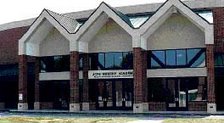
I finally made it out of the familiar confines of Jefferson, Shelby, or Franklin counties. A little trip over the weekend to me first to the northeast, then later to the southwest, added a few new outlined areas to my 2010 Map of Counties Visited.

Still it has been a struggle getting started - it is almost like 2010 is just getting off the ground. Between the cold and the snow, and some family issues - my dad spent nearly nine days in the hospital recently - it has been difficult to get away.

But, I do have travel plans this year - not just to other counties, but also to othere states. My annual trip to Washington, which seems to take place far less annually than I would like, should happen one weekend soon. Later this spring is Puerto Rico, the island Commonwealth. I'll get back to Fancy Farm this summer - I know it is in Kentucky but at 222 miles away, I might as well be in another state.

And this fall who knows. This fall - that is the very beginning of this fall - marks, as you know, the 50th anniversary of my nativity. There will be a celebration - maybe two.

But for now, my travels are mostly the mile drive westward from home to work or the mile drive eastward from home to the Fischer for Mayor campaign HQ. That's not much distance from an admitted free-will wanderer.

Tuesday, February 16, 2010

598. Mayoral Debate on Downtown Issues

As many of you know, we have a mayoral election going on here along the Left Bank of the Ohio River near Milepost 606, the first real one we've had since the 1998 Primary. Actually, every city in the Commonwealth has a mayoral election this year along with elections for their councils and commissions. My friend Greg Anderson is running for mayor in Murray. Another friend, Will Cox is running in Madisonville. I'm supporting Jim Gray in Lexington. Here in Louisville, in the Democratic Primary, I am working for and supporting Greg Fischer.

Earlier today, a debate was held between the Louisville candidates, one of several which have taken place (and a few more which will, one of which is the Metro Democratic Club's debate, scheduled for March 10). Today's debate focussed on downtown issues, something near and dear to me and people who think like me. It was sponsored by the Louisville Downtown Management District, whose Director of Operations is my friend Ken Herndon, who is supporting Tyler Allen. I did not attend the debate so I won't comment on it. Instead, I am providing a link below to where one may listen to the debate on Louisville's National Public Radio station, WFPL, 89.3.

Below that link I've copied straight from the LEO Weekly's webpage the comments of its political reporter Phillip M. Bailey. You can listen to the audio and read Phillip's comments to form your own opinions.

*****

From the WFPL webpage: http://archive.wfpl.org/soa/20100216SOA.mp3

*****

From LEO Weekly's Fat Lip webpage, a loose play-by-play by Phillip M. Bailey:

12:13 p.m. The first question returns to a question around merger and the different taxes and public services between those who live in the city and county. Democrat Greg Fischer says we need to review merger and look at what has worked and what hasn’t, but Independent candidate Jackie Green points out that it’s impossible to make everyone happy and maybe there needs to be a referendum to change the tax rates and services.

12:20 p.m. Last year, in our annual interview, LEO Weekly asked Mayor Jerry Abramson about the tax structure post-merger. When asked about the different tax rate Abramson said:

JA: In terms of the money that’s spent in the urban service district, only the money generated by those who pay a higher tax — and you pay a higher tax if you live in the urban service district — those are the dollars that pay for the extra services.

From time to time you have people asking, why do people who live in the urban service district get free garbage [pickup]? The reason is they pay two-and-a-half times the property tax. Nothing’s free. As more and more folks want more and more services, then we’ll be in a position to be able to say, this is what it costs, and this is what we could deliver. There’s a mechanism in the statute that allows that to happen.

12:24 p.m. The focus turns to local businesses and giving them more incentives to build downtown. And given what’s happening at ear X-tacy, this conversation certainly has the audiences’ attention.

Democratic candidate and Councilman Jim King says downtown development will be a mark if we’re a great city (or not) and Louisville needs more business anchors in the area. “We can give tax breaks, but ultimately it’s about safety and the perception of safety,” he says, adding that will be a centerpiece of his administration and continuing the crime fighter aspect of the campaign.

King’s “crime first” position on downtown contrasts with Fischer, who puts housing and bringing people back as the engine for development.

Democrat Tyler Allen continues a line that he made during our one-on-one interview, saying that it was a great first start, but that momentum was lost after Fourth Street Live was created.

12:34 p.m. You can’t talking about downtown development unless you deal with the juggernaut — The Ohio River Bridges Project — and the candidates have dug in their positions over which bridge to build first (downtown or east end), the project’s viability and whether the favor project at all. It’s a subject where Green and Allen shine even though their positions are considered irresponsible by the mainstream.

12:41 p.m. “Would you be in favor of toling any of the current downtown bridges?” For a $4.1 billion project you can’t avoid that question.

Councilman Tandy points to private financing, but tolling is certainly an option even though he said it could have different rates in different areas.

Democrat Connie Marshall favors tolling becuase it works in larger cities.

Councilman King says no, he’ll need to see a financing plan. He wants federal dollars invested as they were promised years ago. “It will be neccessary to complete the project,” says King.

Green: “I do not support tolling on the three existing bridges. We don’t know who will be towed or the rate. It will change our traffic patterns and modify our regional cross river economic exchange…You’ll increase the price of a meal on the other side of the river.”

When Fischer brought up needing more transparency, Allen slapped back and asked how are we going to get transparency when we turn the decision over to an unelected tolling authority? Can the Allen campaign to get their candidate to get this excited and energized about an issue other than transportation?

12:48 p.m. The discussion turns to creating a downtown police division. Councilman Heiner says we haven’t reach the point where downtown is absolutely safe and it will not grow until that perception changes, but it’s too early to say if we need an isolated division.

Tandy: “I’m certainly open to it, but we need to talk to Chief Robert White … before we get to that point we have to utilize the resources we already do have.”

Besides Councilman King, who has made banging the drum of gangs a centerpiece, the candidates appear to all believe that a substation isn’t needed until the police department is consulted. Maybe this conversation is related to the creation of a new substation in the Shawnee neighborhood. In January, Councilwoman Cheri Bryant-Hamilton, D-5, announced a new partnership with the Shawnee Neighborhood Association, the Shawnee Weed and Seed program and Metro Police extending the department’s 2nd division headquarters into the French Plaza.

1:05 p.m. After the debate tune-in to WFPL 89.3 FM at 1:30 for post-analysis on State of Affairs. The panel will include Courier-Journal columnist John David Dyche, law professor John McGarvey and WFPL’s own Gabe Bullard.

1:10 p.m. “How will you be different or the same as Jerry Abramson?”

“Interesting question,” says Heiner, adding that job attraction, transparency and finding efficiencies in Metro government.

Councilman King highlights that unlike Abramson, he has a background in finance and job creation. Bringing up transparency, as council president he created the government accountability committee.

Tandy’s considered to be the most Abramsonesque by many, and he brought attention to that he can work on the local, state and federal levels. Interestingly, he didn’t really answer the question.

“I need a deep breath and much more than 60-seconds,” says Thieneman. It couldn’t be an easier question for the Republican businessman, who released a television spot attacking Abramson, but the Louisville developer added his support for Senate Bill 80.

Allen says he’s like Mayor Abramson in that they both love the city, but did something few elected officials do in Louisville, be brought up the Mayor of Christmas Past — Dave Armstrong. The difference, Allen says, will be he challenges common perceptions and conventional wisdom.

Before going off on a tangent into his still foggy biography, Fischer told the audience he wants to redefine and repair the relationship the Mayor’s Office has with the Metro Council even going as far to say he wants the two branches to be peers.

1:21 p.m. The 30-second closing statements. Overall this forum contrasted the differences and consensus among the candidates on job attraction, local business incentives, crime downtown and the bridges project. Nice.


I'm hoping Phillip (or someone) can explain his comment of Greg's "foggy biography." I'm not clear on that - no pun intended. Feel free to make any other comments.

597. Snow-colored glasses

Will it ever stop? When is Spring? Too much snow. Too much cold.

Snowpocalypse - I like that one. First read it in a Facebook comment by Aneillo Alioto, formerly of Louisville, now residing in the Federal city.

I'll admit to not liking the cold. The walls of my old brick house - three bricks deep for the most part - have gotten cold and won't warm up til May or June. The temperature in two of the rooms hovers at 50 to 54. The living room and kitchen, on the other hand, stay in the 70s or even 80, given their natural-gas fired sources of heat. Still, it keeps me cold at night, which, if nothing else, does help me to sleep better.

But the snow - well, I still like it. We've had seven inches, then a few more, then some dusting, then four more, and now some more dusting, with a few more inches on the way. And it isn't ice like we had last year, with branches and electric lines falling with regularity. It's just snow. We often speak of the big snows when we were kids. Francois Villon, the fifteenth century French poet and vagabond wrote "Where are the snows of yester year?" Well, my friends, like David Rogers' 1973 play, they are "Here and Now." Enjoy the snow. Eat, Drink, and Be Merry. For tomorrow starts Lent.

Friday, February 12, 2010

596. "Oh, he's my cousin"

I cut class today - no, I played hookie from work today. I didn't call in sick - I actually told my boss I wouldn't be in and he said ok.

Part of my unscheduled holiday was spent in Louisville doing those things you can't always get done during the day because you are at work. But I had planned my afternoon around a trip to Frankfort. (I know what you are thinking - how many times is he going to write about a trip to Frankfort pretending such a trip isn't just another in a series of the mundane adventures of a political junkie?). Well, here is another in the series.

Today's trip had little to do with politics. I attended a ceremony at the Old State Capital on Broadway honoring the conclusion of the Abraham Lincoln Bicentennial and the beginning of the Civil War Sesquicentennial. Today, of course, marks the 16th president's 201st birthday. During the last few years the nation has been celebrating the bicentennial of his birth. Many of those events have taken place in Kentucky, in places like Springfield, the Lincoln Homestead State Park, Larue County, and in downtown Louisville on the waterfront where we have a new larger than life size statue of Lincoln, created by Louisville's famed sculptor Ed Hamilton. All of those celebrations, at least in Kentucky, officially came to an end today. But with that closing of one door, we open another, the 150th Anniversary of the Civil War, or as some call it the War Between the States, or the War of Northern Aggression. Through the Kentucky Historical Society, of which I am a member, Kentucky will be marking the Civil War for the next few years. That program will be ran by Donna M. Neary, the director of Kentucky's Civil War Sesquicentennial Initiatives.

After the official program this afternoon, I found a friend in the audience, former State Senator Lindy Casebier, and we discovered each other's interests in being present today. I told him I wanted to meet Ms. Neary as she and I had already been exchanging tweets on the Twitter. She came over to our conversation and he made the formal introductions and an expansive conversation ensued. The end result is that I am hoping to somehow get involved in this sesquicentennial celebration as the Civil War in general, and the Civil War in Kentucky in particular, is something which holds my interest. My backroads travel of the Commonwealth often - regularly - involve stopping to read historical markers scattered across the state, many of which concern the Civil War. I have "cousins" buried here and there in the state, some with graves marked by a cross and the letter USA for the United States Army, while others have the same cross, but the letters CSA, for Confederate States Army. Most any Kentuckian with roots in the state have relatives on both sides of the blue and gray line. Again, it is something which interests me.
During our conversation, we somehow got talking about the colorful new interior in the New State Capital, which itself is celebrating a milestone, its own centennial. And at some point in that conversation I heard a familiar name and responded, "Oh, he's my cousin." I didn't go on to explain just how we were cousins as I have never thought of this person as anyone other than my cousin. I see him pretty regularly, we are the same age, and fairly close. But then it occurred to me that here I was in the Old Capital, which in the past housed the Kentucky Historical Society, which is the repository of so many genealogical records and resources, that maybe my casual reference to this person as simply my cousin was an orthographic faux pas. After all, we aren't simply cousins.

I have no first cousins. My brother and me are the only grandchildren of both sets of our grandparents. Our cousin-counting technically starts with second cousins, or properly, in some instances if we had any, first cousins-once removed - we don't have any. There is a nomenclature amongst genealogists, some of whom follow it with zeal and precision while others are lazier in their observance of the proper rules and terms. The person I casually referred to as my cousin is technically my third cousin-once removed. I am his second cousin-twice removed. Some people might call us fourth cousins. We share a common ancestor - Annie Collins. Annie Choate Brawner Collins was his great-grandmother. She was my great-great-grandmother. She lived at the fork between E. Main and Broadway, just east and opposite the Capitol Avenue bridge in downtown Frankfort. I've written about her before here on the blog. Whatever the technical relationship, in my family we're simply called cousins. And I have a lot of them.

*****

Before I left Frankfort, I stopped in my favorite Frankfort coffee shop, the Kentucky Coffeetree Cafe, located across Broadway from the Old Capital Annex. It is a ritual of mine although I've never been in there this late on a Friday. The time was about 6:30 p.m. There was a band setting up while I was there which was to be performing tonight to a sold-out house. Now, to be honest, there probably aren't 30 seats in the house, so selling it out shouldn't be difficult. For Louisvillians, the best way to describe the Kentucky Coffeetree Cafe is that of a true combination Heine Bros. - Day's - Old Louisville - Sunergos coffeshop with a little Rudyard Kipling thrown in for music. It is quickly becoming a cultural center for downtown Frankfort.

Tonight's band is The Farewell Drifters, based in Nashville, Tennessee. With one exception, they all looked about 22 years old to me - with one older. The promo picture at right reminds me of a Procol Harem promo pic from the 1960s. They have a website - thefarewelldrifters.com. The warmup was a very mellow combination of folk music and bluegrass picking, played a little too loud but I am sure with a full house it won't be. I wish I could have stayed and the truth is I probably should have. As a Jackson Browne devotee, I am sure, based on the fifteen or so minutes I was listening, that I would have liked their performance. Here is some copy from their bio:

"Zach Bevill (guitar, lead vocals) and Joshua Britt (mandolin, vocals) write eclectic folk songs unbound by tradition, yet invariably influenced by it. Add the rest of the Drifters – Clayton Britt (lead guitar), Christian Sedelmyer (fiddle), and Dean Marold (upright bass) – and you have a delightful synthesis of folk pop and traditional string band music that appeals to a wide range of listeners."


The coffeehouse itself has a website - kentuckycoffeetree.com. Those of you into indi music should check out their show schedule. Just remember, the seating is very limited. Also, they have a varied food menu and their beverage list isn't limited to coffee. There is also beer and wine, and being Kentucky, Ale-8-One in a bottle.

Another reason Frankfort is my favorite little capital city.

Wednesday, February 10, 2010

595-Addendum. Metro Democratic Club Meeting Cancelled

The Metro Democratic Club meeting scheduled for tonight has been cancelled. I just received this email from the president, Lindsay Dickinson.


Hi everyone,

I have decided to cancel this evening's meeting. I hated deciding to do so, but with the all the snow from yesterday and the freezing temperatures, I didn't want to take a chance on anyone's safety.
I have talked with the Mayor's office already. I'm going to be in touch with them in the near future to reschedule Mayor Abramson's visit.

Thanks for everyone's help on tonight's meeting. Let me know if any of you need anything!

Lindsay

595. Abramson at the Metro Democratic Club

A few years back then-Metro Democratic Club president Bruce Maples suggested the club ask the mayor to come for a visit. Every January, His Honor the Mayor of Louisville-Jefferson County Metro gives a State of the City address to the Downtown Rotary Club at the Galt House. Bruce's bold idea was to have him come at a later date and repeat to some extent the same address. His idea was generally dismissed by those (including this writer) who knew the mayor wasn't apt to bring his road show to a Democratic Club. We were wrong; Bruce was right.

Bruce called the mayor's office and they agreed to schedule us on his calendar. And now we have a tradition. All because Bruce Maples had the audacity to ask.

That tradition repeats itself tonight - weather permitting. In what will be his last State of the City address to the Metro Democratic Club, outgoing Louisville Mayor Jerry E. Abramson will speak to the club tonight at 6:30 pm. The club meets at the American Legion Hall on Bardstown Road, three blocks north of the Watterson.

All are welcome.

To my knowledge, this is the first blog posting wherein I have used the mayor's name. Just a thought.

Tuesday, February 9, 2010

594. Seven Inches among other things

It is snowing here along the Left Bank of the Ohio River near Milepost 606, and it has been since about 2 a.m. I measured the white stuff about an hour ago in my front yard with a reading of 4 inches. The National Weather Service, in one of those instances where they got the forecast exactly right, they are now saying will get at least 3 more inches. Some places already have that much, especially in central and southern Kentucky. It isn't the two or three feet experienced in the Nation's Capital this week, but it is more than I can recall falling around here in several years. Seven inches works for me. I like the snow.

But as a sign of getting older, something I'll be doing in grand fashion come September, crossing the threshold of a half-century of living, I find myself complaining more and more about "the cold." I first noticed this phenomena - both the cold itself and me complaining about - in 2008 when I was, for the most part, 47. That was the same year I first noticed the wrinkles in my hands. It was also the same year I started rubbing my feet with alcohol, first, followed by baby oil. None of these were things I planned on doing til, you know, later, when I got old. Sunday after church one of the ladies expressed the thought that she was tired of the cold already and didn't like the forecast of snow. My response was I still like the snow. In fact, liking the snow is one of the ways of fighting against the inevitabilites of time. I told her I was afraid to stop liking the snow - that such a change of heart was simply a step which might lead down the slippery slope of aging.

Maybe it has just been the year itself. It has gotten off to a slow start, just as it did last year with the ice storm. Last year I added to the cold by going to Washington and standing in the 17 degree weather for six and half hours waiting to see the new president inaugurated. It took me til March to warm up. I doubt I've been outside (meaning not in the house, car, or other building) for six and half hours thus far this year. And as for travelling, this year's county count thus far is three: Jefferson, Shelby, and Franklin. I haven't even made it to Bullitt. It's very disappointing. And such a start has revealed itself in this year's blog postings. They've been limited to say the least.

For now - meaning right this moment - I'm going to bundle up and take a walk, maybe down to the skatepark or over to Market Street. I've got nothing else to do. Meetings later today may have been cancelled. Tomorrow's schedule includes the Metro Democratic Club's monthly meeting. It is the annual address to the club by His Honor the Mayor of Louisville-Jefferson County Metro, the last one for the current holder of that office as he did not seek re-election. The meeting will be at the American Legion Hall on Bardstown Road. It starts at 6:30 pm.

Enjoy the snow.


My house this morning.

Tuesday, February 2, 2010

Greg Fischer Announces Jobs Plan

As some of you know, I am working for and supporting Greg Fischer, a Democratic candidate for mayor. This morning he released a jobs plan at a press conference in the Park Hill Corridor area. The full plan will be available on his site later today. Below I have copied his press announcement.


Dear Friend

With unemployment rising above 10%, Louisville needs a Mayor who can be trusted to start on Day #1 to create jobs we need. I’ve launched, built, or invested in more than 15 area firms and directly created more than 1,000 local jobs. I know what it takes to help small and medium-sized businesses to grow and as Mayor, and I will win a new generation of jobs: blue, white, and green-collar jobs.

Today, I announced a substantive Plan for Jobs and Economic Development to put Louisville Metro back to work, which you can learn more about below and at www.gregfischer.com/issues.

The keys to jump starting our economy are: jobs and economic development, transportation and infrastructure, and education and workforce development.

As mayor, I will relentlessly champion job growth and a culture of customer / citizen satisfaction. My top line economic development goals include:

Helping Our Existing Businesses Expand
Encouraging and Simplifying the Process for Entrepreneurs and Innovators to Start New Businesses
Attracting New Businesses to Louisville
And I will embrace the challenge to transition our economy to one that is cleaner and greener.

Our citizens need jobs now. Therefore, we must turn first to the area where we can put people back to work immediately: Transportation and logistics. We must get thousands of construction workers back to work now by starting work on the East End Bridge, continuing infrastructure improvements around Louisville International Airport, and remediating and restoring the brownfields of West Louisville and the Park Hill Corridor.

I will approach jobs and economic development as I always have – as an entrepreneur. I will create an Office of Innovation and Breakthrough to nurture ideas that have the potential to create significant numbers of jobs in new areas.

Another example of breakthrough initiatives will be my work to make Louisville Metro a national leader in local food economy-related jobs. We can bring fresh, healthy local food to every neighborhood and create hundreds of food-related jobs. As part of this initiative, I will create Local Food Enterprise Zones – called LIFE Zones - that provide incentives to food-related businesses that locate in the zones.

Finally, education and work development is an area where we must unite as a community and commit to making a lasting, meaningful improvement so that our children and grandchildren can be prepared for the jobs of the 21st Century. I am committed to making Louisville Metro a National Center of Joy in Learning from Childhood to Adulthood. This lifelong learning will be vital to putting Louisville Metro citizens back to work so that they can earn the blue, white, and green-collar jobs I plan to create in my administration.

I call on you to join me in support of these critical initiatives of jobs and economic development, transportation and infrastructure, and education and workforce are the keys to ensuring a brighter future for Louisville Metro.

Your support is critical to my mission and in the coming weeks, I’ll detail the second part of my plan to create an Open, Honest and Transparent Government which will be critical to delivering on the services that our citizens need and deserve.

Thank you,

Greg

The Archives at Milepost 606

Personal

Louisville, Kentucky, United States
Never married, liberal Democrat, born in 1960, opinionated but generally pleasant, member of the Episcopal Church. Graduate of Prestonia Elementary, Durrett High, and Spalding University; the first two now-closed Jefferson County Public Schools, the latter a very small liberal arts college in downtown Louisville affiliated with the Roman Catholic Sisters of Charity of Nazareth. My vocation and avocation is politics. My favorite pastime is driving the backroads of Kentucky and southern Indiana, visiting small towns, political hangouts, courthouses, churches, and cemeteries. You are welcome to ride with me sometime.