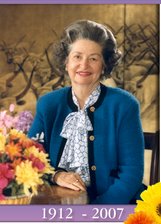
823. It's going to be a great week in America! Happy 2021.
© Jeff Noble, Louisville, Kentucky, January 2, 2021.
Musings of a political, social, cultural, religious, and/or historical nature from near Milepost 606 on the Left Bank of the Ohio River, located at Louisville, Jefferson County, Kentucky.
© Jeff Noble, Louisville, Kentucky, January 2, 2021.
Posted by
Jeff Noble
at
7:11 PM
0
comments
Labels:
Frankfort,
History,
Laws,
Politics and Politicians,
Theater,
Travel,
U. S. Constitution,
Washington DC
Burrel Farnsley's memorial service took place today at Christ Church Cathedral.
Burrel and I have been friends for decades. He has regaled me with many stories about his youth, his family ancestry, his father (and especially his time as mayor and his Friday afternoon Open Houses at City Hall), his ownership of the Schenck Mansion with Sandy Speer up in Vevay, unending theater talk, and lots of the history of the United States, the Roman Catholic Church, and the Episcopal Church. I was a natural pupil for his history lessons.
After his loss to John Yarmuth in the 2006 Democratic Primary, he came and volunteered at our campaign headquarters and somehow became my responsibility. He wanted to do a special Voter Registration Drive to prove a point on voter turnout. He chose two precincts in Smoketown, L111 and L112, and I created the voter lists for him. His goal was to knock on every door of those listed and if the person whose name appeared on the rolls was not the person who answered the door, then he would offer to register whoever answered. If no one answered he left them an already-stamped envelope with a voter registration card to be returned to our office so we could track the results.
I drove him over to the area around Shelby and Breckinridge streets most every day and dropped him off and picked him up later in the day. He'd have a handful of new registrants. We kept track of the all of new voters registered due to his efforts and sent them a letter ahead of the election encouraging them to vote. At the time both precincts voted at the old Presbyterian Community Center.
As it turned out, voter turnout was up, not significantly, but up, in both precincts. Once the voter rolls were updated, we could see that many of Burrel's new registrants were also new voters. His plan was a success.
Burrel and I continued our friendship through the years as his illnesses and demons began to take a toll on his body. He continued to call the office through October from various places, the last being a nursing home in Indiana. Unfortunately, I did not take the last of the calls he made to the office. I regret that now.
Posted by
Jeff Noble
at
8:06 PM
0
comments
Labels:
History,
Lives and Deaths,
Louisville,
Politics and Politicians,
Prayers,
Religion,
Theater
[I must add at this point, as I did in a much longer entry dated March 19, 2012, that of all the actors I have seen play the role of Ernest "Jack" Worthing in one of my two favorite plays, The Importance of Being Earnest, Neill's was simply the best. I wrote in that entry, "Robertson was absolutely delightful to watch in every way and I look forward to seeing him again. His was the worthiest Jack Worthing I've had the pleasure to watch."]. But, I digress.They are all catalogued in a fashion by the man "the agency sent over" at the mother's request, the actor Lucas W. Adams in the role of Arthur, to record her life as it is slipping from her, memory-by-memory and, with a little sleight-of-hand, piece-by-piece from the curio shelves which adorn her third floor room, away from the family problems, physically and emotionally. Arthur with his pen and notebook dutifully records the life and times of the family and in doing so intermingles and insinuates himself into it, eventually falling in love with Aiden, as Arthur has a collection of things and Aiden has a room of empty shelves.
When the Lafayettes descend upon a crumbling Arkansan plantation to liquidate their dead patriarch’s estate, his three adult children collide over clutter, debt, and a contentious family history. But after a disturbing discovery surfaces among their father’s possessions, the reunion takes a turn for the explosive, unleashing a series of crackling surprises and confrontations. A play about the trouble with inheritance, memory loss, and the art of repression.
Posted by
Jeff Noble
at
9:25 PM
0
comments
Labels:
Theater
Some of my seven faithful readers may recall this entry's name as that of a play written by James Reach in 1936 and performed at least once here along the Left Bank of the Ohio River near Milepost 606 by the thespian troupe in the Class of 1976 at my high school alma mater, Sallie Phillips Durrett High School, in its erstwhile location on Preston Highway. It was a grand play complete with a butler who may (or may not) have been the murderer. But this entry isn't about that.
This entry is about the word itself, lunatics, with an etymology related to the moon, from the old Latin word luna. It is also related to other "l" words such as lumen, lux, and light. Those who are followers or worshippers of the moon, or specifically moonlight, have been known to be called lunatics, although not in the best of light. Ha! Last night as I sat with friends enjoying a sarsaparilla at one of those Baxter Avenue shebeens (although this one was licensed), we discussed the upcoming phase of the moon, the full moon. But, first, something else.
Tomorrow, August 1, is a holiday of sorts in the pagan world, and extended into the non-pagan world, especially in the British Isles. It is Lammas Day, a feast of the first wheat harvest. The word itself is a contraction of sorts, on Loaf and Mass, thus the wheat harvest yielded a loaf of bread, something for which to be thankful. Another bit of trivia related to the day is that one of the Bard's most famous characters was born on Lammas Day Eve, which is today. Do you know who she was?
Tomorrow also marks a full moon, the "full sturgeon moon" at least in America, so named for the fish which are abundantly caught during the month, especially in the Great Lakes of the great midwest. Having a full moon on August 1 will also afford one of those moons we've all heard of but may not really know what they are. "Once in a blue moon!" You've heard the expression, no doubt, meaning "not very often." The name has come to be applied to the third of four full moons within a quarter of the lunar year. In lay terms, that is usually interpreted as a second full moon in any given month. August 31 will bring us a second full moon for the month of August, a blue moon according to the legend.
To begin a month and end a month with full moons is certainly something to be celebrated, notwithstanding the pagan celebration of Lammas Day, also tomorrow.
Need something more to celebrate, at least on August 1? My maternal grandmother, Vivian "Tommie" Hockensmith, was born on this date in 1916. She died in 1976. Another dear friend of most of my life, Mary-John Celletti, will also be celebrating the anniversary of her nativity tomorrow. I know the year of her birth, but, alas, I'll keep it to myself for now.
Happy Lammas Eve! Celebrate.
Posted by
Jeff Noble
at
11:06 PM
0
comments
Labels:
History,
Literature,
People,
Religion,
Theater
Theatre [502] is in the middle of their production of Jordan Harrison's play Futura at Actors Theatre in downtown Louisville. It is directed by Theatre [502]'s Co-Artistic Director Amy Attaway. Migael and I took in the performance last night in the Victor Jory Theater in the Actor's complex. The setting is identified as taking place in a university lecture hall in the "near future." As the play is performed in one Act, with scene changes executed by a darkening of the theater, the presumption, though odd, is that the entire play takes place somewhere on that same college campus. The adjective "dystopian" has been used in all of the media hype for the play. Dystopian is, I suppose, the opposite of utopian. If you learned language as I did based on Latin, Greek, and other word-roots, you will recognise the "dys" which is bad, as opposed to "u" which is good. The other root is "topia," from "topis" for place. We get the word topography from the latter. So, if utopia is a good place, dystopia isn't.
Let's start at the end of the play, an uncomfortably small library in a secret room, with a teacher and a student beginning the process of learning to write all over. "Put your name up in the right-hand corner of the paper" the teacher tells the student. That's how we all learned, first to print, and later at the end of second grade, to cursively write on those ubiquitous writing tablets from kindergarten through fourth grade. A chilling, indeed dystopian, place to end a play. It is a great lament of the day that young students no longer learn to cursively write. In fact, they typically learn to type, or, euphemistically - and there's that "u" for good spelled slightly differently - kids do not learn to type at all; they learn to use the keyboard.
Today's keyboard has all kinds of characters on it besides the 26 letters and 10 numbers of the Latin-based alphabet we use in the United States. A few strokes away are symbols for Spanish, Portuguese, and other languages as well as signs for "libra" or "pound," a unit of money and weight in British-speaking places, or other signs not normally used in our Americised English. And with the help of our computers, word-processors, iPads, and telephones, we can change the size and font of what we read and what we "write." And all of this is safely stored away in some computer world, the "Cloud" perhaps, understood by some, but for most of us just "accepted" as being the way things are.
This play deals with the notion that all written forms and the means to create them have been put away - hidden away under the control of some "1984"-type business or entity or, perhaps, a college. We never really know.
The play starts with that same teacher, a widowed college professor, giving a somewhat tortured lecture about type fonts. Yes, type fonts. Probably not the most exciting lecture for most, although I was totally involved. As a reader and writer and student of words, languages, thoughts, and ideas, I found the subject totally engrossing. To my surprise, Migael did too. Anyone who has taken the time to read about the invention of the printing press, or the politics and intrigue which gave us the King James Version of the Bible, or any other histories of the beginning of the printed word, will find this part of the play familiar.
The play takes a violent unexpected turn with the professor's kidnapping and the rest of the story revolves around her eventual escape, if one could call it that. Three people are integral to the kidnapping - a bully, a character who first appears to be a street-thug, and - without giving too much away - another professor. And at first it is difficult to know exactly what separates the protagonists from the antagonists, if one judges those roles by who comes out doing what is best for humanity.
The bully, whose use of variant forms of the "f" word is simply gratuitous - most modern plays have adopted this gratuity for some unexplained reason (there was some discussion of this by three of the patrons on the Main Street sidewalk after the play) - is quickly offed in another unexpected scene, lending credence to the street-thug's character. And, as with all "bad" plots, there is the weak spot, in this case the same street-thug who, as it turns out, not only has a soft spot for the type-font lecturing professor - he was one of her former students we learn - but also for the written word itself, the anathema of the play, as he attempts to smuggle a book of poems for his own use.
The middle of the play is occupied by a great deal of dialogue between the two professors - and quite a bit of it went unheard by me, in part because because I do not hear well and in part because the acoustics for the play weren't the best. On several occasions my date relayed some lines to me recognising that I did not hear them. But the one I did hear during the professorial dialogue was paramount in understanding the play - a war between the format or platform for retaining information - whether electronically or in hard copy form. I will return to this thought at the end of this essay because it remained on my mind through the course of the play and indeed well into the night. But, I digress.
Let me speak here about the acting itself. I hesitate to say I wasn't as impressed as I was expected to be but maybe that was appropriate given the subject matter. The players seemed disconnected and distant. One of the "hallmarks" of modern communication is the distance and disconnectedness [a new word, perhaps] of we the speakers. We speak via chat boxes, email, text messaging, tweeting, and updating our Facebook statuses as if that is communication, as opposed to what they really are, simple electronic comments for which we may or may not receive a response, comments typically unadorned by accent, emphasis, or even bolding or italics; nor do we experience any body language or kinetics in these brief typwritten exchanges, the psychokinesiology involved in person-to-person communications. So it is possible the acting was intentionally disconnected and distant. I certainly felt that vibe.
Of the four actors, I have previously seen the work of three. The rather stoic and emotionless type-font lecturing professor was well-portrayed by Laurene Scalf, a veteran of local theater. Another veteran actor with many years to his credits was Tad Chitwood who is the other professor and boss, Edward Wexler, to the bully and street-thug characters. I was back-and-forth on whether he was a good-guy or a bad-guy, but more on that later. The unknown to me was the bully, acted by Betsy Huggins, a Marylander-turned-Louisvillian. She has recently acted and performed at a variety of Louisville venues including Actors and the Walden Theatre's Young Playwrights Festival. The final character, the street-thug - and in the final scene a student once again - was portrayed by Drew Cash, who I've seen here and there in various performances. I'm intrigued that the playbook mentions he'll be performing later this year for a two month national tour of King Arthur and Hamlet. As the seven regular readers of the Left Bank of the Ohio River near Milepost 606 are aware, things Arthurian and things Shakespearean are leit-motifs of my favored reading lists. I hope to learn more about Drew's upcoming plans.
But, back to the play. Another gunshot, this time from the stoic professor as aggressor and the boss-professor as victim effectively take the latter character out of the action of the play. The street-thug turns in favor to his former professor and they make their escape arriving at the "zero-drive" destination, an unknown and underground bunker, a small dark room of books and writing accoutrements, things our escaping professor, and perhaps her reprised student, believe are keys for the future. Eerily uncomfortable and dystopian indeed.
Let me return to the middle of the play and the discussion between the two professors, some lines of which went unheard. I wrote above, Laurene, the type-font lecturer, makes the argument, in so many words, that books and libraries, the traditional repositories of the written word and the information relayed by those words, are necessary for the future, for future generations to know and understand all that has been written before them. Professor Wexler argues, in turn, that much of what is recorded in books and then retained on library bookshelves is, for the most part, inaccessible to the great masses, and that the panacea for such is making all that is available in the electronic avenues which serve as the new and updated repositories of information. And the argument is hinted that such a reliquary as a library has limited use, its "books gathering dust," whereas modern electronic media is more widely acquired and used by far greater numbers of people.
"But the one I did hear during the professorial dialogue was paramount in understanding the play - a war between the format or platform for retaining information - whether electronically or in hard copy form."It was at this point I decided that Professor Wexler was not an antagonist but a protagonist, ultimately the only one in the play. He is right - the wider accessibility of electronic media is better than all the libraries of the world sitting in quiet and staid possession of all the books on their shelves. This is not easy for me to write or admit to - it is, in fact, quite a revelation, perhaps an epiphany for me.
Posted by
Jeff Noble
at
1:34 PM
0
comments
Labels:
History,
Literature,
Theater
Posted by
Jeff Noble
at
12:38 AM
0
comments
Labels:
Theater

I'm politely shocked that there is only one mention - on March 15, 2007 - of Oscar Wilde's play The Importance of Being Earnest anywhere to be found on my blog. Rather like those precious cucumber sandwiches Aunt Augusta was expecting, there just isn't any, more than the one instance, of Earnest to be found - not even for ready money.
Oscar Wilde's play, The Importance of Being Earnest, was written in the town of Worthing, England in late summer of 1894. Its first performance was made on February 14th of the next year, a date which has a role in the play. It has long, long been one of my favorite plays and I have seen several performances of it over the years, the first I recall being in the Fine Arts Center at the University of Kentucky on Rose Street, just south of Euclid Avenue. I also have several copies of the play itself, and have committed to memory many of the lines, many of which set me on an uncontrollable laughter for minutes at a time. The play is a series of witty puns and wordplays mostly about the importance of the trivial versus the inanity of the serious. It follows the story of two mischievous friends, John "Jack" (and later Ernest John) Worthing and Algernon Moncrieff.
Earlier this evening, my friend Preston Bates and I took in the Savage Rose Classical Theater Company's performance of this favorite play of mine, staged at Walden Theater, housed in the former Saint Aloysius School on Payne Street in Louisville's Irish Hill neighborhood. Tonight was the closing show, a run which began on March 9th.
This production was played in three acts - in Algernon's home, then the garden at Jack Worthing's Manor House, and finally the interior rooms of the Manor House. The characters of the play, in addition to Algernon and Jack are Lane, who is Algernon's manservant; Algernon's aunt, Augusta, and her daughter Gwendolyn; Jack's ward, Cecily; Jack's butler, Merriman; Cecily tutor, Miss Prism; and the local rector, the Rev. Canon Chasuble. And a handbag, with handles, which had been inadvertently left at the Victoria Station cloak room of the Brighton Line. This performance was under the direction of Charlie Fields, director, and Melinda Crecelius, assistant director.
In tonight's performance, two portrayals easily stood out - that of Lady Bracknell - of course - and that of Jack Worthing, later Ernest Moncrieff.
Lady Bracknell was portrayed by J. Barrett Cooper. In all the performances I've seen of the play, Cooper's crossdressing to create Lady Bracknell is the most overwhelming I've ever encountered - truly Wagnerian. I've always had an image in my mind of what Lady Bracknell should look like and up until tonight I had not seen that character. That has changed. The Cooperian Lady Bracknell was truly Wagnerian, to say the least. Some of the pregnant pauses taken by the character were a little too pregnant and the effect was, ever so slightly, sometimes lost by a second or two. But the change in voice when Lady Bracknell recognises Miss Prism, or Prism or, as you would text it to indicate the boldness of the voice, PRISM, brought the character back to a full dramatization. Her stern looks and, what can I say, broad shoulders, brought Lady Bracknell to the stentorian life which Wilde's pen had truly created for her - a good performance.
Cecily Cardew, the ward of Jack Worthing, was portrayed in sweet and enchanting innocence by Julane Havens who has been seen over in Central Park in recent years. My seven faithful readers will recall that I am a faithful attendee at Shakespeare in the Park in the summer months. Ms. Havens was wonderful as the young ward and love-interest for Algernon. Her foil in the play is Gwendolyn Fairfax, Lady Bracknell's daughter. Gwendolyn was performed by Natalie Fields, a graduate of Walden School who went away to college for her drama degrees. She and Cooper's Lady Bracknell looked amazingly "related." Ms. Fields must somehow be "really" some kin to Mr. Cooper.
Cecily's love-item in the play, stated earlier, is one of the two main characters, Algernon Moncrieff, played by a personal acquaintance and Facebook friend, Mike Slaton. Mike has been on local stages for years and I have seen him in a variety of roles. His performance tonight as the idle but handsome Algernon was fun to watch, especially as he described and defended his bunburying activities. (One might ask some of the Yarmuth for Congress 2006 campaign crew to define "nobling" for you as it is related to "bunburying.")
Tony Prince is another long-time local actor this time portraying the Rev. Doctor Chasuble, the local rector, provider of unpublished sermons and adult christenings at the ring of a bell. His opposite-sex interest in the play is Miss Prism, played by Kelly Moore, reprising the same role she played a decade ago. She is appropriately deferant to Lady Bracknell when the details as to her unfortunate day "28 years ago" are bought to life.
The two "manservants" were played by Gerry Rose, as Lane in Algernon's household, and Monte Priddy, as Merriman in Jack's country residence. I am not familiar with Rose but will make the guess that his last name is somewhat responsible for the Rose name in the theater company. I don't know that - just venturing a guess. Monte Priddy has been acting in Louisville as long as I have been alive, many times at Central Park. I've seen him in more roles than I can remember. He is a Louisville drama treasure.
But for me, the Oscar easily goes to Neill Robertson and his portrayal of the central character, indeed the title character, of the play, Jack Worthing, who in the end discovers the vital importance of being earnest. Mr. Robertson is unfamiliar to me, and I would easily remember his striking facial features and beautiful curly gingerhead curls. (Baldies notice hair). Robertson played the role to the top of the game, responding to Algernon, Lady Bracknell, and all the characters with a variety of looks, some of fear, others of anger, and others of interest. His voices in the play were much on target. He reminded me of my friend Callaway Kosine in appearance and demeanor and tone of voice and I said as much to Preston who, he informed me, has yet to meet Callaway. But, I digress.
Robertson was absolutely delightful to watch in every way and I look forward to seeing him again. His was the worthiest Jack Worthing I've had the pleasure to watch.
It was a wonderful, wonderful night. We began a little early at the Garage Bar and ended with dinner at Ramsi's. Quite and pleasurable evening. Thanks, Preston.
For more information on the Savage Rose Theatre Company, visit their website at savagerose.org.
Posted by
Jeff Noble
at
12:11 AM
1 comments
Labels:
Literature,
Theater

Ninety years ago, Pirandello's play Six Characters In Search of An Author made its way to Broadway to mixed reviews. While the play Once in A Blue Moon and Pirnadello's have nothing else in common, a thread could be drawn between the title of the latter and the formation of the former.
Last Friday, at the invitation of my friend Gil Reyes, Theatre 502's co-artisitic director, my date - Callaway Kosine - and I attended the opening night perfomance of Once in A Blue Moon, created, staged, and performed by the ensemble of Le Petomane, at the Rudyard Kipling on W. Oak Street. The play was a lot of fun, a little disjointed, but a nice story nonetheless. It seemed like six or seven vignettes in search of a common theme.
But, there was a common theme, that of the play's heroine, Ruby, and the loss of her voice and the journey to reclaim it. Through a series of scenes - a streetyard, a field, a diner, and some others I wasn't quite able to place, Ruby meets with adventures and antagonists in her effort to follow her heart and find her voice.
There were bits and pieces of familiar feelings - some spoken verse that sounded Elizabethan, some eerie dance from the 20th century, evocations of mystery in the form of a Coyote, and a Blue Moon which seemed to be the magical force keeping it all together. For those who follow me on Facebook, you know that I am strongly attached and attracted to the moon, a personal sort of lunacy.
There were doses of rhyme and rhythm, singing and dancing, and even sword fighting. I was intrigued by and completely enjoyed the music created by the playing of a propane tank. Listening, I envisioned in my head scenes from some Mithraic celebrations in one of Mary Stewart's Merlin trilogies - or maybe it was a scene from the Mists of Avalon, I forget which.
The ensemble is four actors, three of whom, Heather Burns, Tony Dingman, and Kyle Ware, played a variety of roles - too many to list and sometimes hard to distinguish, especially since I've waited a week to write my review - apologies extended. The fourth was Kristie Rolape in the lead as Ruby. One role played by Kyle Ware was that of narrator, in the character known as Fairy Thoughtfather. Dingman roles included Ruby's father, high school friend, truck driver acquaintance at the diner, and some slickster who looked remarkably like a young Frank Sinatra. For me, the star role wasn't the protagonist Ruby, however. It was Coyote Blue, as played by Heather Burns (who I know from somewhere but I can't quite place where). Her moves around the stage and through the audience as the Coyote, a non-speaking role, were mesmerizing, hynotic, and elegant, all at once. The Coyote character appears at different times throughout the play and the delivery was top-notch at all times. I found myself anticipating the Coyote's next appearance on the stage. The threesome also played a blue-haired stoner band in one scene which was a lot of fun. Dingman, as the trucker, is also a rapper - an interesting performance. In the diner scene is a dance number which was straight out of Stomp - a clogging in rhythm which provided a musical perfomance all its own - or maybe it was reminescent of the old Hayloft Hoedown, for those of you old enough to remember that local show which played for many years, on WHAS at first and finally on WLKY, in the golden days of television here along the Left Bank of the Ohio River near Milepost 606. But, I digress.
Like every good tale, the heroine succeeds in her mission; her voice is found and the show comes to a quick end - a little too quickly although the play ran a little over an hour and twenty minutes the opening night. Perhaps because of the bareness of the stage, or the venue itself, a very intimate space with dinner tables and chairs - and dinner and drinks all around. I've always enjoyed that sort of venue but it isn't for everyone. My friend Callaway seemed as equally pleased with the performance. And, the truth is I have been going to events at the Rudyard Kipling for almost thrity years. It is a great place for some sometimes less-than-serious fun.
After the play, the cast and most of the patrons retired down into the bar part of The Rud for some music from a band called Neulore - or something - at that point I was on my third glass of Pinot Noir and they sounded pretty good.
Two more showing for Once in A Blue Moon are offered - tonight (Friday the 17th) and tomorrow, both at 7:30 pm. While it wasn't polished theater, it was fun and engaging, and a little quirky. I give it a B+.
Posted by
Jeff Noble
at
4:03 PM
1 comments
Labels:
Literature,
People,
Theater