Friday, August 27, 2010

643. I did come back

I haven't posted for two and a half weeks. Seems I left y'all down in the Kentucky Bend of the Mississippi River with a promise of stories about the return trip. My apologies. Interestingly, my readership hasn't suffered from the lack of posting - still the same seven faithful readers.

At this point I'm not going to give you a paragraph or two for each road and highway used to make the trip back home. Suffice it to say, at least while in Kentucky, they were mostly two lane state routes through stretches of largely unpopulated territory - what seemed to be some of western Kentucky's coal country - areas previously undiscovered in my trekking about the backroads of Kentucky.

From the Bend, I returned to Fulton County proper travelling to the county seat Hickman, and from there to Clinton, the county seat of Hickman County immediately north. Along the way, just west of the intersection of KY239 and KY123, I spied an old school building called Oakton or Oakdale or something. I wish I had taken the time to learn more about it while I was in the area but didn't. I've sent off an email to a Hickman County historian in the hopes of learning more.

I passed through Clinton to KY307, which runs in a nearly straight north-south line for almost 34 miles from Fulton to its intersection with US62 in northeastern Carlisle County, one of the longest straigh lines of pavement anywhere in the Commonwealth. I drove about 13 of those miles to that point, taking US62 eastward through a few miles of Ballard County and into western Kentucky's metropolis, Paducah, the seat of McCracken County. Here I visited the parents of a friend of mine, spending two hours gossiping about the County Judge and County Clerk's races, one of which includes the write-in candidacy of a Republican woman who is apparently running at te behest of the County Judge. The incumbent County Clerk, a Democrat, is otherwise running unopposed. From there I headed back to my motel room in beautiful Calvert City to prepare the next day's trip back toward the Left Bank of the Ohio River near Milepost 606.


Early the next morning, before leaving Calvert City, I drove to the northern dead-end of KY95 in Marshall County where the road becomes a boatramp into the Tennessee River. The picture here is looking eastward (or upriver). It was an inspiring sight - that's Livingston County across the river to the left.

I crossed back over the Tennessee and Cumberland Rivers following the new US62 eastward up through Caldwell County and into Hopkins County and its intersection with KY109 northward. I'll have to admit I've never really been much off the main roads in Hopkins County. Back in 1995 I spent a lot of timing driving State Representative Jim Wayne around in his Primary race for State Auditor. One of those trips was to some kind of BBQ event sponsored by State Representative Eddie Ballard of Hopkins County. I'm not sure I could find it today, but until this recent venture, that was my only detour from the regularly scheduled roadways. I left Madisonville, the county seat, eastward on the four-lane Anton Road - KY 70. At the fork in the road just before the community of Anton and a crossing of the CSX Railroad, I went to the left as is my wont and ended up on KY85. For seven long and lonely miles, KY 85 traverses acres and acres (and acres and acres) of corn and soybeans. There were no mailboxes and no electric lines along this elevated section of highway along the bottomlands of eastern Hopkins County. The road eventually crosses the Pond River and into McLean County, just north of the Muhlenberg line. After a few miles, KY85 comes to an end and thus I turned northward onto KY181 and into the village of Sacramento.

Sacramento is a town I've been meaning to visit for some time. For several years now I've been trying to get my friend Preston Bates to join me on a May trip here for the annual reenactment of the Battle of Sacramento, a Civil War event cited by the locals as the first war victory attributed to Nathan Bedford Forrest, a lieutenant general of the Confederate States Army and hero to many in the Old South. Forrest was a self-educated military genius who prior to his service to the Lost Cause was an alderman and slave owner and trader in Memphis, Tennessee. For many, this alone should discredit him. But, let me offer a speech he delivered to his troops upon the end of the war which saw his side capitulate and surrender to the overwhelming forces of United States Army General Ulysses Grant. If more of today's self-proclaimed adherants to the Old South would heed the words of their military hero, General Forrest, a multitude of racial problems might just go away. Here is a part of what he said to his troops at his headquarters in Gainesville, Alabama on May 9, 1865:

Civil war, such as you have just passed through naturally engenders feelings of animosity, hatred, and revenge. It is our duty to divest ourselves of all such feelings; and as far as it is in our power to do so, to cultivate friendly feelings towards those with whom we have so long contended, and heretofore so widely, but honestly, differed. Neighborhood feuds, personal animosities, and private differences should be blotted out; and, when you return home, a manly, straightforward course of conduct will secure the respect of your enemies. Whatever your responsibilities may be to Government, to society, or to individuals meet them like men. The attempt made to establish a separate and independent Confederation has failed; but the consciousness of having done your duty faithfully, and to the end, will, in some measure, repay for the hardships you have undergone. In bidding you farewell, rest assured that you carry with you my best wishes for your future welfare and happiness. Without, in any way, referring to the merits of the Cause in which we have been engaged, your courage and determination, as exhibited on many hard-fought fields, has elicited the respect and admiration of friend and foe. And I now cheerfully and gratefully acknowledge my indebtedness to the officers and men of my command whose zeal, fidelity and unflinching bravery have been the great source of my past success in arms. I have never, on the field of battle, sent you where I was unwilling to go myself; nor would I now advise you to a course which I felt myself unwilling to pursue. You have been good soldiers, you can be good citizens. Obey the laws, preserve your honor, and the Government to which you have surrendered can afford to be, and will be, magnanimous.


This year's reenactment was held the weekend of May 21 (although the actual Battle was in late December). Preston and I had both just concluded our work in different Democratic primaries and neither of us was up to the trip. Perhaps next year. But, I digress.


I left Sacramento northward to the county seat at Calhoun where I picked up KY81. Coming down off the Veterans Memorial Bridge over the Green River into downtown Calhoun deposits you at a stop sign on Main Street just south of Second. The east side of Main north of Second is occupied by the McLean County Court House. Main Street runs on for about a mile north of town out to the Calhoun Cemetery where a fork in the road leads KY81 off to the right. As a side note, the fork to the left, KY815, leads to a town called West Louisville. I wonder if they cruise along Broadway in West Louisville on Derby Day? I wonder if they even celebrate Derby Day? Again, I digress.

A few miles north of Calhoun, I turned east onto KY140 which leads to one of my ancestral communities, Utica, in southern Daviess County. I've written about Utica before and my great-grandfather Robert Lewis' forefathers being from there. At KY140's intersection with US431, I turned northward through what appears to be another mining region in Browns Valley and into Owensboro, the Daviess County seat.

The Kentucky part of my trip home ends, at least for now, in Daviess County. I worked my way through downtown and eastward out of town along E. 4th Street, co-numbered as US60 and US231. There is a great deal of highway construction going on as the east side extension of the Wendell H. Ford By-Pass around the city is being reconstructed to connect to the recently rebuilt US60/231, which leads to the fairly new (opened in October 2002) and strikingly beautiful William Natcher Bridge, carrying US231 out of Kentucky and into southern Indiana. US231 is being completely reconstructed in Indiana as a four-lane divided highway - almost an interstate - all the way up to I-64 north of the town of Dale. Gone will be the days of travelling the narrow but terribly straight US231 which presently passes through the communities of Rockport, Chrisney, Gentryville (with its connection to all-things-Lincoln), and Dale on its route from Owensboro to I-64.


As with other journeys which eventually reach I-64 in this very Catholic area of Indiana, I tend to head straight on eastward into Louisville, about a 70 mile journey from this point. This trip was no exception. I'm sorry it has taken all these weeks to get you back home, but here we are.

Have a good weekend.

Monday, August 9, 2010

642. The Road Trip within the Road Trip

In the preview I mentioned several cities "and the ride back." This entry concerns those matters.

But first, let me say again how impressed I was with Attorney General Jack Conway's speech at Fancy Farm. Clearly he has the temperament needed to be a leader for Kentucky for many years to come. Suffice it to say, I back Jack.

So, shortly after Jack spoke, and well into his opponent's rant on a variety of matters, I took matters into my own hands - literally my steering wheel - and set off on my Road Trip within the Road Trip to Fancy Farm.

I had a goal in mind - the New Madrid Bend, that little hook of land rising northward out of far northwestern Tennessee but always (and properly) shown on maps as part of Kentucky - specifically a part of Fulton County, Kentucky.

For the following discussion, which will eventually get back to the New Madrid Bend, let's first remember that Kentucky was formed from part of Virginia and that Tennessee was formed from part of North Carolina, and that each of these earlier states were originally British colonies.

Back on February 10, 1763, a treaty signed in Paris, France settled what was known as the Seven Years War, a feud between Great Britain and France, which on our side of the big pond was known as the French and Indian War. On that date, a date which should be learned (or learnt, as I learned) by every student of Kentucky history, the treaty set the western boundary of the colonies of Great Britain in America, and specifically the colonies of Virginia and Carolina.

That treaty granted to Great Britain everything east of the Left Bank of the Mississippi River (which includes parts of the western boundary of present-day Kentucky).

The boundary on Kentucky's southern border was first established in 1663 with Virginia's boundary settlement with the colony of Carolina, later North Carolina. That boundary was set as the 36 degree 30 minute North Latitude mark - the great 36-30 line which divides many a culture, county, and state throughout our Republic. Several surveyors set out to mark the what they believed to be the 36-30 line.

While the bottom of Kentucky should be a straight line from a point in the Cumberland Gap at "the seven pines and two black oaks" and thence west to the "Western waters," effectively the Mississippi River, any map reader will see the line meanders very slightly northwardly as it crosses from west to east - the Duncan notch south of Franklin being an exception - all the way to the Tennessee River. At that point, the survey boundary is some sixteen miles north of the 36-30 line. One problem was that they started about six miles north of the 36-30 line over at the Cumberland Gap. The line west of the Tennessee River, established in 1818 with what is known as the "Jackson Purchase" and called the Munsell Line accurately places the boundary along the 36-30 line. The entire line was eventually settled by a court case in 1859.

But, there is the problem of the meandering Mississippi. In the far northwestern corner of Tennessee and southwestern corner of Kentucky, the Mississippi, as it makes its way southward wanders below the 36-30, then makes a u-turn northward back above the 36-30, then makes another to the west and continues its southerly flow below the 36-30. Thus a portion of land is both east of the Mississippi and north of the 36-30 but not connected to the rest of Kentucky. Still, according to the treaties establishing the borders in 1663 and 1763, along with the so-called "purchase" of 1818, and the court case of 1859, that land is rightfully part of Kentucky. And that's where I was headed after hearing Jack Conway's speech Saturday.

My seven faithful readers know I have a practice of travelling to a place on one set of roads and returning hence on another. Getting to and from the New Madrid Bend required some planning. I left Fancy Farm southbound - nearly due southbound - along KY339 for Fulton, an old trading town situated on both sides of the Kentucky-Tennessee state line, separated by State Line Road, which is KY116. Following KY116 west, I crossed the centerline line of the road, and thus into Tennessee by turning south on CR21 into Obion County, Tennessee toward Union City. At Union City, I turned westward along SR22 toward Tiptonville, the county seat of Lake County. SR21 wraps around the bottom of Reelfoot Lake, a very shallow lake formed by the great earthquake of February 7, 1812, an earthquake felt not only in Louisville and Saint Louis, but also New York and Boston.

There is a slight depression in the earth in this area and waters from the Mississippi, about twelve miles away, washed out of the riverbanks and in a counter direction from the river, and settled in the lowlands of what is now Reelfoot Lake. This is a beautiful body of water with homes and parks surrounding the water's edge - a simply beautiful lake. Unlike Kentucky's lakes, which are down in valleys and cannot usually be entirely seen because of the hills and dells separating the arms of the lake, Reelfoot's broad footprint is a long and wide and level piece of land. It is a place I hope to return to one day. I did, as is sometimes my wont, take off my shoes and socks and wandered down into the waters along one of the boatramps, shown in the picture.

But Reelfoot was not my destination. To get there, I had to wander through Tiptonville, across the railroad tracks, and northward along a desolate roadway numbered as CR22 and called Kentucky Bend Road. Now I have always called my destination the New Madrid Bend, so-named for the Missouri city which is on the northern shore of the bend. But I learned in this trip that it is more regularly called the Kentucky Bend, and by the five people who live there, called simply the Bend. At the state line the quality, color, and texture of the road changes. In Kentucky the road is more just a lane, somewhat narrower, somewhat smoother, and certainly lighter in color than the red-clayed ashphalt which covers many Tennessee roadways.


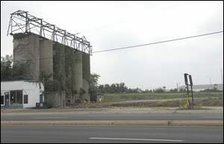
I stopped briefly and spoke with a local, a man who name was Kimmel (I think). He is married to "a Whitson girl," the Whitsons being the predominant - read only - family left in the bottom land contained within the Bend. He pointed out the building, at left, which once served as the store, school, post office, and voting poll for the Bend, but which was abandoned long ago. Kimmel actually has a Tiptonville, Tennessee mailing address.
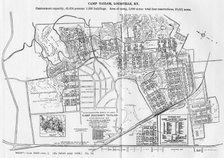
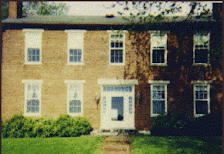

We talked about the history of the place along with a little politics. I was wearing my Yarmuth for Congress t-shirt which rendered a question from Kimmel, "who is Yarmuth?" I explained. I never determined Kimmel's politics although it would be easy enough to say that they were somewhere to the right of mine. I enjoyed the history lesson, a lesson filled with the stories of the now-deceased members of the Whitson, Everette, and other families buried in the only real landmark of the island, a very well maintained cemetery.

Upon leaving Kimmel and the Bend I began my journey back to the Left Bank of the Ohio River near Milepost 606, a journey of about 320 miles and an entry which will be recorded on another day.

Sunday, August 8, 2010

642 preview

I'll write more later.

Briefly, as I said, there was food involved.

Also, once the speeches began I was inclined to go play Bingo. Instead I listened to several at the beginning. And I was very, very impressed with Jack Conway's. He didn't sound defensive or mad or bothered, which he often does. He was enthusiastic, upbeat, optimistic, and clear. Clear in that he is the easily and unquestionably the leader Kentucky needs for the future - the long future. I cannot say enough how pleased I was.

After the speeches that I wanted to hear were heard, I took to the roads.

Later I'll talk about Fulton, Union City, Tiptonville, Island #10, the New Madrid Bend, and the ride back. And Reelfoot Lake, too.

For the moment, I'm headed to Mass at Saint Peter's Episcopal Church in Gilbertsville, a few blocks west of Kentucky Dam Village in Marshall County.

Have a good day.

Saturday, August 7, 2010

641. Day Two from the Purchase, briefly

First, a quick run-down of last night. The Bean Soup at the 15th Annual Marshall County Bean Soup Supper was really, really, good. This is an improvement on years past. The cornbread muffins were sweet-cakes, which isn't the type of cornbread I like to crumble up in my soup, but still it was all good, including a slice of yellow watermelon which came with the meal.

After the bean soup supper, there were parties along Executive Drive, home to the cabins facing Kentucky Lake. I spent time at two of them - first, a party site for Marty Meyer and other Democrats running for the State Senate along I-65. Four of them shared the spotlight. I got the chance to speak with two guys I read a lot - Joe Sonka and Jonathan Meador. I had met Sonka before - I even have one of his Barefoot and Progressive coffee cups on my desk back in Louisville. I had informative chats with both. Standing in the background and listening closely was anotheer writer, Ryan Clouse, although we never spoke.

At one point I walked with two friends down to Eddie Jacobs' cabin where the more-or-less official unofficial Democratic Party party was taking place. I ate - something you do every where, and had a couple of softdrinks. The crowd there kept getting bigger and bigger, and at some point I went back to the Meyer cabin. After a long conversation with State Treasurer Todd Hollenbach and his assistant Tom Scally, who was a dormmate of mine at UK back in the fall semester of 1978, I decided to call it a night. It was about 11 which was late for me, but I am sure everyone else was out til well into the morning.

Today's events include the Graves County breakfast in Mayfield, followed by the Fayette County brunch, also in Mayfield, followed by the K of C dinner (at lunchtime) in Fancy Farm, followed by the speeches, and assuredly more food.

The weather is hot and humid, surprise, surprise.

More later.

Friday, August 6, 2010

640. Live from Calvert City, briefly

Ok. I made it. Never got on an interstate or parkway. Went out to Shively to see my fav mechanic Michael J. who changed the oil and air filter for the long hot journey to west Kentucky. Stayed with Dixie Highway out to Fort Knox where I followed US60 west over to the other side of Hardinsburg. Took some backroads off KY261 to Fordsville, Rosine, Rockport, and then over to Beaver Dam. Followed US62 from Beaver Dam through Central City, Princeton, Eddyville, Kuttawa, to my destination at Calvert City. Averaged 32 MPG in the little Aveo, a little less than I was expecting. One more thought. US62 has a new bridge over the Tennessee River, just slightly downriver from the dam. Ergo, you cannot see the little beach off to the left like you could on the old road. So far that's my only letdown. I've been looking at that little beach since I was a little kid.

More later.

Thursday, August 5, 2010

639. Hot Weekend Plans

Other than the temperature, very little else will be hot.

Yesterday, for the first time since 1930, the temperature on August 4th exceeded 100 degrees. In 1930 the mercury climbed to 101. Yesterday, the official temperature reached 102 around 6 p.m. setting a new record. Later yesterday I cut my grass in anticipation of being away for a day or two. Hopefully I lost a few ounces as homage to the sun and the heat.

More homage to the heat and the sun will be paid this weekend in Fancy Farm where the temperature is always five degrees warmer than anything we experience in Louisville. I can't remember a comfortable day in recent history. Seems like it rained in 1999 or 2000. I remember there was lots of towing out of that back lot that year. But most of that is paved now, adding to the heat from the asphalt.

I usually park "up in town" which is to say about 1000 feet away toward the west and away from the school, where the famous political picnic is held, actually a typical Catholic Church summer picnic benefitting Saint Jerome Parish is western Graves County. Now, to be honest, I don't go to Fancy Farm to hear the speeches. You pretty much know what everyone is going to say. With Rand Paul aboard this year, that may not be the case. He tends to say and do things that most politicians wouldn't. And I'm sure my candidate for the United States Senate won't be quite as "tough" as he was last summer. If McConnell is present, I will listen to him even if I won't agree with anything he says. His speeches usually have plays on words which draw people into a wrong conclusion and when he has them wrapped there's the "pow" catching them off guard. He is pretty good at it, so a little theater amidst the heat is appreciated. The truth is it is all theater, as far as that stage behind the old school is concerned. All the world's a stage, et cetera, et cetera, as the Bard once wrote.

The real reason to go - and my seven faithful readers have read this before - is the food. Food, glorious food! The "main event" at Fancy Farm is the dinner prepared and served in the Knights of Columbus Hall, which is even further back in the field behind the speaker's stand. Served "country style" there is no finer dinner plate on earth on the first Saturday in August. Anything and everything you want, freshly cooked, with appropriate bits of ham, bacon, grease, salt, and pepper already cooked in southern style. Thanks be to God. The dinner at the K of C begins around 11 and the line grows long quickly and there is little respite from the heat until you get into the little hallway leading to the big hall where all the fixins are a-waiting.

But the K of C dinner is only one of several opportunities to eat, although it is decidedly the best one. Earlier in the day is a breakfast over in Mayfield with pancakes, ham, bacons, and fresh sliced tomatoes which makes the meal. This is a partisan affair for Democrats only although members from the Dark Side of the Aisle have a similar event across town.

The truth is the events start today and run through Saturday night. Tomorrow night are several different opportunities to eat, drink, and be merry, all taking place along the shores of Kentucky Lake, formed by the damming of the Tennessee River [see the dam at right]. I'll be at quite a few.

Enjoy the weekend.

Saturday, July 31, 2010

638. Thus Ends July

"It's been an interesting week in Lake Wobegon" - thus says a well known tag line from the long-running APM radio show A Prarie Home Companion - PHC. In case you are looking at those letters APM and thinking those aren't the letters you remember, you are right. APM, American Public Media, has been the distributor of PHC for the last few years. Before that, the show was distributed by PRI - Public Radio International. But, I digress.

We aren't in Lake Wobegon or Minnesota. Here along the Left Bank of the Ohio River near Milepost 606, we, too, have had an interesting week. Earlier in the week, we took a road trip. My friend Lisa Tanner, political field organiser extraordinairre, is handling that task for the congressional campaign of Democratic challenger John Waltz in Kentucky's Fourth Congressional District. Kentucky-4 is a "stringtown" of counties mostly bordering the Ohio River from Ashland in the east to Prospect in the west, just upriver from our place here on the waterway. The Fourth also includes some interior counties such as Henry, Robertson, Bath, and Carter. If you think of the v-shape that forms the top of a map of Kentucky, that gives you the Fourth Congressional District.

At one time the Fourth also included a band of precincts around the Jefferson County perimeter from Prospect southwest to Valley Station. With the exception of ten precincts in Okolona and two south of Valley Station, those precincts are now part of Kentucky-3, represented by my favorite congressman John Yarmuth. The twelve mentioned above, once in the Fourth, now in the Second, are represented by Congressman Bret Guthrie, a Republican from Bowling Green. The Fourth was for many years represented by Marion Gene Snyder, he for whom the Jefferson Freeway was appropriately renamed. The Federal Court House, downtown on Broadway, was also named for him, although I can't give you a good reason as to why. The Fourth is currently represented by Geoff Davis, a Republican from northern Kentucky about whom I know very little. My friend Lisa's candidate, Mr. Waltz, is seeking to unseat Mr. Davis.

She called Tuesday afternoon with a few questions and wanted more than a few answers. Rather than hang on the phone until the batteries went dead, something I have often done while listening to Lisa on the other end of the line, I instead looked at my calendar and realized my Tuesday night was unexpectedly free.

Road trip!

I told Lisa that I would head up to Mr. Waltz' campaign headquarters, officially located in the southern Boone County community of Walton. For many Kentuckians my age, Walton brings to mind one person, a jockey named Steve Cauthen. Cauthen, who is a few months older than me, gained a spot in Kentucky horse racing history (and thus Kentucky history) aboard one of the greatest horses of all time, Affirmed, the last horse to win the sport's covetted Triple Crown. Cauthen did that as an eighteen year old in 1978. He was pictured on the cover of Sports Illustrated a week after his Derby win, which was only a few days after his 18th birthday. As a side note to that most historic storied racing season, Affirmed, with Cauthen aboard, beat the same horse in each of the Triple Crown's three legs, a horse named Alydar. Alydar is the only horse which Placed in all three races. But, again, I digress.

John Waltz' campaign headquarters is located on Dixie Highway - the real Dixie Highway, not the imposter that runs through Louisville, which is signed as US25 in this southern part of Boone County, just west of the main CSX rail line to Lexington. While in the unincorporated commnuity of Richwood, the mailing address is in the Walton zip code. Walton city proper is a few miles to the south along US25. On the other side of Frogtown Road, to the north, is a tavern known as the Special K's Sports Bar. It reminds me of an old fashioned roadhouse, the kind you of place like where the Blues Brothers played in the classic movie Animal House. In Louisville, we used to have a type of roadhouse along Preston Highway, just north of the original alignment of the Watterson known as Coke (or Koch or even Cooke) Station. It was torn down in the 1980s.

Lisa and I ended up in the Special K's place for a sasparilla [thank you Jerry Kleier] and our discussion covered a multitude of questions and answers, amidst the usual crowd of bar patrons who had stopped in for a cold one after a day's work. There was a pool table, a juke box, cornhole and horsehoes out back, and three large screen TVs, all three of which were tuned to the same channel showing the same Cincinnati Reds baseball game against the Milwaukee Brewers. Tuesday's game was centerpiece of a three day homestand against the Brewers. They had lost the night before 3-2. Tuesday's game, as well as Wednesday's, went in the win column.

We eventually returned to the headquarters where I met the rest of the campaign staff as well as the candidate Mr. Waltz, an aggressive and progressive young man with a solid resume for the job he is seeking. Mr. Waltz served on board the USS George Washington from 2000 to 2004 and was deployed in support of Operation Noble Eagle, Operation Iraqi Freedom, and Operation Enduring Freedom. He and his wife, Janie, live in Florence (Mall Y'all) with their four daughters. The group of us ended up in the headquarters parking lot discussing the specific events of the day and the general events of the campaign. Mr. Waltz' campaign website is http://www.johnwaltz.com. Go visit.

That was my long road trip for the week. I've had a few shorter ones, including one last night out to the El Nopal restaurant east of Jeffersontown on the way to Fisherville. I met a group of friends who had been campaigning on behalf of Marty Meyer, the Democratic candidate for Kentucky's 38th Senate District. They had spent the evening at Saint Michael's Catholic Church picnic, about a mile away. We had a good time well into the evening afterwhich I took a short ride out into Spencer and Shelby counties before returning home.

As I said, it has been an interesting week.

Thus ends July. Happy Trails.

By the way, tomorrow, August 1, would have been my grandmother's 94th birthday were she living. Vivian Thomas "Tommie" Lewis Hockensmith, older sister to Frances Lewis Moore, mentioned a few entries back, was born August 1, 1916 in a house along the south side of Pea Ridge Road in western Franklin County, near the back of the property now occupied by the Game Farm on Louisville Road in Frankfort. She married Daniel Thomas Hockensmith on May 16, 1936 at a pastor's residence on Conway Street in Frankfort. The couple's only child, my mother Barbara Ellis Hockensmith, was born in the old Kings Daughters Hospital on Steele Street in South Frankfort, in 1940. During the war, while my grandfather was serving in the United States Navy, my mother and grandmother lived in Long Island, New York and Providence, Rhode Island. Other than those years, they made their home in Louisville. My grandmother died on February 18, 1976.

Tomorrow is also the birthday of two long time friends, folks I met when I was a young teenager in the Kentucky Young Democrats. Mary-John Celletti and Dale Emmons are both just a few years older than me, and both will get one year older tomorrow.

Time for August.

Sunday, July 25, 2010

637. ME7-1387


Tonight's entry number reminds me of old telephone exchanges. My Aunt Louise Roberts' (nee Anna Louise Hockensmith) phone number was ME7-1387. In my mind's eye, I can still see my grandfather's writing in his little phone book indicating his little sister's phone number. She lived on S. Floyd Street in Old Louisville, just up the street from the old Saint Philip Neri Catholic Church. She herself belonged to Walnut Street Baptist.

My grandfather's other little sister was also in that book with the number 50-BU3-xxxx. I won't list the last four digits because Aunt Mildred Smith (nee Mildred Hockensmith) still lives in the same house over in Clarksville where she lived when I was kid. And, still has the same number. Back then, you had to dial 50- to call over to Indiana. For a while, you had to dial 502-. All that has changed.

Those telephone letters were remnants from the older telephone exchanges from around town. I'll be honest - I never used them. I learned telephone numbers had seven numbers, not two letters and five numbers, except in Frankfort where all the numbers began with 22- so you just dialed the last five digits. But, I digress.

You could tell where a person lived by their phone exchange. We had EMerson, MElrose, JUniper (or JUpiter), SPring, TWinbrook, WOodlawn, WEst, GLendale, and CEcil, all of which later in life became phone numbers beginning, respectively, with 36-, 63-, 58-, 77-, 89-, 96-, 93-, 45-, and 23-. Back then all those exchanges served a particular area. South End, Old Louisville, Downtown, West End, East End, Okolona, PRP/Valley Station, the Highlands, and Fern Creek. I'm not sure what the exchange for Jeffersontown was, with its 26- numbers; some combination of the letters A-B-C with M-N-O - maybe COral or ANne or something like that.

I used to always try to figure out where the exchanges changed, from one set of numbers to another. They were sometimes marked with higher-than-usual phone poles with those ubiquitous upside-down glass jars in a line across one of the poles' t-beams. Where Belmar Drive goes under the Norfolk Southern Railroad is one of those cardinal points, bringing together the 36-, 63-, and 45- numbers. Similarly, 36-, 96- and 45- came together where Durrett Lane and that same railway cross under the Watterson Expressway. Where Wathen Lane crosses the Paducah and Louisville Railroad was the demarcation line between 63-, 36, and 44-, the latter serving the Shively area (and another exchange whose "name" I don't really know). Another spot is along Pennsylvania Run Creek, south of Mount Washington Road, where the separation occurs between 96-, 23-, and the 95- exchange in northern Bullitt County, known in history as the Echo Phone Company and later the Pioneer Phone Company, serving Zoneton, Brooks, and what was then called Maryville but since the 1970s has been known as Hillview.

As I know you know, numbers, in various configurations, have always intrigued me. Phone exchanges are just another set of numbers, which when linked together, allow people to communicate. Kind of like notes on a scale in music. In the proper order, they make sense.

Saturday, July 24, 2010

636. July 24th

My friend Rob died nineteen years ago today. It was a Wednesday morning. Below are the lyrics to Bob Dylan's 1973 song Knockin' on Heaven's Door, one of Rob's favorites. It was written the year he was born and gained wide popularity the year he died as part of Guns 'n' Roses Use Your Illusion album.

Rest in peace, Rob.


Mama, take this badge off of me
I can’t use it anymore
It’s gettin’ dark, too dark for me to see
I feel like I’m knockin’ on heaven’s door

Knock, knock, knockin’ on heaven’s door

Mama, put my guns in the ground
I can’t shoot them anymore
That long black cloud is comin’ down
I feel like I’m knockin’ on heaven’s door

Knock, knock, knockin’ on heaven’s door

Wednesday, July 21, 2010

635. A nice night considering it is 81 degrees.


Had a perfectly swell end to my day with drinks at Amici with Bobby S. and Ken H. I had a peach/ginger Sangria - something different and light. Then I met my friend Craig for a walk around Garvin Place and Ormsby Avenue. He lives in the old Mayflower Hotel, shown at right, a 1920s beaux-arts style once-fashionable hotel just outside of downtown in Old Louisville, now converted to apartment homes of various shapes and sizes. Its most famous visitor was President Harry S. Truman.

Tuesday, July 20, 2010

634. Happy Birthday Aunt Frances

Went to Frankfort last night - actually to Choateville (named for my Great-Great-Grandfather's family) - to celebrate the birthday of my oldest living relative, Aunt Frances Katherine Lewis Moore, little sister to my late grandmother, Vivian Thomas Lewis Hockensmith. Aunt Frances' 90th birthday party was held at the Choateville Christian Church, where many generations of my mother's family have been baptised or are current members. Happy 90th Aunt Frances.

Tuesday, July 6, 2010

633. The real first day of summer


Lots of people have their own ideas about when summer begins, often differing from the official timetable of solstices and equinoxes which were observed about sixteen days ago. For some, that period between Memorial Day (or Decoration Day, as I was taught) and Labor Day constitutes "summer." Roughly three months, it is an equal number of days as that between the Summer Solstice and the Autumnal Equinox. For others it is once the kids are out of school, roughly the same time period as between the holidays. Some may measure summer's commencement by the first day the temperature rises into the 90s, something it did here along the Left Bank of the Ohio River near Milepost 606 long before the official beginning. For me, there is another date of demarcation - the day you pick the first ripe tomato from your garden and proceed to eat it straight from the vine. For me, that day was today. And eating those tomatoes off the vine on a hot July afternoon was, well, as Al Purnell used to say about his mama's sausages made out in Simpsonville, "it's good!"

Saturday, July 3, 2010

632. The 234th on the Fourth


Tomorrow our Federal Republic, a nation too long at wars we aren't winning and can't fully define, wars which take too many of America's young women and men away from their families, friends, and sometimes their futures, celebrates its 234th birthday.

Here along the Left Bank of the Ohio River near Milepost 606, one of the ways we celebrate the aging of the country is by an Annual Reading of the Declaration of Independence, the document announcing our separation from King George III and his British Isles across the waters.

The Louisville-Jefferson County Democratic Party has for many years gathered at the War Memorial on the corner of 5th and Jefferson streets at 9 am on the 4th for the reading and this year will proceed as we have in the past. All are invited for this celebration in the morning. We'll sing the Star Spangled Banner and My Old Kentucky Home, then proceed on with our grievances against the King.

After the reading, Americans are free to go do whatever they wish in celebration. Tomorrow being Sunday, many will use their freedom to practice their religion by attending the church, synogogue, or mosque of their choice. Others will bar-be-cue, shoot-off fireworks, or go to the lake. If you have time, visit a National Cemetery (there is one in Louisville and another over in New Albany) and honor those who've gone before us in defense of the freedoms we celebrate. Even a tip-of-the-head when you pass a VFW, AmVets, or American Legion hall will suffice.

And although I've never learned how to do it, if I knew how, at this point I would upload a YouTube version of Ray Charles singing America the Beautiful. His rendition is among the most moving and is an appropriate way to celebrate. Amen, amen.

Wednesday, June 30, 2010

631. Election Day in the Sixth Council District


After seven hours and thirty-three ballots, all of which failed to produce a 13-vote majority, the Louisville Metro Council, on the 34th ballot, elected Dr. Deonte Jamar Hollowell to fill the vacancy in the Sixth Council District. The first thirty-three generally split between my friend Ken Herndon and attorney Neeka Thompson by a 12-11 margin in Ken's favor. After a second hour-long recess, the voting resumed about 10:15 pm with the compromise candidate, Dr. Hollowell, winning by a 17-7 margin over Ken Herndon. Dr. Hollowell, surprised and excited, arrived at the back door of City Hall where Councilman David Tandy and I were waiting to let him in since all the doors were secured several hours ago. After brief congratulations he made his way to the Council Chambers where he was promptly swore in by Jefferson Circuit Judge Barry Willett and took his seat on the Council. At 31, he is by far the youngest member of the Council. He is also a registered Independent, the first non-affiliated member of the Council. His term will end with the certification of the Special Election to be held to fill out the remainder of the term this November on General Election Day, November 2, 2010. The Democratic and Republican Parties' nominations committees will decide the partisan candidates. I suppose Dr. Hollowell could file as an Independent setting up an interesting race. In any event, the Metro Council is now back to being fully represented. Congratulations Dr. Hollowell, Sixth District Councilman for Louisville-Jefferson County Metro.

630. Some Numbers and a Birthday

Yesterday's entry, #629, was posted on 6/29. Today's entry, #630, will be posted on 6/30. Number coincidences like that intrigue me. Just like the idea that I have lived in the era that had two palindromically numbered years, 1991 and 2002. The previous one was 1881 and the next one is 2112. Very few people live through two of them.

*****

Here's a Kentucky geography question for you. Do you know the importance of the Ohio River, the Kentucky River, Benson Creek, a line connecting thence to Hammond's Creek, Hammond's Creek itself, the Town Fork of Salt River, a line connecting thence to the Green River, and the Green River itself, as they relate to those of us who live here along the Left Bank of the Ohio River near Milepost 606?

Those are the original boundaries of Jefferson County, Virginia created by an Act of the General Assembly of the Commonwealth of Virginia on this day in 1780, 230 years ago. The act was signed into law by Governor Thomas Jefferson and became effective later in the year. Between the formation of these counties on June 30, 1780, and the establishment of the Commonwealth of Kentucky on June 1, 1792, six more counties would be carved from these original three.

Below is the text of the act that created not only Jefferson County, but also Fayette and Lincoln.

Text of Act Creating New County:

CHAPTER XXXVI. An ACT for establishing three new counties upon the western waters.

WHEREAS the inhabitants of the county of Kentucky are subject to great inconveniences for the want of due administration of justice, arising principally from the great extent of the county, and the dispersed situation of the settlements, Be it therefore enacted, That from and after the first day of November next, the said county of Kentucky shall be divided into three counties, that is to say: All that part of the south side of Kentucky river which lies west and north of a line beginning at the mouth of Benson’s big creek, and running up the same and its main fork to the head; thence south to the nearest waters of Hammond’s creek, and down the same to its junction with the town fork of Salt river; thence south to Green river, and down the same to its junction with the Ohio, shall be one distinct county, to be called and known by the name of Jefferson. And all that part of the said county of Kentucky which lieth north of the line beginning at the mouth of Kentucky river, and up the same and its middle fork to the head; and thence south east to Washington line, shall be one other distinct county, and called and known by the name of Fayette. And all the residue of the said county of Kentucky, shall be one other distinct county, and called and known by the name of Lincoln.

And be it further enacted, That a court shall be held by the justices of each of the said counties of Jefferson, Fayette, and Lincoln, respectively, after they shall take place, upon the following days in every month, to wit: For the county of Jefferson, upon the first Tuesday in every month; for the county of Fayette, upon the second Tuesday in every month; and for the county of Lincoln, upon the third Tuesday in every month, in such manner as is provided by law for other counties and as shall be by their commissioners directed.

Provided always, That nothing herein contained shall be construed to hinder the sheriff of the said county of Kentucky as the same now stands entire from collecting or making distress for any publick dues or officers fees which shall remain unpaid by the inhabitants thereof at the time such division shall take place, but such sheriff shall have the same power to collect and distrain for such dues and fees, and shall be accountable for them in the same manner as if this act had never been made.

And be it further enacted, That the court of the said county of Fayette shall have jurisdiction of all actions and suits in law and equity which shall be depending before the court of Kentucky county, at the time the said division shall take place, and shall and may try and determine all such actions and suits, and issue process and award execution thereon. And the justices and militia officers in the said counties of Jefferson, Fayette and Lincoln, after the division shall take place, shall exercise their several offices in their respective counties, of which they shall be resident at the time when the division shall take place, until new commissions shall be issued.

And be it further enacted, That the justices to be named in the commissions of the peace for the said counties of Jefferson, Fayette, and Lincoln, respectively, shall meet for the said county of Jefferson, at Louisville; for the said county of Fayette, at Lexington, and for the said county of Lincoln, at Harrodsburg; upon the first court day of each county, after the division shall take place, and having taken the oaths prescribed by law, and administered the oath of office to, and taken bonds according to law of, their respective sheriffs, every of the said courts may proceed to appoint and qualify a clerk, and fix upon places for holding courts in their respective counties, at or as near the centers thereof as the situation and conveniences of the respective counties will admit of; and the courts of such counties shall thenceforth proceed to erect the necessary buildings for such counties, at such places respectively, and until such buildings shall be completed, they shall appoint such places for holding courts as they shall think fit.

Provided always, That the appointments for holding courts, and of clerks for the several counties aforesaid, shall not be made, unless a majority of the justices of such counties be present, where such majority shall have been prevented from attending by bad weather, or their being at such time out of the county, but in such cases the appointments aforesaid shall be postponed until some court day when such majority shall be present.

And be it further enacted, That it shall be lawful for the governour with the advice of the council, to appoint a sheriff for each of the said counties of Jefferson, Fayette, and Lincoln, respectively; which said sheriffs so appointed, shall continue in office during the term, and upon the same conditions as is by law appointed for other sheriffs.

And be it further enacted, That the surveyor of the county of Kentucky as it now stands, shall, as soon as the division shall take place, make his choice of the counties so divided, and shall make out and deliver to each surveyor of the other two counties, a fair and correct copy of all entries for lands in such other county which have not been surveyed, with the warrants or rights upon which such entries were founded; for each of which entries, he shall be paid by the surveyor furnished with such copy, three pounds of tobacco.

REF: Hening’s "Laws of Virginia", Vol. X, 1822, pgs. 315-317.


That's your history lesson for the day.

Tuesday, June 29, 2010

629. End of June Miscellany (including some plagiarism)

1. This blog has a list of topics over on the right sidebar, one of which is the United States Constitution. That document is very important to me for a number of reasons. Twenty-six entries on this blog have been marked with a "US Constitution" tag. It serves as the Bible for our government, and if it is the Bible, then Robert Byrd certainly must have been God. United States Senator Robert Byrd, Democrat of West Virginia and the longest serving Senator in the history of the United States, passed away two days ago. While he was known to cite the Romans, Shakespeare, and the Bible, along with long passages of poetry as part of his oratorical skills, it was the United States Constitution he most often referenced when informing his colleagues on why things are as they are in the United States. There is a reason and it is spelled out in the Constitution, a copy of which he maintained in his breast pocket, and which quite often he pulled from there as a very strong and potent visual aide while speaking.

While his early life is marked with some errant decisions, he later rebuked those and became a leading liberal and beloved figure not only in Washington but more importantly in his home state of West Virginia, our neighbor to the east. Though some saw him as a throwback to a bygone era, he will be remembered as one whose first interest was that of the people, especially those he represented in West Virginia. And his adherance to the Constitution served as a strong protective element against the powers of the presidency which most often have been used against the less fortunate and underrepresented. Senator Byrd, Rest In Peace. +

2. The Louisville Metro Council tonight interviewed candidates to fill the open seat in the Sixth Council District, created by the unfortunate and untimely passing of George Unseld. Ten candidates made their pitch. I am supporting my friend Ken Herndon who sought the office in 2008. Two other candidates are friends, Mr. Keith Hunter and Ms. Bobbie Powell, and one other candidate is someone I knew many years ago. The LEO Fat Lip column (www.leoweekly.com) has reported that Herndon is the favorite. The vote to fill the vacancy until an election can be held this November will take place at a meeting of the Council tomorrow night beginning at 5:00 pm.

3. Finally, my friend and fellow blogger Tim Havrilek, a western Kentucky Democrat who blogs at www.undergroundrooster.blogspot.com, has an entry today on two different subjects, the first being a rumor concerning Frankfort. I try not to report all the rumors coming out about Frankfort because too many of them turn out to be true, which is usually not a good thing. But the second part of his entry concerns this fall's United States Senate race in Kentucky. Actually, it concerns the United States Senate races in Kentucky during the last twenty-six years, which is to say the era of one Addison Mitchell McConnell, Jr., which began with some hounddogs on a TV commercial seeking out the Democratic incumbent who apparently missed more meetings than he should have.

Tim's article on the McConnell era appears below in italics. He begins by taking a swing at what he perceives to be the plan put forth for this fall by the Kentucky Democratic Party's candidates and leaders saying it "empowers unions, liberals, and minorities." Those bastards! Ok, Tim didn't call us bastards - he is not that kind of guy. But here along the Left Bank of the Ohio River near Milepost 606, if you take away the votes of the unions, liberals, and minorities, few, if any, Democrats would be elected to any county-wide offices. Those are important votes here. But, as Tim points out with numbers to back him up, those elements aren't important in most of Kentucky's other counties.

Tim's article caught my eye because not only does he provide the electoral returns - numbers - to make his claim, he also posits solutions to Kentucky's failure to elect Democrats to the world's most exclusive club - the 100 member United States Senate - with specific counties. I like "talking 'bout counties" and those who are in charge of the fall elections would do well to read Tim's ideas. The specific counties he mentions are Hardin (Elizabethtown, Radcliff, and Fort Knox), Barren (Glasgow), Christian (Hopkinsville and Fort Campbell), Warren (Bowling Green), and Daviess (Owensboro). I would counter that Daviess is already ours and would replace it with McCracken (Paducah) but that is just me. Tim makes some very good points, many we do not often think about here in the land of unions, liberals, and minorities. I urge you to read his article below, or better yet, go visit his blog and comment there.

One final cautionary and educational note, though. Based on Tim's figures below, the candidate who did come closest to defeating Senator McConnell after his initial vicotry over Dee Huddleston, was not an Ag-loving, gun-toting, military man from the First or Second Congressional District. No, it was a bleeding-heart leftie from the land of unions, liberals, and minorities, the red-jacketed, Ford Maverick driving Dr. George Harvey Ingalls Sloane, Democrat, a resident of Old Louisville, former Mayor of Louisville, and Judge/Executive of Jefferson County.

*****


From The Underground Rooster, www.undergroundrooster.com, written by Tim Havrilek

It would appear to me that Gov. Beshear, Conway and the Party are putting together the traditional general election campaign that empowers unions, liberals, and minorities. A strategy that has spelled doom since 1984. Rand Paul will surely run against Obama and a liberal agenda. The usual "Golden Triangle" strategy has failed time and again but always looks good on paper to the DNC.

Obama garnered a 49,136 vote margin out of Jefferson and Fayette and ending up losing Kentucky by 296,477 votes. Lunsford had about the same margin of victory out of these two counties but lost by almost 107,000 votes. Here are some statistics of this failed strategy over the last 26 years.

1984: McConnell: 644,990 - Huddleston: 639,821
1990: McConnell: 478,034 - Sloane: 437,976
1996: McConnell: 724,794 - Beshear: 560,012
1998: Bunning: 569,817 - Baesler: 563,051
2002: McConnell: 731,679 - Weinberg: 339,634
2004: Bunning: 873,507 - Mongiardo: 850,855
2008: McConnell: 953,816 - Lunsford: 847,005

By my assessment of the last 26 years I have concluded that for the democrats to win they must employ a "must win" strategy in 5 counties which included Barren, Christian, Warren, Hardin and Daviess. Only a moderate to conservative stance on just about every issue will be required. The main themes will have to be agriculture, military, veterans and industry. The margin of error is very slim for the Jack Conway. Conway will have to prove that he is committed to staunchly defending Fort Knox and Fort Campbell as well as Agriculture. I think its important for democrats in Rural Kentucky and these 5 counties to hear that Conway will seek a seat on Agriculture and Defense Committees and Sub Committees.

In the last 26 years in these 7 U.S. Senate races the democrats have only carried 3 of these counties on 4 occasions. Huddleston carried his home county of Hardin by only 465 votes in 1984. In 1990, Harvey Sloane carried Daviess County by 655 votes over McConnell. In 1998, Scotty Baesler carried 2 of 5 by winning in Barren County by 187 votes over Bunning and he also carried Daviess County by 1350 votes.


Tuesday, June 22, 2010

628. Solstice summary

1. We did what the governor wanted us to do Saturday and named Dan Logsdon as the Kentucky Democratic Party chair. Now comes the reports of his giving money to Republicans, including the one which ran against the governor. In this year's Democratic Primary for mayor, I supported and worked for a guy who gave money to Anne Northup a decade ago. His opponents tried to use it as a campaign theme, but, given he won with 45% of a eight-way race, I guess that didn't matter to the voters. But Mr. Logsdon is now chair of the Party. We should have vetted better. One of our group suggested doing so but we didn't follow up. Stay tuned to see what happens. Sometimes Jacob Payne's comments on the KDP are quite on target. This may be one of those time.

2. My friend Ken Herndon, who is celebrating a birthday today - for the record, he is many, many years older than me - is trying to be seated as the 6th District Councilmember here along the Left Bank of the Ohio River near Milepost 606. There are nineteen others seeking to do the same thing. I know about six of them including all of those who seem to be the frontrunners. The County Attorney's office is vetting them to make sure they actually live and vote in the 6th District and have for the requisite twelve months as of the vacancy as well as meeting the age requirement, which is 21. I'm pretty sure all the candidates are 21 or older. I'm not as sure they all meet the residency requirements, especially those related to how long they've lived in the 6th District. Not only is it hot outside of City Hall, this race is making for some interesting heat inside.

3. My garden, about which I've not written this year, is really doing good. There are five tomato plants (two different varieties including little cherry tomatoes which are best eaten off the vine), three bell pepper plants, two banana pepper plants (one of which is "hot"), three cucumbers hills, and pumpkin vines everywhere. The pumpkins are "volunteers," left over from the my jack-o-lantern from last Hallowe'en. I've got to keep an eye on the pumpkins or they'll take over the entire space.

4. This weekend in Holy Family's Picnic. Although I've left the membership of that church (where I belonged for thirty years), I'm still volunteering as the announcer on Friday night, something I've done for many, many years. The picnic is Friday and Saturday, on Poplar Level Road, three blocks north of the Watterson Expressway.

Yesterday was the longest day of the year. What did you do to celebrate? Happy Solstice.

Friday, June 18, 2010

627. The Kentucky Democratic Party meets tomorrow

The State Central Executive Committee (SCEC) of the Kentucky Democratic Party (KDP) will be called into session tomorrow at 11:00 am. Typically, the members receive an agenda telling us the business to be discussed but that has not happened for this meeting. We have all received an email from Governor Steve Beshear informing us of his pick as the new chair of the Party, Dan Logsdon, presently a staffer in his office and the son of former Agriculture Commissioner Ed Logsdon. Mr. Logsdon's name had been circulated as the governor's choice for about two weeks. I'll add I've never met Mr. Logsdon nor do I ever recall his presence at the KDP headquarters on Democrat Drive in Frankfort.

Article VIII, Section D, Paragraph 1 of the KDP By-Laws provides that "If there is a sitting Democratic Governor or an elected Democratic Nominee for Governor, he or she may present an individual for consideration and vote to the State Central Committee." It has been my experience through the years that if the governor wants a particular person to be chair of the Party, we the members of the Committee are very likely to seat that person. I fully expect that to happen tomorrow.

But the by-law setting forth that situation provides for an interesting scenario. Presently, a campaign is being conducted by the sitting Democratic governor for his re-election. What would happen if he were challenged in 2011 and that challenger won the nomination? Who, then, would have the authority to "present an individual for consideration and vote to the State Central Committee" - the sitting Democratic governor or the elected Democratic nominee for governor? The current by-law isn't clear.

There is a reason why by-law amendments should be seriously and timely considered. Occasions arise without warning which aren't always covered by the existing by-laws, or occasions arise where there is no clear direction from the by-law, something which can and should be avoided.

Although there is no agenda for tomorrow's meeting, at the last meeting a proposed by-law amendment was presented and it was announced that that presentation served as the proper notice for that proposal to be heard and voted upon at the next meeting, which is tomorrow. I am hopeful that tomorrow's meeting will not be the simple ceremonial ratification of the governor's chair-appointee, but will also consider the business matters at hand, one of which is a by-law proposal from the last meeting.

All Democrats are welcome to attend the meeting.

*****

Unrelated, today is the birthday of my oldest niece, Lindsey Shea Noble, who is now pushing her mid-20s. Happy Birthday Lindsey.

Wednesday, June 16, 2010

626. Untimely Passing; Timely By-Law

Several years ago I proposed an amendment to the Kentucky Democratic Party's By-Laws, specifically to a by-law pertaining to Special Elections in Jefferson County. That was 2003. For the most part, I was ignored by the powers-that-were (and in many cases still-are) and my proposal went nowhere.

I was told that one way to have my idea heard by a bigger audience was to speak with members of the Kentucky Democratic Party State Central Executive Committee, the body that would or could ultimately approve or not approve my proposed change.

In 2004 several friends, including Aaron Horner, his former wife Mary Ellen, along with Ted Shlechter, and others suggested I run for a seat on that committee as a Third Congressional District voting member. I knew the drill as I had been nominated (mostly self-nominated I might add) at every state convention I had attended back to my first one in Frankfort in 1980. I had lost all of the previous elections.

The race for Third Congressional District Committeeman was a three person affair - the two incumbents and me. I defeated one of those incumbents and went on to serve a four-year term. I first formally discussed my proposed by-law amendment at one of the "road" meetings then-Chair Jerry Lundergan held. I'll be honest; I don't remember where it was, it may have been in either Carrollton or Henderson. Shortly thereafter, I became ill, suffering from a brain tumor and a very slight stroke. I was hospitalized the summer of 2005 and recovered in the fall, during which time my proposal went by the wayside.

Throughout my term, I worked with then By-Laws Chair George Blackburn of Rockport, a small village on the Ohio County side of the Green River, opposite Muhlenberg County, just north of where the Western Kentucky Parkway crosses into "Paradise." Despite George's help, my by-law proposal was never fully heard, although it was scheduled to be heard at the 1st Quarter meeting of the Committee in 2008.

That day's meeting ran very, very long. At one point, the Vice Chair of the Committee, Nathan Smith of northern Kentucky, simply got up from the meeting and left. When the time finally came to hear my proposal, the discussion was blocked by Jefferson County Chair Tim Longmeyer, saying we could table it until the next meeting. I pointed out to Tim that the next meeting was the state convention, meaning that it would not be heard until at least September. He suggested I run for re-election and bring it back up. Rather than table the item, he moved to adjourn the meeting and his motion passed.

I took Tim's advice (for once) and ran for re-election. After some work, I was finally seated on the Committee in September 2008 at a meeting at KenLake State Park in Aurora, just inside Calloway County where the new KY80 finally leaves its long sojourn with US68 across southern Kentucky. Although I requested to be placed on the By-Laws Committee, as I had served there for the previous term, then-Chair Jennifer Moore failed to name me to any committees. I remain a member of none of the KDP's various committees, all of which are appointed by the chair.

In April 2009, I made a call to the new By-Laws Chair George Mills, an attorney from Lexington. I eventually addressed my concerns with him and through his hard work and that of his committee, my proposal was finally heard and passed, taking effect just over three months ago.

The jist of my proposal was to expand the voting body of special committees which have the power to name candidates in certain cases, such as when a candidate resigns or, perhaps, dies. The old rules allowed for some of these special nominations to be wholly controlled solely by one person, an idea I felt undemocratic and unbecoming the Kentucky Democratic Party. The amendment calls for a minimum of three people (and in some cases more) to make such a nomination. While no one ever expects or seeks the need to use the rules, it is necessary to have rules in place to assure a continuity in governance. Most people felt the adoption of my proposal wasn't all that important given that such needs are rare - few and far between.

Last week one of Louisville's Metro Council members collapsed at City Hall and later that same evening passed away. While it is important for individuals to mourn the loss of a civil servant, it is also important to have rules in place for the continuity in governance, as I previously stated. One set of rules, the Kentucky statutes, governs an interim appointment to be made by the Council. Due to the timing of this great loss, there will also be required a Special Election this November to serve out the term of the deceased councilman. This process is laid out by the Kentucky Constitution. And the rules on how the Kentucky Democratic Party will nominate their candidate for this special election in Jefferson County are governed by the very recently amended By-Laws of the Kentucky Democratic Party, amended by a proposal first made in 2003.

*****

REST IN PEACE - George Dorsey Unseld. May his soul and all the souls known to God rest in peace. +

Wednesday, June 2, 2010

625. From DC to NYC and then back to Louisville

I left off with a planned coffee visit with Preston as he was arriving to Washington very close to the hour I was departing. We ended up meeting at a coffee shop just south of Dupont Circle on 19th Street NW. I waited for him as he was arriving from the Metro Red Line and there was an up-escalator there on 19th where I could see him as he arrived. We chatted for about 40 minutes, mostly on political economy and philosophy, with very little actual discussion about Democrats or Republican or Independents. Playing drums in the background over in Dupont Circle was the all-female percussion group Batala - visit their website at batalawashington.com. They had been practicing for at least an hour before Preston arrived and were still playing as we departed.

My car was parked around the corner in front of the Honk Kong Trade Office (shown at left) at 18th and Church streets NW. From there I left for New York City, the Big Apple, the City that Never Sleeps, the city So Nice they named it twice. While my stay in Washington was a combination of business and pleasure, the trip to New York had the sole purpose of helping a friend of mine move from an apartment in the Bronx to another one in Brooklyn, and then to bring him back to Louisville to witness his brother's graduation from Ballard High School which took place last night. When he found out I was to be in washington he suggested that "while I was in the neighborhood" I could give him a ride back to Louisville. His moving from the Bronx to Brooklyn was never a part of the "no-plans" vacation, but it did become so.

Thus I left from DC along the I-95 corridor which would take me to Baltimore and points to the northeast. Somewhere outside of Batlimore I stopped at a rest areas where a Boy Scout Troop (and their parents) were serving coffee, lemonade, and hot dogs. While they weren't charging, buckets were available for donations and I made mine. I passed through (and literally under) Baltimore Harbor on I-895 before returning to the parent route en route to Delaware. As I recall there were two tolls booths along the short route of I-95 in Delaware. In New Jersey, you are somewhat force-fed onto the New Jersy Turnpike, and another toll road. Tolls were about to become a big part of my trip.

Riding along the New Jersey Turnpike is, frankly, boring. It is a four to six lane divided highway with groves of trees along both sides, devoid of anything other than concrete and cars. There were maybe six intersections along the entire route. You get a toll-ticket as you enter the turnpike and there are toll booths along each exit. I drove the entire length of the turnpike, all the way to my destination in Little Ferry, just across the Hackensack River from New York on US46. My toll for the privelege of travelling the entire distance was $9.05.

I haven't much to say about my non-tourist visit to New York City. It was mostly spent on interstates and freeways, with regular stops at toll booths to pay very high tolls, anywhere from $3.00 to $11.00 for the privelege of being in one or more of New York's five boroughs. And, getting around by car wasn't made any easier by my friend.

Keith doesn't own a car and doesn't seem to need one. He lived in the Bronx and worked in Lower Manhattan. He now lives in Brooklyn. All of these points are connected by busses, trains, and subways, and Keith's directions to and from anywhere are mired in subway stations, transfer points, and bus-stops. Unfortunately he couldn't tell me exactly how to get around in a car other than if one was close to the Brooklyn Bridge, shown at right. From sighting the bridge Keith could easily get you into Brooklyn or out of Manhattan. In Manhattan it is easy - most of the streets are numbered and the whole affair isn't all that wide. The Bronx continues the numbered street system of Manhattan which makes it a little easy. All the other boroughs have their own sets of numbered streets along with a collection of Broadways, Parks, Markets, and Mains. Keeping them all straight requires some concentration.

Given that I was in and out of New York in 36 hours, I tried to go as many different ways as I could between his two apartments, one on 238th Street in the Bronx, the other on DeKalb Avenue in Brooklyn. Along the ways, I may as well have travelled to others countries as I drove through areas wholly occupied by people speaking Spanish or Polish or Arabic or something else. Latinos seem to outnumber everyone else. for a while I was in an Hasidic Jewish neighborhood in Williamsburg, this on a Saturday night with everyone in their synagogue-going best. It was quite an experience.

But the whole New York thing was overwhelming - too much humanity for me. I cannot imagine existing everyday amongst so many people. Thus, there was no sorrow when the time came to leave the Big Apple and return to the relative southern comfort of America's biggest little town, Louisville.

One place I had never been was Staten Island, so the trip out of New York took us across the Verrazano-Narrows Bridge, America's largest suspension bridge, from Brooklyn onto Staten Island (also the name of the borough) and into the County of Richmond. Crossing the bridge brought the highest toll I paid anywhere on the trip - $11.00. I'm not sure that my $11.00 bought me $11.00 worth of goods, but it was a place I had never been before and one of the great points of driving anywhere is to visit places theretofore unvisited.


We left Staten Island and ventured northward up to Hackensack, NJ and Interstate 80. I-80 would take us across northern New Jersey, through the Delaware Valley Water Gap and into the mountains of central Pennsylvania. At another rest area we encountered more Boys Scouts doling out hot dogs and soft drinks. This time we could add chili and sauerkraut. I had one of each and made a hefty donation.

Midway across the state, we left Interstate 80 headed for Interstate 99, the highest numbered two-digit interstate. I-99 is unusual in a number of ways. First, it should not be in central Pennsylvania. I do not know what the highway located east of I-79 and west of I-81 should be numbered, but I-99 should certainly be somewhere along the eastern seaboard. But, it isn't. It is also odd in that it physically begins as PA26, a two-lane state highway. PA26 picks up US220 and then becomes I-99. Similarly, at its end, it goes back to US220. Very few interstates do not begin or end at another interstate and only 15 lay wholly within one state. I-99 takes you through rolling hills and valleys, running closeby State College, home to Penn State University.

At the end of I-99 we continued south on US220 the handful of miles left between the town of Bedford and the Maryland border, the very well-known Mason-Dixon line, or properly, Mason's and Dixon's line, the symbolic boundary between the North and the South. US220 leads into the very historic town of Cumberland, Maryland. Cumberland is a city full of church steeples, and the city itself is steeped in the history of our republic, established long before the Revolution. Because of its site on a river, canal, and rail line, it, like Louisville, grew as a transportation hub and at one time this little town stretched along the banks of the Upper Potomac River and Wills Creek was Maryland's second largest city. It is sometimes known as Maryland's Queen City.

From Cumberland it is only a small stretch along Interstate 68, formerly known as US48 over to the West Virginia state line (and therein lies a story from 1981 about a certain KYD/YDA convention, former KYD president Bobby Rowe, and me and John Warren McCauley, perhaps somewhat intoxicated, giving bad directions to a lost Morehead State University bus driver). But, I digress.

Arriving in West Virginia, I-68 comes to an end and I-79 is the southbound interstate which takes you up and down and over and across the hills and valleys of central West Virginia. While it is a well-built highway, the path it follows - the only path it could follow - leaves much to be desired. Being quite familiar with this stretch of road, I turned the driving over to one of my fellow travellers, took to the back seat and woke up, thankfully, in Kentucky. Thus, I missed Clarksburg, Charleston, and Huntington.

The final leg of the 2185 mile trip was along I-64 from Catlettsburg and Cannonsburg in Boyd County across the center of the Commonwealth. It was longer than usual because we were all tired and at this point, it was the middle of the night. We stopped alot mostly to wake up and drive a few more miles. I remember stretching out of the grass for a catnap at the rest area between Lexington and Frankfort, something I had not done since I was a UK student back in the late 1970s.

At some point around 4:15 am, we exitted I-64 onto Mellwood Avenue, then north on Frankfort, and west on Story making our way back home. It was a wonderful trip.

Friday, May 28, 2010

New #624. On The Road

I've been travelling a little and will be posting more upon my return. I've not yet graduated to the sophistication of making entries from the lowly telephone. I have learned how to take pictures with it, which I've been doing a lot of the last few days. With a little ingenuity, I'll get them from the little screen on the phone to the screen on your computer - but not tonight.

I've been on a several day tour now in its third day.

Day One took me across the Commonwealth from Louisville to Catlettsburg along I-64, noticing as I always do the especial beauty of Bath County whose hills are a different color green - a little lighter and brighter - than the rest of the countryside. It is something that has always appealed to my viewing interest. At US23, I exitted the roadway and drove north up to the city of Ashland with its downtown nestled along the main street, with short side streets emanating up into the hillsides built with big and little homes, and other streets reaching across the several-tracked CSX railroad yard and down to the Ohio River. I went as far as about 16th Street, then up the hill and a left to Lexington Avenue and alongside Central Park, and finally back south eventually to the interstate.

Crossing over into West Virginia, I made my way to that state's capital city again exitting off the highway and down into town. West Virginia's capital at Charleston, with its beautiful gold-domed seat of government, is a very large series of connecting buildings set in a park, all facing down to the Kanahwa River which courses through the entire town.

From Charleston, I took the West Virginia Turnpike (I64-I77) southward, my favorite route in West Virginia, arriving a darktime in the coal industry town of Beckley, home to Congressman Nick Rahall, one of a line of men and women by that family name who have played a role in the town for many, many years. Beckley, the county seat of Raleigh County, sits on top of a hill. I stayed overnight at the Budget Inn on Heber Street, the only motel left in the downtown area - all the others have moved out along the by-pass on what it known as Eisenhower Boulevard. Very early the next morning, I walked the streets of downtown Beckley, all of which seem to feature a hillside. One doesn't go far without going down hill at some point. Beckley has a yellow bricked United States Courthouse Building, along with its limestone Raleigh County court house, which, if I remember correctly, was built in the late 1930s. I have pictures and will add them at some point.

Day Two took me eastward across the mountains along I-64. As I have always done in this stretch of roadway, I dropped off onto the "old road" (US60) and travelled through the village of White Sulphur Springs, with its famous resort, very little of which can be seen from the village's main street, called Main Street. Most of the resort sits behind a two-mile long green wood fence which wouldn't pass code regulations back along the Left Bank of the Ohio River near Milepost 606. I made it back to I-64, stopping along the way at a one-lane wide town which had a Sunoco station, as I was beginning to run low on fuel. The town's name was Collinsburg as I recall, and eventually the roadway climbed back up to I-64.

Once in Virginia, I again took the old road, again US60, down into and through the towns of Lexington and Buena Vista and back up again, where I left US60 and spent about 50 miles on the Blue Ridge Parkway. This is a two-lane wide peaceful, even lonely ride, along the ridge, headed northwards toward Charlottesville, and maintained by the National Parks Service. For those fifty miles, I encountered only a few other vehicles, mostly motorcycles, a few bike-riders, and a few hikers. The elevation at one point reaches 3294 feet above sea level. For comparison, the highest point in Jefferson County is 902 feet (sometimes listed as 888 feet) at South Park Hill out near I-65 and the Bullitt County border. The courthouse in downtown Louisville is 462 feet, marked by a geological survey marker down along the left bottom of the front steps facing out toward the Thomas Jefferson statue and Jefferson Street itself. But, I digress.

My venture once off the Blue Ridge Parkway was along US250 down the hill eventually arriving in Charlottesville, home to the University of Virginia. I drove a little around town and through the college campus, finding my way out of town on US29, my route, for the most part a four-lane divided full access highway from here to my first major destination, our Nation's Capital, from which I am now writing. Ok, I'm not exactly in DC at this point, but rather at a motel out by the Dulles Airport in Sterling, Virginia, about 23 miles from downtown. Each of my travels from the motel into DC have taken about an hour. Northern Virginia is full of four-lane highways which seem to go on for miles and miles, but few of them take you into DC.

Yesterday I did some sightseeing as well as some business-seeing while in the District of Columbia, but did very little else. My evening plans were changed around some and I eventually made it back to the motel for the night, just in time for a big thunder-and-lightning party which dropped quite a bit of rain. I watched it all from my third-floor window.

Day Three (today) was mostly spent inside the buildings of our federal government. I went on tours, walked through all the connecting tunnels, and, at the invitation of my favorite congressman, my congressman John Yarmuth, climbed the 370-or-so steps to the top - the very top - of the Capital Dome - actually to a platform on top of the dome. Again, at some point, I'll communicate this with pictures. It was a most exhilirating view. On a clear day, as today was, you can see for miles and miles. I thought about President Abraham Lincoln, whose presence here is felt, looking into the hills to the northeast towards Hyattsville and Bladensburg and seeing the cannon-smoke during the War Between the States. Looking westward to the hills in northern Virginia, again I could almost hear the sounds of gunfire over in Manassas knowing the troops of the Army of Northern Virginia planned their takeover of the United States government from places which I could now see atop the nation's most famous legislative building. Although I had toured the entire facility, and got to sit in on some of the Jobs Bill-Extension of Unemployment Benefits debate where the Democrats were for it and the Republicans were, as is their wont, strictly saying no, it was from up here on top the building that, being able to see the entire metropolis, well into Virginia and Maryland, and perhaps to the northwest into West Virginia, that I got a full sense of the history of the place. The entire trip could have ended there and been a great success.

Of course, once finished with that "full sense of history" I had to come back, literally, down to earth along those same 370-or-so steps, one at a time, slowly and steadily. Back in the real world, I met briefly with Congressman Yarmuth who related the story of a 19th century Kentucky congressman killed by a Courier-Journal reporter on one of the interior stairwells. I'm not familiar with the story and will do some research on it upon my return to Louisville. I also met a young reporter outside the House Chambers who is a graduate of Louisville Male High School and reminded him that before the building in which he attended Male was Male, it was Durrett, from which I graduated 32 years ago next week, long before he was born. While we were talking the bells went off and John quickly ducked into some room marked "Members Only" to cast a vote, one in a series of seventeen votes expected for the day. For the record, there are lots of rooms in the capitol marked "Members Only."

After the afternoon of touring inside, I walked outside and down onto The National Mall, which is being prepared for Memorial Day festivites, with the city being filled up with tourists, especially Vietnam Veterans on motorcycles - thousands of them everywhere. There will be concerts on the front lawn of the Capital and a huge motorcycle parade on Sunday beginning at Arlington Cemetery winding through the District and ending at the Lincoln Memorial.

I'll miss it. I'll be leaving tomorrow for New York. But, before leaving, my dear friend Preston will be arriving for a few days stay in Fairfax for some educational purpose and we are going to meet for a coffee.

One other note - while out for a walk today along New Jersey Avenue SE, I ran into one of my old bosses and dear friends, Denis Fleming. Denis has served for many years as Chief-of-Staff to Kentucky's Sixth District Congressman Albert B. Chandler, III. I've not seen Denis in years and we quickly caught up with each others' lives during the interim. We had a pleasurable discussion about the passage of the Don't Ask-Don't Tell legislation, which had passed the House last night, carrying not surprisingly the support of my congressman, but certainly a little suprisingly, the support of his boss.

That's all for now.

Happy Memorial Day Weekend and Happy Birthday to my #3 nephew Elijah Gene Noble, who will be 7 tomorrow.

The Archives at Milepost 606

Personal

Louisville, Kentucky, United States
Never married, liberal Democrat, born in 1960, opinionated but generally pleasant, member of the Episcopal Church. Graduate of Prestonia Elementary, Durrett High, and Spalding University; the first two now-closed Jefferson County Public Schools, the latter a very small liberal arts college in downtown Louisville affiliated with the Roman Catholic Sisters of Charity of Nazareth. My vocation and avocation is politics. My favorite pastime is driving the backroads of Kentucky and southern Indiana, visiting small towns, political hangouts, courthouses, churches, and cemeteries. You are welcome to ride with me sometime.